
In a fast-paced same-day surgery center, you receive bloodied forceps and scissors after a minor procedure. The central sterile department is down the hall, and the instruments must not be sterilized on the unit. Which preparation step best prepares soiled equipment for sterile processing and transport?
Select an answer to reveal the explanation.
Short Explanation
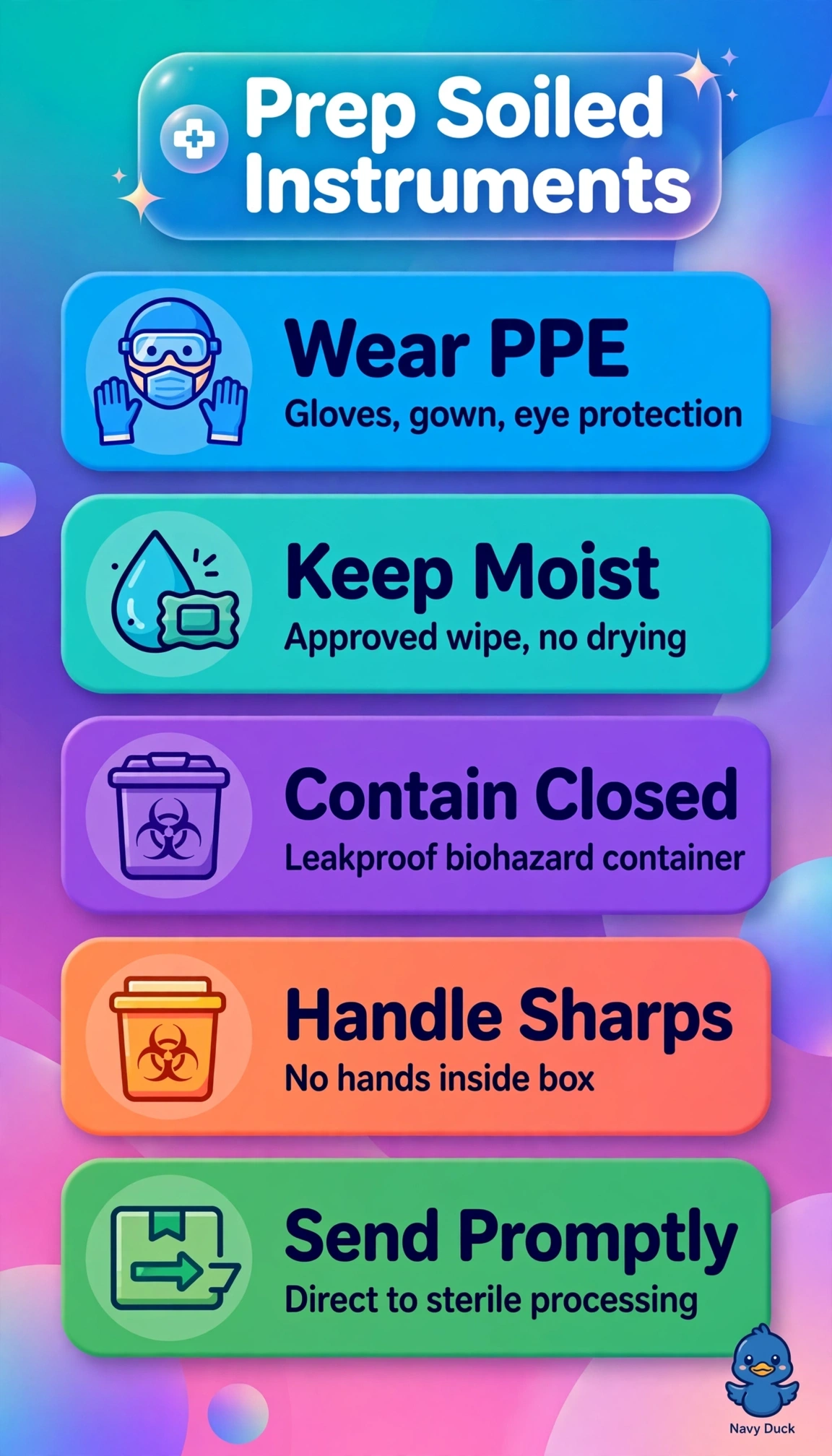
Dried blood turns cleaning into a wrestling match, so moisture is your friend here. Point-of-use care means you keep soil damp and transport sharps safely in a closed, leakproof, labeled container to central processing.
Full Explanation
Keeping bloodied instruments moist prevents protein from drying in serrations and locks, where it could interfere with later central cleaning. Securing sharps in a closed, leakproof, labeled container protects staff during transport and provides containment, leak prevention, and identification while the instruments go to central processing. Immediate steam sterilization on the unit does not fit the required workflow: central processing is required, and proper decontamination, inspection, packaging, and monitoring cannot be assured at the bedside. A closed, labeled mesh tray is not leakproof; its perforations can let blood and moisture escape onto hands, carts, and corridors, even though mesh trays are routinely used for sterilizer loads. Allowing instruments to air dry works against cleaning because dried blood can fix to surfaces, corrode joints, and resist removal, even when the equipment looks tidy. Exam caveat: look for all the required transport features together, and distinguish sending items for central processing from sterilizing them on the unit. Practical check: confirm the soil remains damp, the lid is latched, the container does not leak when tilted, the label is legible, no sharp tips protrude, and handoff is documented.