
A medical-surgical PCT tracks intake and output for a patient with heart failure who drinks broth and water from marked cups, voids in a hat, and has a continuous IV managed by the nurse. Which intake and output recording and monitoring method best ensures accuracy for the care team?
Select an answer to reveal the explanation.
Short Explanation
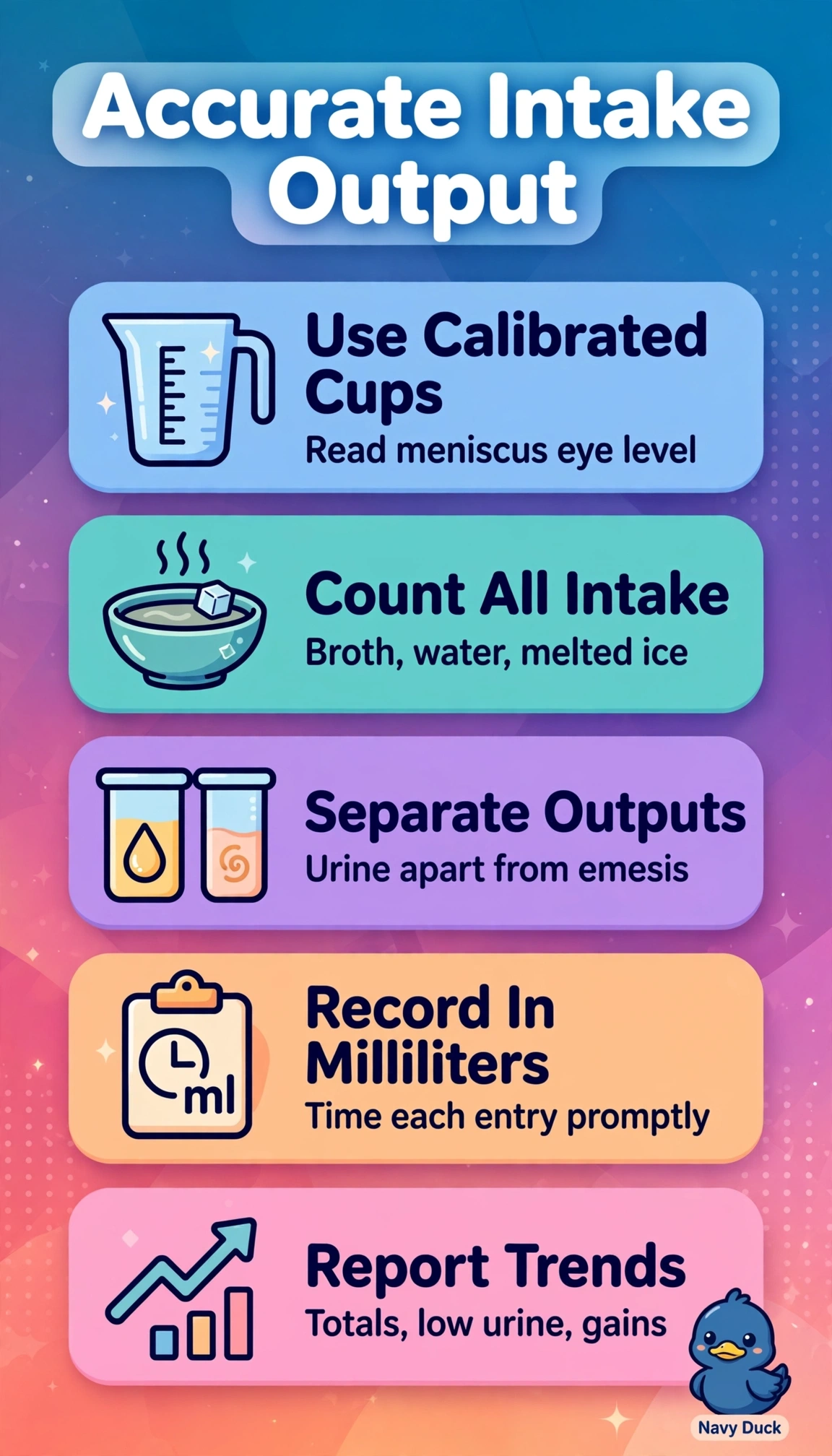
You're like the scorekeeper for your patient's fluid balance, so you'll get the truest read when you check cups and hats at eye level and log each sip and void in milliliters right away. Just pull the IV totals from your nurse's record so your whole team is working from the same playbook.
Full Explanation
Accurate intake and output in heart failure requires standard technique, complete capture, prompt metric charting, and correct sourcing because balance guides diuretic decisions. Reading the marked cup and hat at eye level on a flat surface prevents parallax error, including broth and water as intake and each hat void as urine ensures completeness, charting each volume at once in milliliters with time preserves trends for early action, and using continuous IV totals from the nurse record is essential since the nurse manages rates and pump documentation. The approach having the aide read the bag scale to calculate infused volume fails on scope because it can miss titrations and residuals despite correct oral and urine technique. The approach recording in ounces while using correct timing and nurse IV totals fails on standardization because non-metric values cannot be balanced directly and invite conversion error. The approach holding correct milliliter values with nurse totals until end of shift fails on timeliness because batching hides overload patterns and delays care. For exams, reject a familiar workflow that violates one stem condition such as units, timing, or IV ownership, and in practice level the hat, read at eye level, chart time-amount-type at once, and reconcile subtotals with the nurse total at handoff.