
A 68-year-old rehabilitation patient who was alert at breakfast is now difficult to arouse, breathing fast and short of breath when speaking, and shows new drooping on one side of the face with slurred words. Which change-in-condition response correctly addresses level of consciousness, breathing, and stroke signs?
Select an answer to reveal the explanation.
Short Explanation
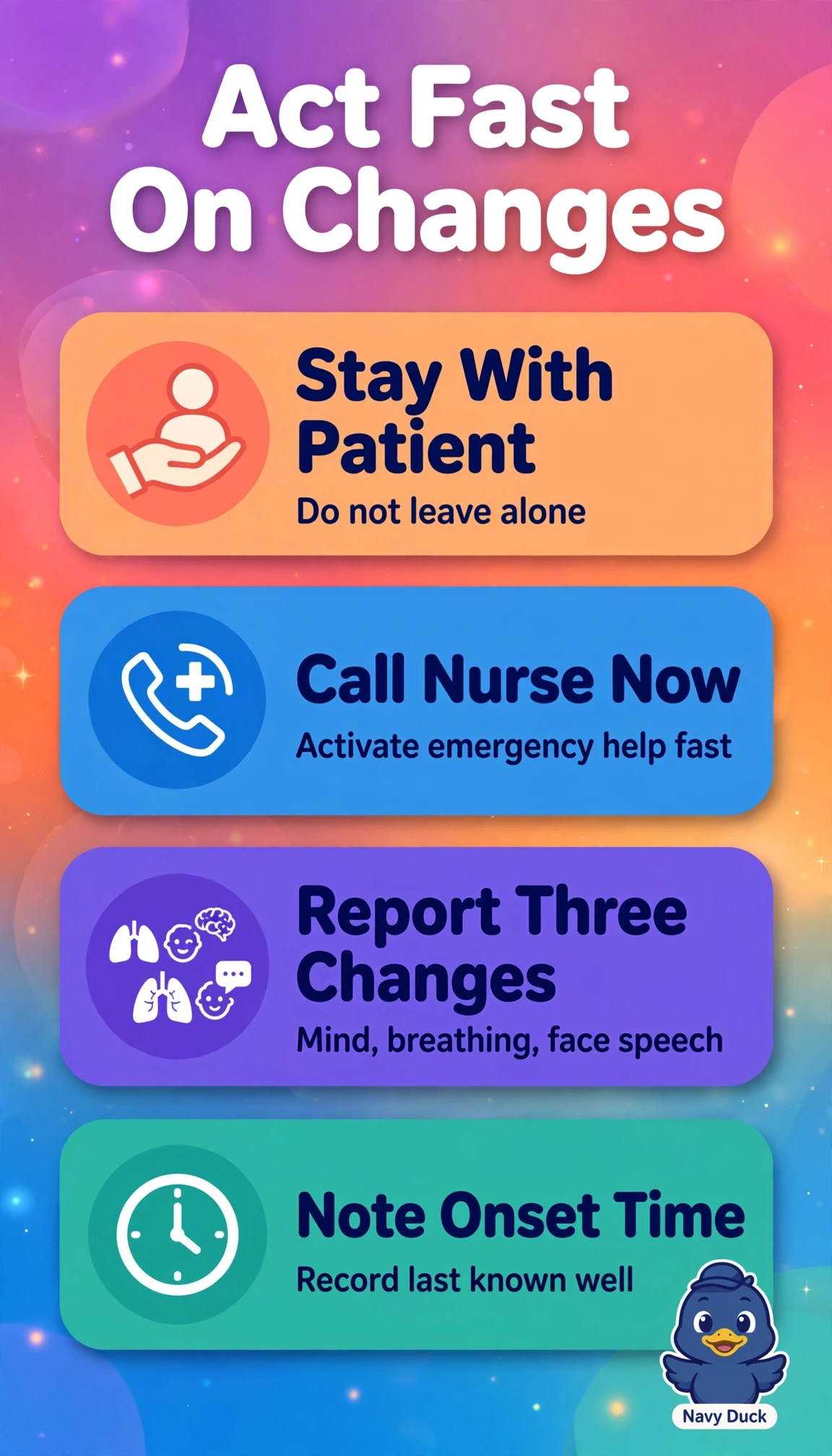
You're spotting a triple warning, so don't leave your patient for a second and get help fast, a bit like hitting the emergency button when every minute counts for brain-saving care, so share what changed and when it started. You'll help most by staying close and reporting those alertness, breathing, and face changes right away.
Full Explanation
The correct response succeeds because it maintains safety by staying with the patient, escalates emergently, and reports all three domains with timing: change from alert to difficult to arouse defines altered consciousness, fast breathing with shortness of breath defines respiratory compromise, and new facial droop with slurred speech defines focal stroke signs where onset time guides reperfusion eligibility. One strong but incomplete approach emphasizes rapid stroke assessment with consciousness change and focal deficits plus onset time yet omits dyspnea, which fails because tachypnea signals hypoxia or deterioration that can worsen brain injury and requires concurrent airway management rather than neurology alone. Another strong approach provides staying, emergent notification, consciousness change, dyspnea and focal deficits with reassurance yet omits onset time, which fails because without last-known-well time the team cannot calculate treatment windows or prioritize imaging and thrombolysis decisions. The remaining approach provides staying, emergent notification, dyspnea and focal deficits with onset time and safety measures yet omits arousal change from baseline, which fails because unreported drowsiness obscures global dysfunction and aspiration risk. For exams, beware excellent partial care that drops one stem element, since completeness of reporting is often the discriminating point. In practice, confirm by stating baseline versus now, breathing effort, focal findings, and last-normal time while observing responsiveness until handoff.