
A stable adult on a hospital bed with a running peripheral IV needs transport from the medical unit to imaging down a long corridor and into a small elevator, with privacy and fall precautions required throughout. Which bed-transport technique maintains IV patency, fall protection, and clearance during the move?
Select an answer to reveal the explanation.
Short Explanation
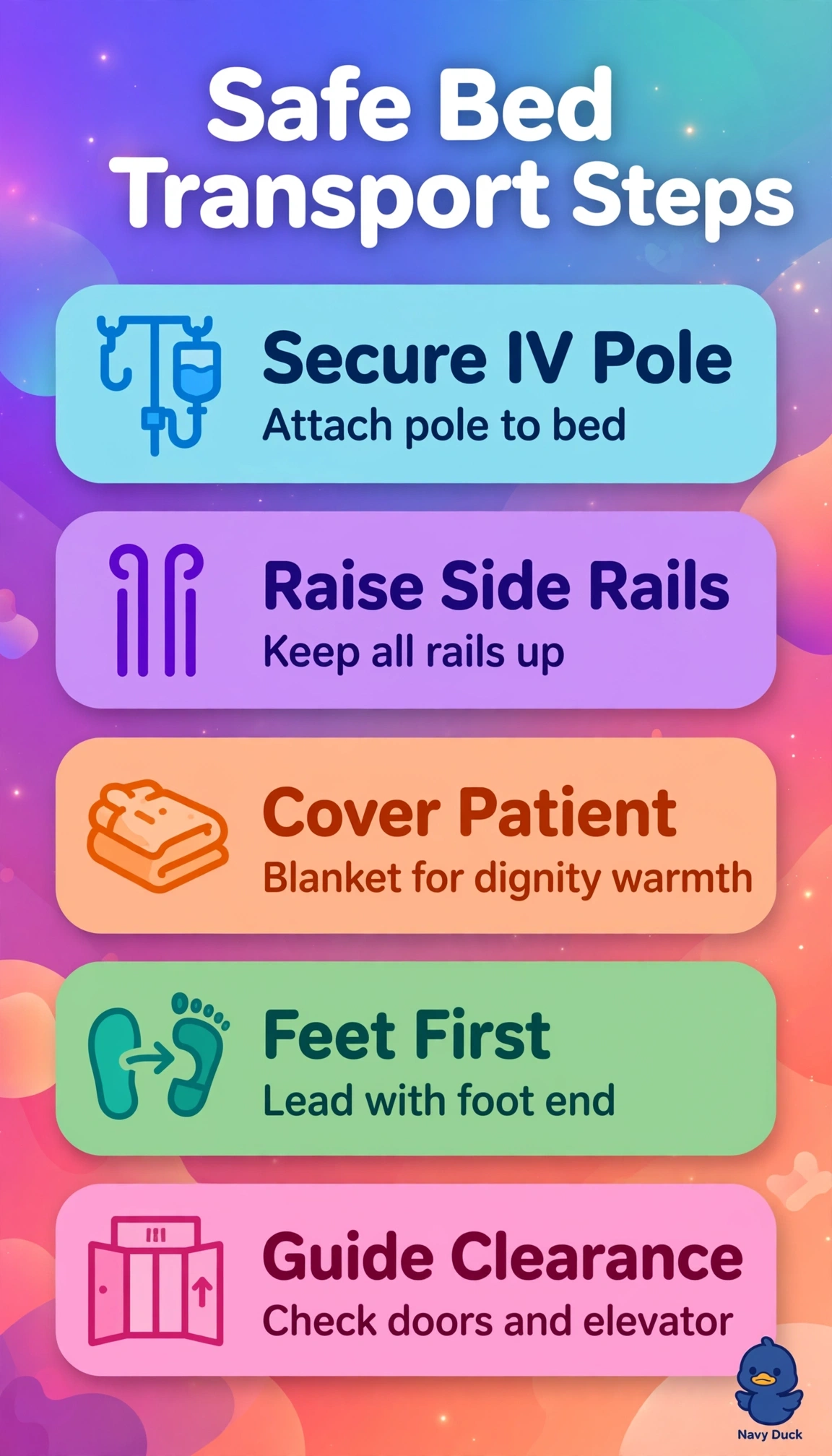
You've got a rolling room to manage, so you'll keep everything attached and tucked in. Securing the pole, raising the rails, and leading feet-first keeps the line open and the ride safe.
Full Explanation
Securing the IV pole to the bed frame keeps the catheter site stable during motion and door transitions, preventing tugs that can occlude flow or dislodge the line, while raised side rails, a covering blanket, and feet remaining inside the bed protect against falls and preserve dignity, and feet-first movement gives the transporter better steering control and protects the head from striking doorframes and elevator walls because the foot end leads through tight clearance first with the patient's airway and face visible for monitoring. Lowering rails for comfort describes a comfort-first approach that fails fall protection because even stable adults can shift or slide when beds roll over thresholds and elevator gaps. Carrying the IV bag by hand describes a manual-hold approach that fails line security because changing height, swinging, and handoff increase occlusion and snag risk compared with a pole fixed to the moving frame. Moving head-first for viewing describes a visibility-comfort approach that fails directional safety because the head leads into doors and elevators and reduces steering control on a heavy bed. On the exam, expect feet-first, rails up, and attached equipment as the default for occupied bed and stretcher transport unless a documented exception applies, and in practice pause before doorways and elevators to confirm rails, lines, drains, brakes released, and clearance before proceeding.