
In a long-term care facility, an older adult with a new serious diagnosis paces, raises their voice at staff, and says the test results must be wrong and care is unfair. The patient sleeps poorly and refuses activities but accepts your presence. Which response best supports coping and the stages of grief for anger?
Select an answer to reveal the explanation.
Short Explanation
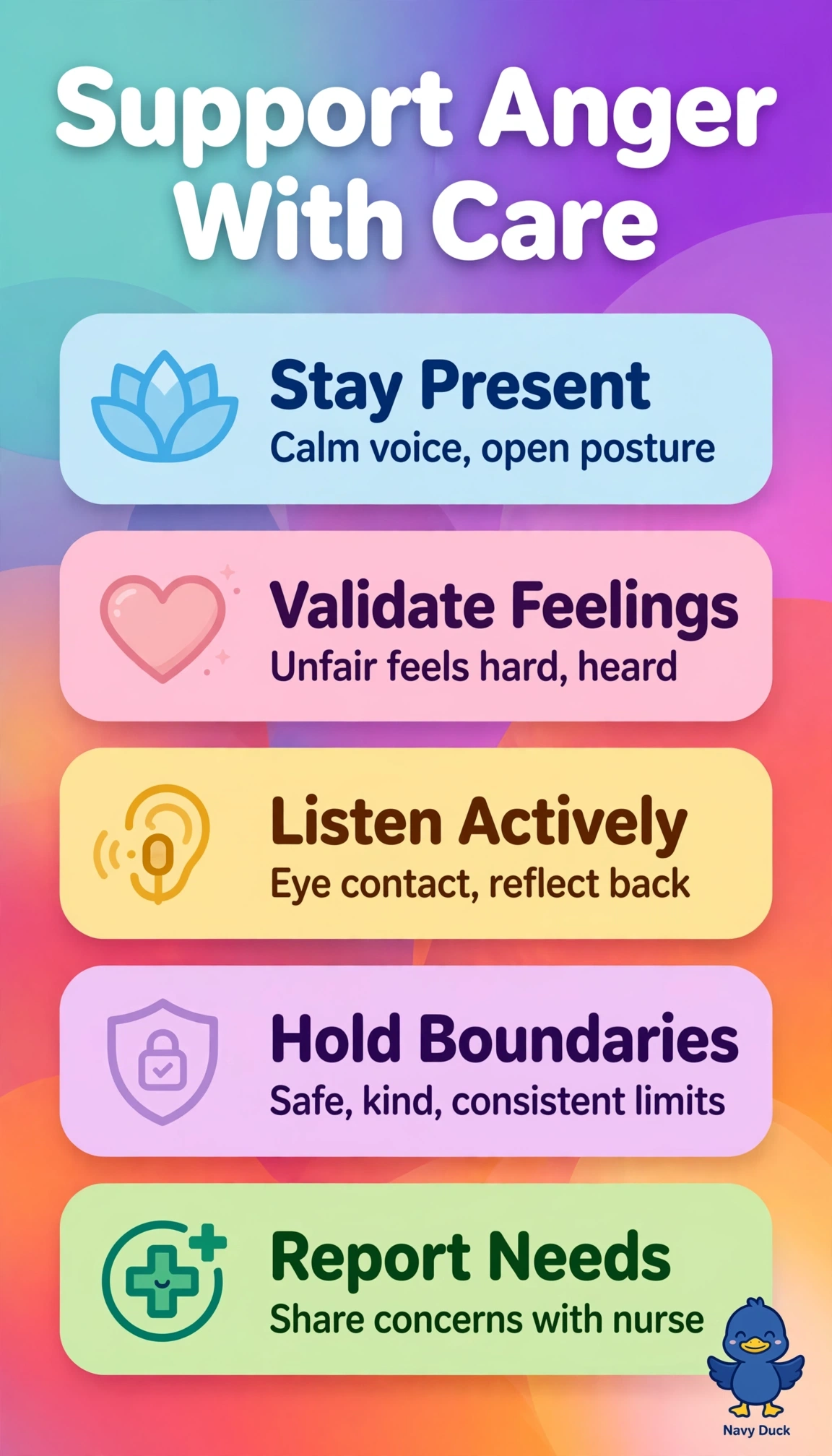
Anger often masks fear, so your steady presence matters more than perfect words. Active listening lets you validate feelings without arguing, fixing, or walking away.
Full Explanation
The correct response fits anger-stage grief care because pacing, raised voice, unfairness claims, poor sleep and activity refusal while still accepting presence indicate heightened arousal needing calm containment, validation of feelings, active listening and quiet companionship that preserve safety, dignity and alliance without confrontation or avoidance. Offering to review results with the team to clarify doubts is a sound strategy for denial, yet here it misidentifies the priority by treating anger as an information gap, which can escalate defensiveness and fails the explicit requirement to support anger coping. Teaching relaxation, sleep hygiene and encouraging a preferred activity appropriately addresses insomnia and withdrawal, but it substitutes early problem-solving for emotional attunement when the patient first needs to feel heard, making support feel dismissive. Encouraging peace and exploring acceptance and closure is valuable in later grief integration, but introduced now it rushes the process and invalidates present anger by expecting resolution prematurely. An exam caveat is to anchor on affect and behavior cues like raised voice and unfairness as anger even when denial words and sleep or activity details tempt toward education or wellness answers. A practical check is to stay unhurried, reflect unfair feelings, watch pacing and volume for safety, maintain kind limits, and defer teaching or planning until calm returns.