
On a night shift, a PCT/A slips on a wet floor without a caution sign, sustains a needlestick from an overfilled sharps box, and notices housekeeping lacks proper PPE. The charge nurse asks for immediate action. Which response best follows OSHA, NIOSH, CDC workplace safety and accident reporting?
Select an answer to reveal the explanation.
Short Explanation
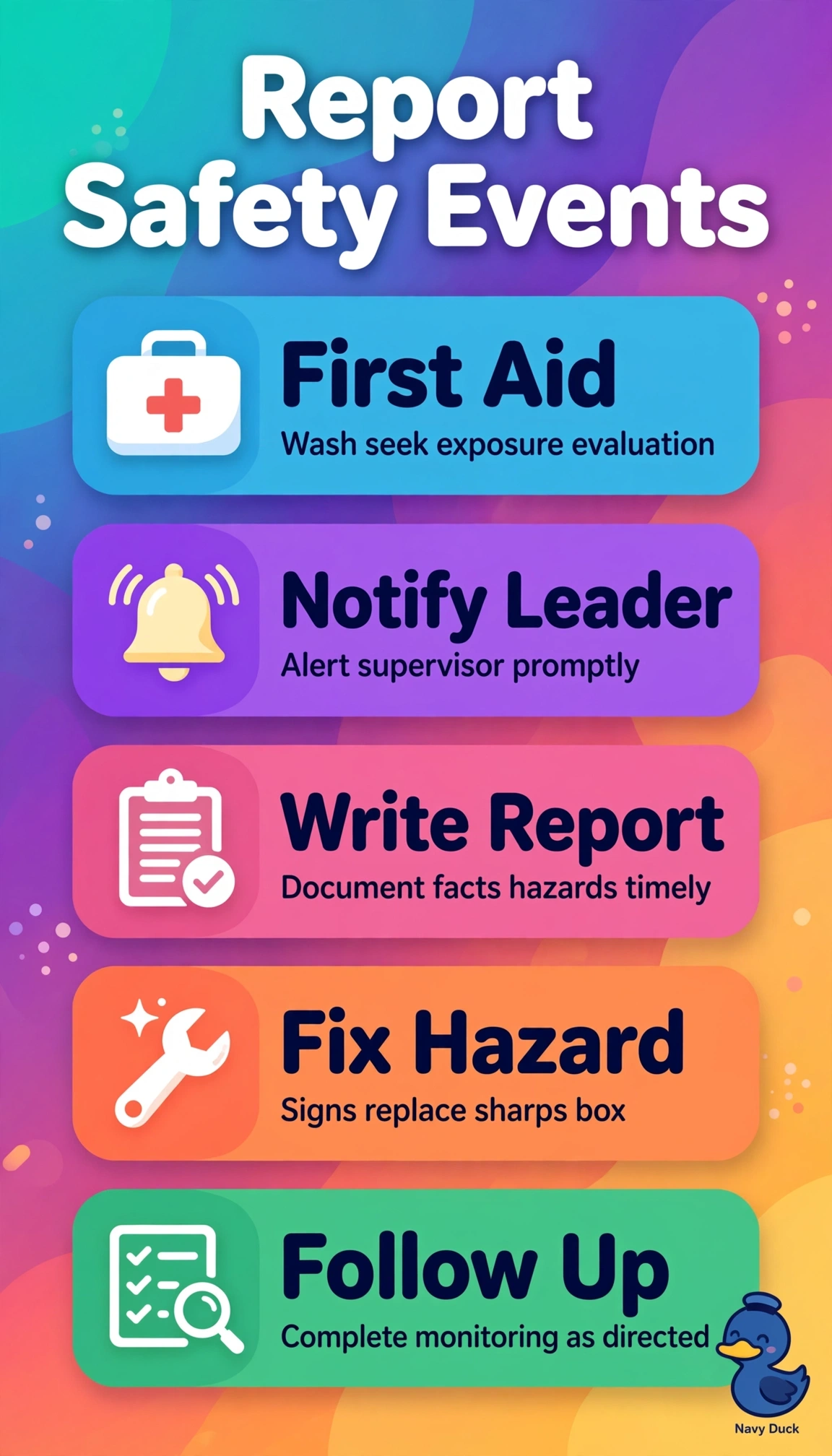
You cannot unstick a safety lapse by waiting it out. Get care fast, alert leadership, and write what happened while details shine. Prompt reporting protects you and fixes hazards for everyone.
Full Explanation
The correct response integrates immediate care, escalation, and formal reporting for this multi-hazard event: wound first aid with prompt exposure evaluation under CDC bloodborne-pathogen guidance for HIV, HBV, and HCV risk stratification and prophylaxis consideration, immediate supervisor notification to activate chain of command and employee-health follow-up, and timely formal incident documentation of facts and all hazards to satisfy OSHA recordkeeping and trigger abatement, including the unmarked wet floor as slip-fall hazard, overfilled sharps box as engineering-control failure, and missing housekeeping PPE as exposure-control gap per NIOSH hierarchy. The approach limiting documentation to fall and sharps hazards fails surveillance completeness because programs require reporting all observed hazards including third-party PPE noncompliance, leaving ongoing exposure unaddressed. The approach recording facts only in shift notes for monthly audit fails timeliness and formality because informal delayed logging cannot support investigation, hazard abatement, and workers’ compensation documentation. The approach correcting environment before care fails triage priority because securing signage and containers before first aid delays time-sensitive wound care and evaluation. For exams, when stems bundle injury plus observations, the answer must account for every element, not the most dramatic injury alone; in practice confirm first-aid and exposure referral were completed, supervisor was notified immediately, and the report lists each hazard with location, time, witnesses, and actions taken without opinion or blame.