
A home-health PCT visits a steady older adult with a colostomy who reports formed stool in the pouch and also needs a prescribed soapsuds enema for constipation, with no bleeding, pain, or orders to hold care. Which ostomy and enema assistance approach best follows standard PCT practice?
Select an answer to reveal the explanation.
Short Explanation
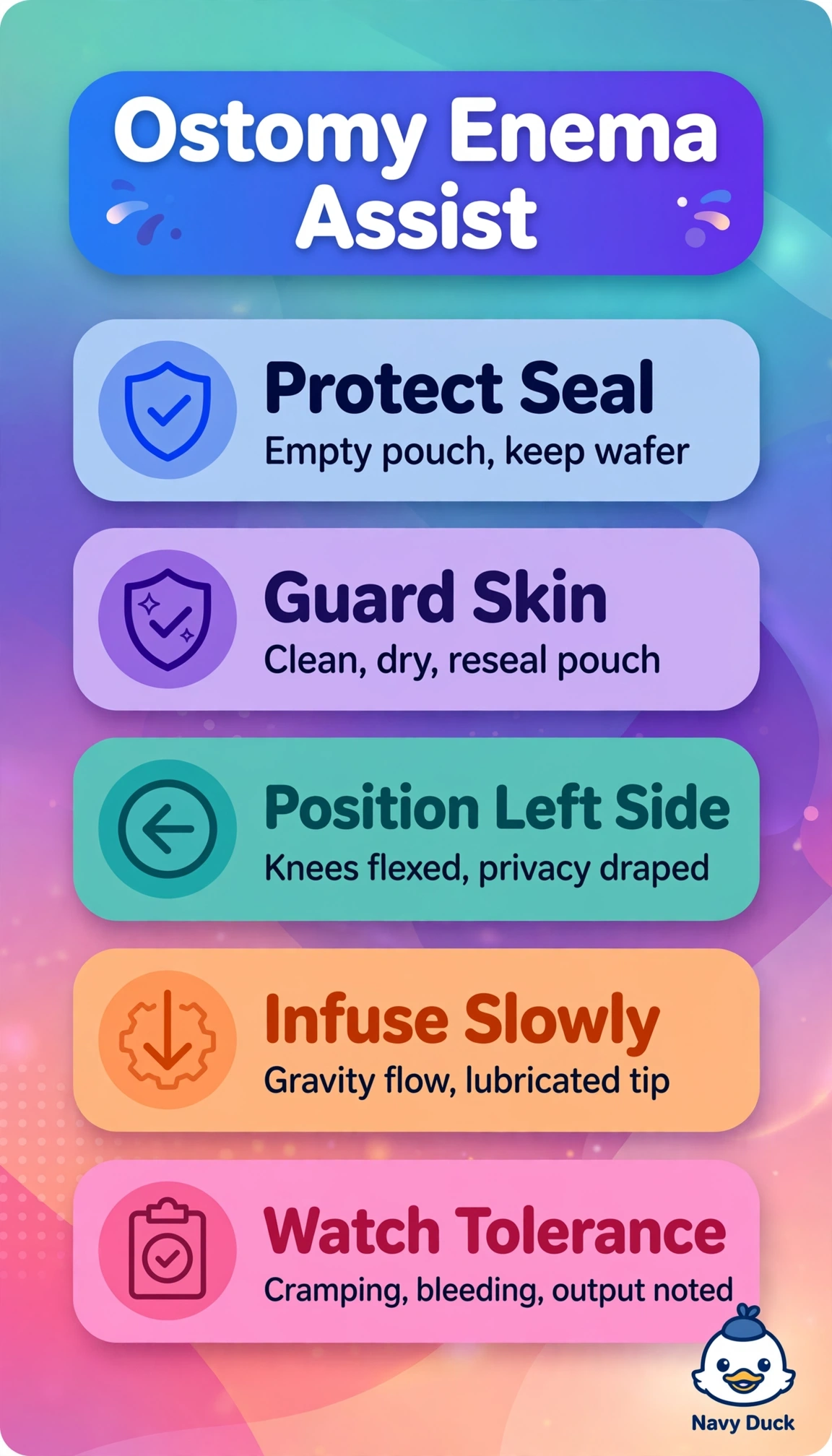
You're keeping things steady by just emptying and rinsing the pouch without pulling off the whole system, like opening a lunch bag without tearing it apart. Then you'll help with the enema on the left side with a slow, easy flow to relieve that constipation without causing cramps.
Full Explanation
The correct approach fits a stable patient with formed pouch stool and an active order with no bleeding, pain, or hold, because emptying and cleaning without replacing an intact system preserves peristomal skin and seal while allowing assessment, and slow infusion in left Sims uses gravity and left-sided descending and sigmoid anatomy to improve distribution and reduce cramping. The routine full replacement is wrong by minimization of skin trauma and supply use, since intact appliances should stay unless leaking, loose, or skin is compromised, and unnecessary removal increases stripping and infection risk without benefit. The right-side positioning variation is wrong by colonic flow anatomy, since left Sims is standard to help solution travel upward then through transverse and downward, while right-side does not aid retention and is tested as a common position trap. Withholding the prescribed enema because formed stool is already present is wrong by adherence to orders and constipation logic, since partial output does not equal clearance and holding requires a hold order or red flags such as bleeding, severe pain, or instability. An exam caveat is that writers often make every step correct except one detail such as position, timing, or changing versus emptying, so reread the stem for hold orders and symptoms. A practical check is to verify prescription, privacy, solution warmth, slow infusion, knees flexed, call light in reach, then reassess cramping, inspect skin, and document enema results and pouch output and tolerance.