
A PCT in long-term care notices a withdrawn older resident with a new bruised wrist shaped like fingers, flinches when a visiting relative raises a voice, and whispers not to tell. The relative insists on staying during care. Which mandated reporting action should the PCT take to address suspected elder abuse?
Select an answer to reveal the explanation.
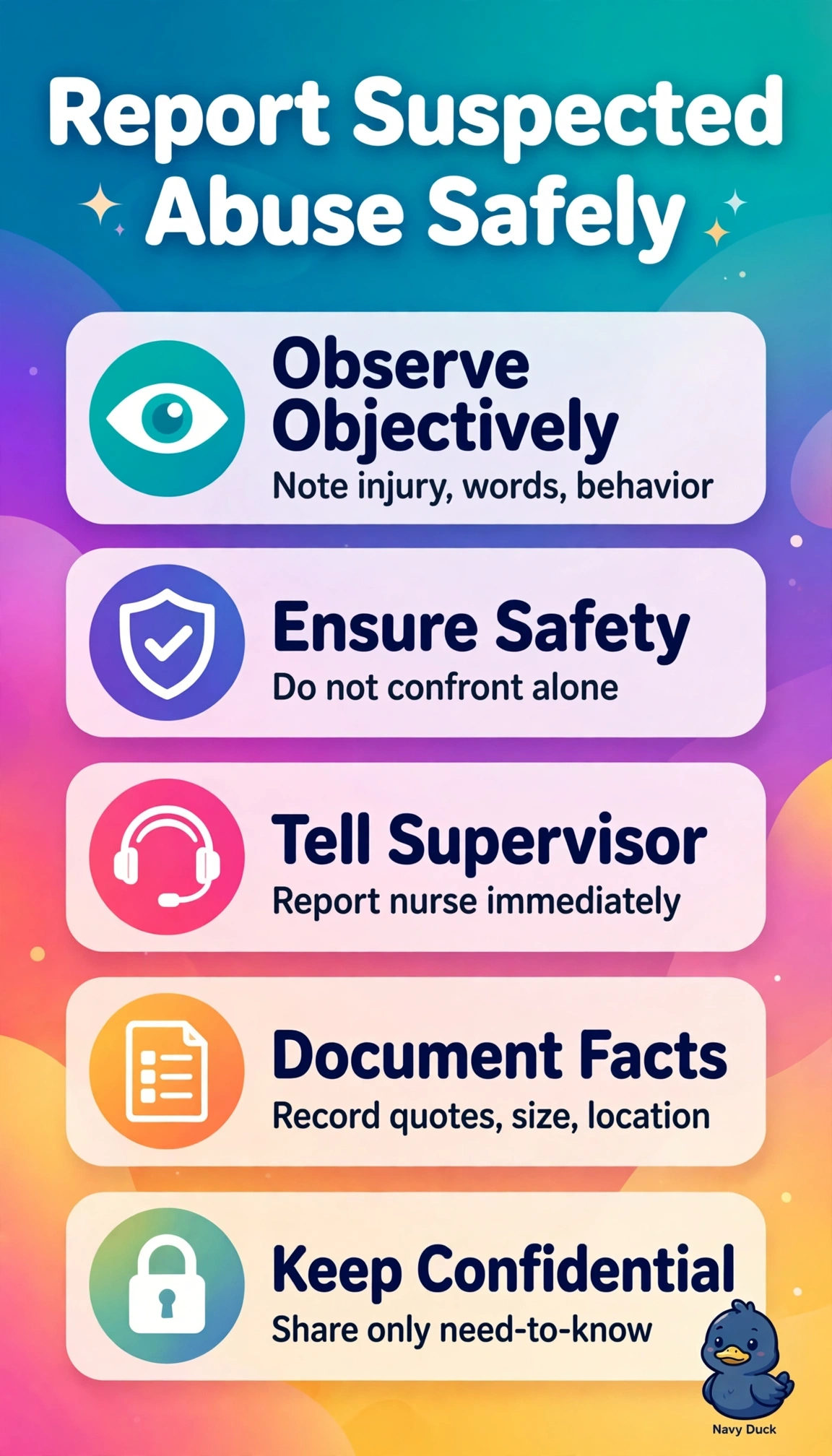
Short Explanation
Your job is to be a clear alarm, not the investigation team. Quick private reporting up the chain gets protection moving like pulling a fire alarm.
Full Explanation
Suspected elder abuse requires the PCT to promptly escalate objective observations through proper channels without investigating, diagnosing, or confronting, which is why reporting promptly to the nurse supervisor per facility policy for referral is correct because finger-shaped bruising, acute withdrawal, flinching, and whispered fear meet reporting thresholds and preserve objectivity and chain of command for licensed evaluation and mandatory referral. Asking the relative to wait outside to preserve dignity is sound person-centered care that may reduce distress, but it addresses only environment management and omits the mandated escalation, leaving risk unreported. Providing calm reassurance and factually charting the bruise and behaviors is sound support and documentation, but charting alone without immediate verbal notification to the supervisor fails immediacy and does not activate protective referral. Continuing supportive care while monitoring for changes next shift reflects appropriate vigilance, but deferral to later violates promptness and allows possible harm to continue without timely assessment. An exam caveat is that when the stem asks for mandated reporting action, necessary but partial measures like privacy, charting, or monitoring are incorrect if they lack prompt supervisor notification. A practical check is to relay exact quotes and objective descriptions, avoid conclusions about cause, maintain safety without confrontation, and confirm supervisor receipt per policy.