
While on cardiac monitoring rounds on a telemetry unit, your assigned patient with chest discomfort becomes unresponsive, the monitor shows a flat line with loose leads, and no carotid pulse is felt while the nurse runs for the code cart. Which immediate response to cardiopulmonary compromise should you initiate as the patient care technician?
Select an answer to reveal the explanation.
Short Explanation
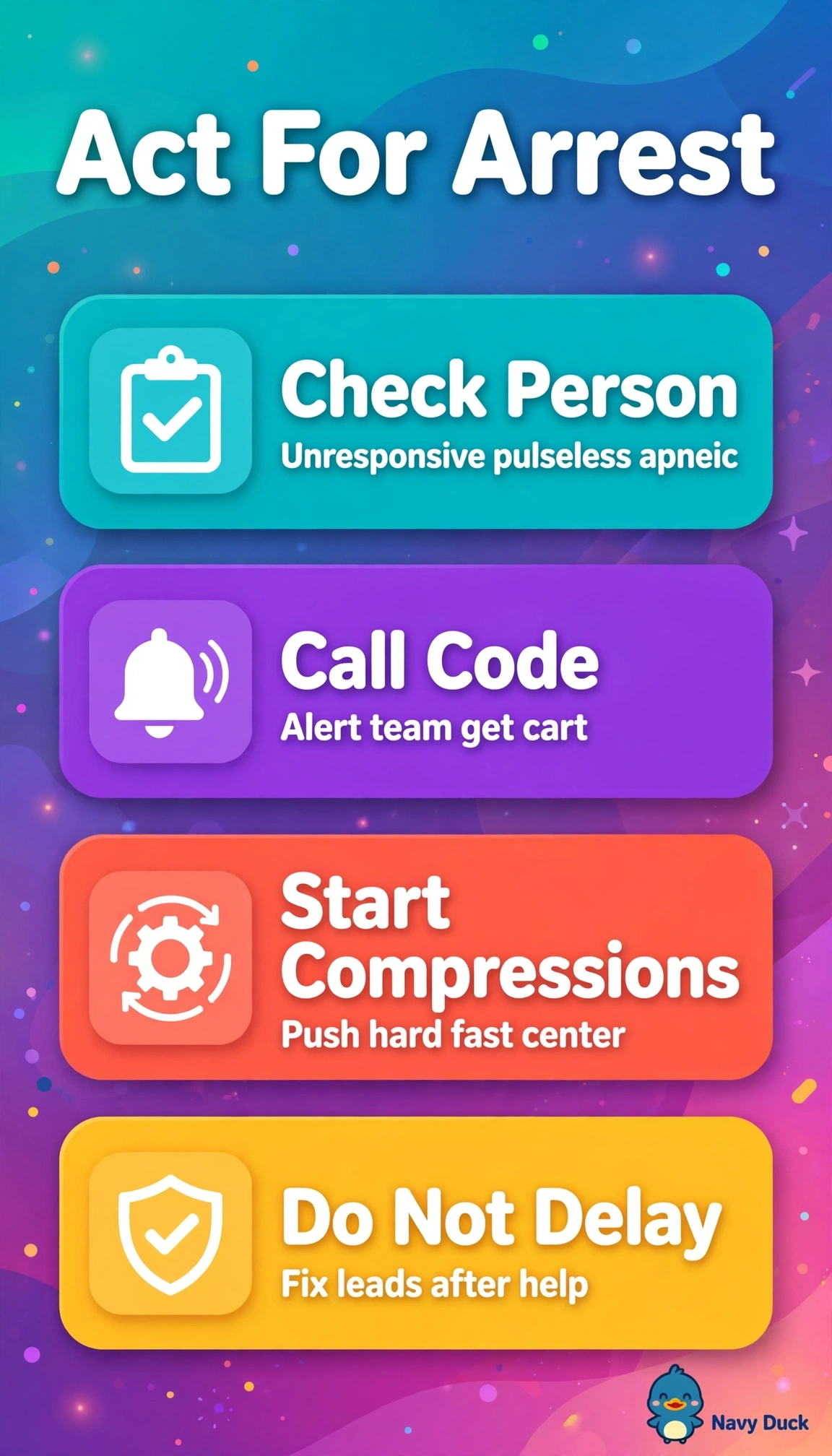
When your patient goes quiet and pulseless, you've got to trust your hands over that loose-lead flatline. You're like the bridge holding the brain over until help arrives, so get that code called and start compressions right away.
Full Explanation
The assigned patient meets cardiac arrest criteria driving the correct action: chest discomfort with new unresponsiveness and absent carotid pulse requires immediate code activation and high-quality chest compressions because perfusion stops without a pulse and cannot wait for the cart, monitor repair, or oxygen titration. Starting compressions but activating a rapid response is appropriate for early deterioration yet fails by response level, since rapid response supports a perfusing at-risk patient while pulseless unresponsiveness requires a full code team with defibrillator, drugs, and advanced support. Reattaching loose leads to determine whether the flat line is artifact or true asystole reflects good telemetry practice yet fails by sequencing, because the pulseless clinical finding already mandates circulation and lead correction can occur in parallel after compressions and code activation. Giving rescue breaths via mask with oxygen is indicated for respiratory arrest with a pulse or as ventilation during CPR yet fails by perfusion physiology, because without compressions oxygen never reaches brain and myocardium without spontaneous circulation. On exams treat the patient not the monitor and never delay compressions to fix equipment when pulselessness is found, and at the bedside shout for the code, check the carotid pulse for no more than ten seconds, begin hard fast center-chest compressions, and let arriving staff fix leads and interpret rhythm.