
In a small hospice inpatient room, an older adult receiving comfort care has just died with family quietly present at the bedside. The nurse asks you to assist with postmortem care per facility policy while supporting the family's need for time and privacy. Which postmortem care step best provides dignified palliative, hospice and postmortem care?
Select an answer to reveal the explanation.
Short Explanation
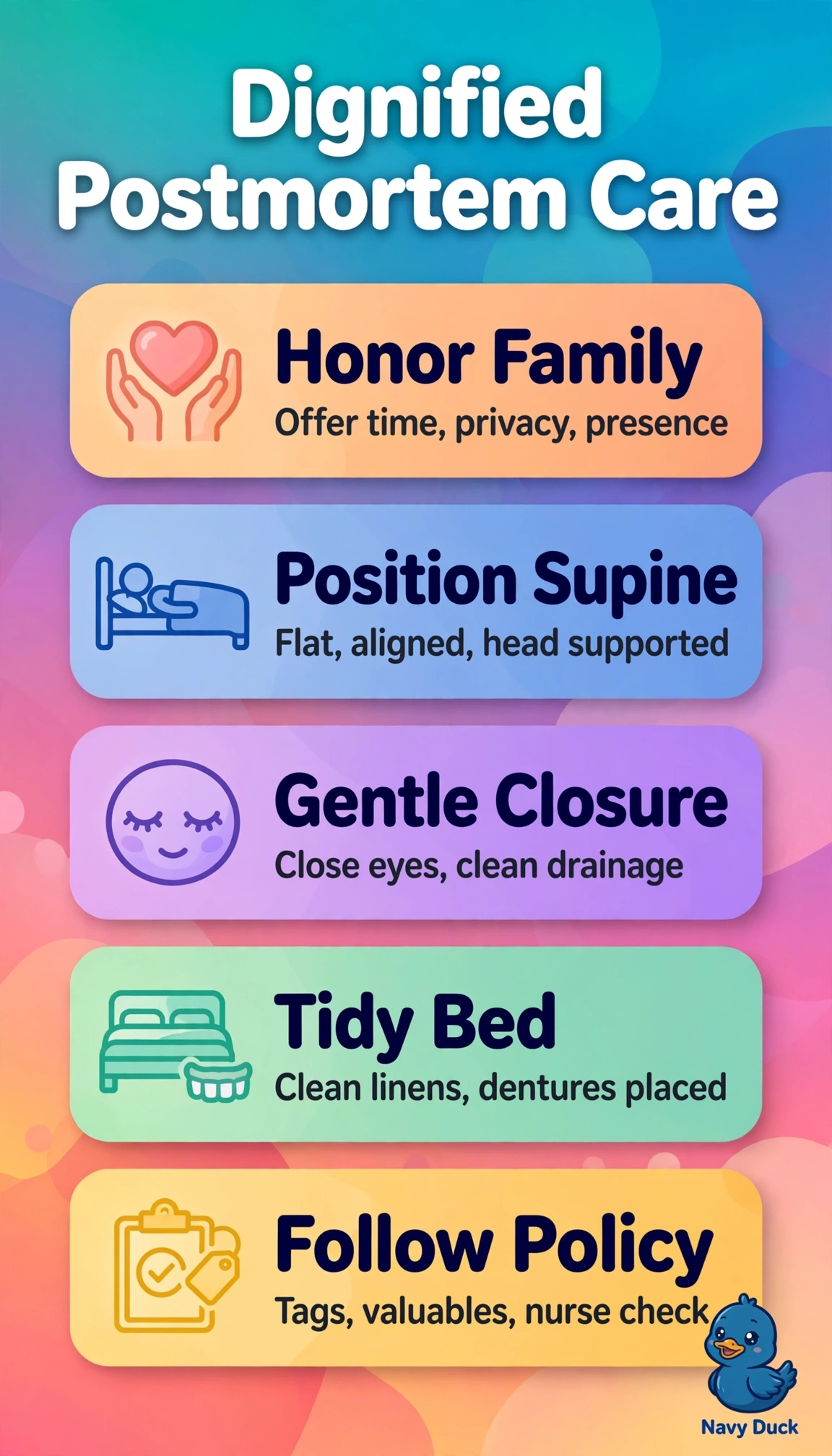
Slow, gentle care speaks loudly when words feel small at the bedside. Dignity grows when you honor family time, then position the body supine, close the eyes, and clean gently per policy.
Full Explanation
The best approach honors the family’s need for time and privacy before postmortem care, then positions the body supine, closes the eyes, and cleans gently per policy. This supports a dignified appearance and viewing while following standard postmortem technique. Elevating the head to semi-Fowler’s may seem peaceful, but that is an antemortem comfort measure for dyspnea; postmortem care uses flat supine alignment with straight limbs to preserve natural appearance and prevent contractures or pooling. Cleaning immediately while the family waits outside may follow hygiene procedure, but it denies the requested unhurried bedside presence before handling the body. Delaying all documentation until much later may preserve family time, but timely recording of death, care, belongings, and notifications is part of policy accountability. An exam caveat is to distinguish live comfort positioning from postmortem alignment and meet all conditions in the stem, rather than choosing an action that addresses only hygiene or efficiency. A practical check is to offer time, use a privacy signal to ask when the family is ready, follow the unit checklist for positioning, eyes, hygiene, linens, valuables, and charting, and confirm family wishes with the nurse.