
A long-term care resident who is alert refuses morning hygiene and asks that family not be told details, while the PCT is behind schedule and the nurse is busy with medications. Which response best applies the Patients' Bill of Rights while following the chain of command?
Select an answer to reveal the explanation.
Short Explanation
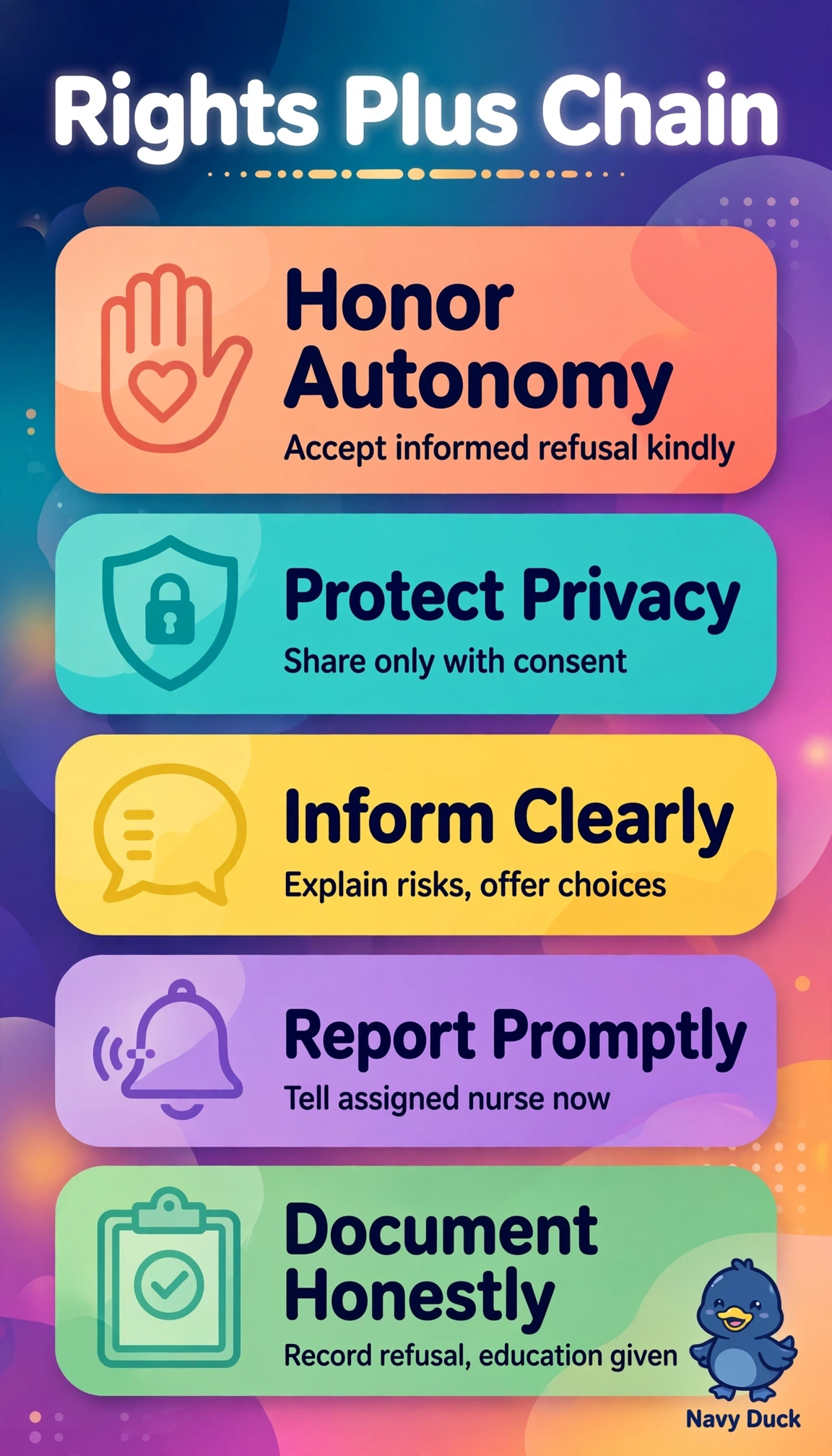
You honor the resident’s choice and privacy while kindly explaining possible consequences. Prompt reporting to the assigned nurse keeps you within your role and supports follow-up.
Full Explanation
Respecting the alert resident’s refusal of hygiene and request for privacy honors the Patients’ Bill of Rights. Kindly explaining possible consequences, such as skin breakdown, odor, or infection risk, supports an informed decision; promptly reporting the refusal to the assigned nurse allows that nurse to reassess, reinforce teaching, document, and decide next steps within the chain of command, without the PCT exceeding their scope. Offering to return later while reporting promptly protects the resident’s rights, but fails to provide the explanation that supports informed refusal. Reporting to the charge nurse because the assigned nurse is busy protects the resident’s rights and includes teaching, but bypasses the assigned nurse, fragmenting accountability for assessment and follow-up. Waiting until end-of-shift charting to report includes the appropriate bedside response but delays communication, leaving the refusal unaddressed and failing the duty to report promptly. Exam caveat: being behind schedule or having a nurse occupied with medications does not justify delaying or rerouting the report. Practical check: promptly use a brief SBAR to tell the assigned nurse, document the refusal, teaching, privacy request, and notification per policy, and offer to recheck later without pressuring the resident.