
In a rehab unit, a PCT/A helps an older adult with a new below-knee prosthesis and a walker to stand for first ambulation, with skin checks ordered and the physical therapist nearby. The residual limb sock is smooth and the prosthesis is aligned. Which assistance best supports safe use of the prosthetic and adaptive device?
Select an answer to reveal the explanation.
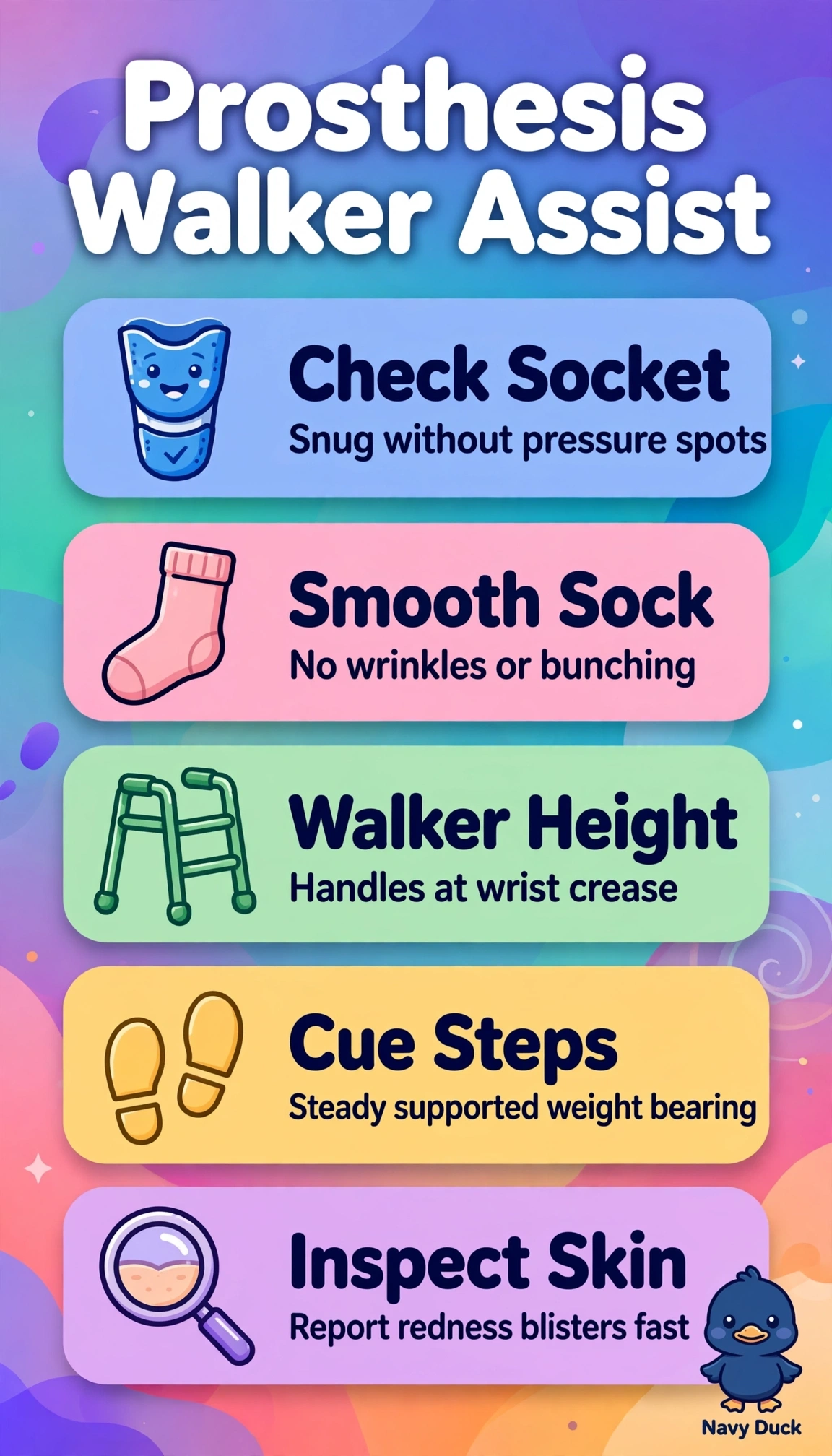
Short Explanation
You are fitting gear that must work as one team for balance. Check the fit first, set the walker to match, then coach steady movement. That careful sequence prevents skin injury and falls.
Full Explanation
The correct response integrates three linked priorities for first ambulation with a new below-knee prosthesis: snug socket fit without focal pressure prevents skin breakdown and pistoning, correct walker height preserves upright posture and reduces fall risk, and cued steady weight-bearing promotes symmetrical loading while the therapist oversees technique. One incorrect approach correctly addresses fit, height, and cueing but postpones the ordered skin inspection until after walking, which fails by timing because early redness or blanching must be caught before loading progresses with a new device. Another incorrect approach provides appropriate socket, sock, and walker setup with supervision yet permits solo practice while the therapist is unavailable, which fails by supervision level because first ambulation requires direct therapist presence for alignment, gait training, and rescue and aide coverage alone is insufficient. A third incorrect approach maintains sock smoothness, alignment, and walker setup with equal weight cueing but omits pressure-spot verification, which fails by skin-integrity surveillance because snug does not automatically mean safe without explicit edge and tibial checks. An exam caveat is to distinguish later independent prosthetic walking, where delayed checks or distant supervision may be acceptable, from new-device first standing where ordered checks and immediate expertise are mandatory. A practical check is to pause before standing to feel socket edges, confirm grips at wrist-crease level, make eye contact with the therapist, and state exactly when the post-stand skin look will occur.