
On a rehab unit, an older adult with a new below-knee prosthesis and a right knee-ankle-foot orthosis wants to walk to the bathroom, reports redness on the residual limb yesterday, and asks you to help apply both devices before standing. Which assistance approach best supports safe ambulation with orthotic, prosthetic and adaptive devices?
Select an answer to reveal the explanation.
Short Explanation
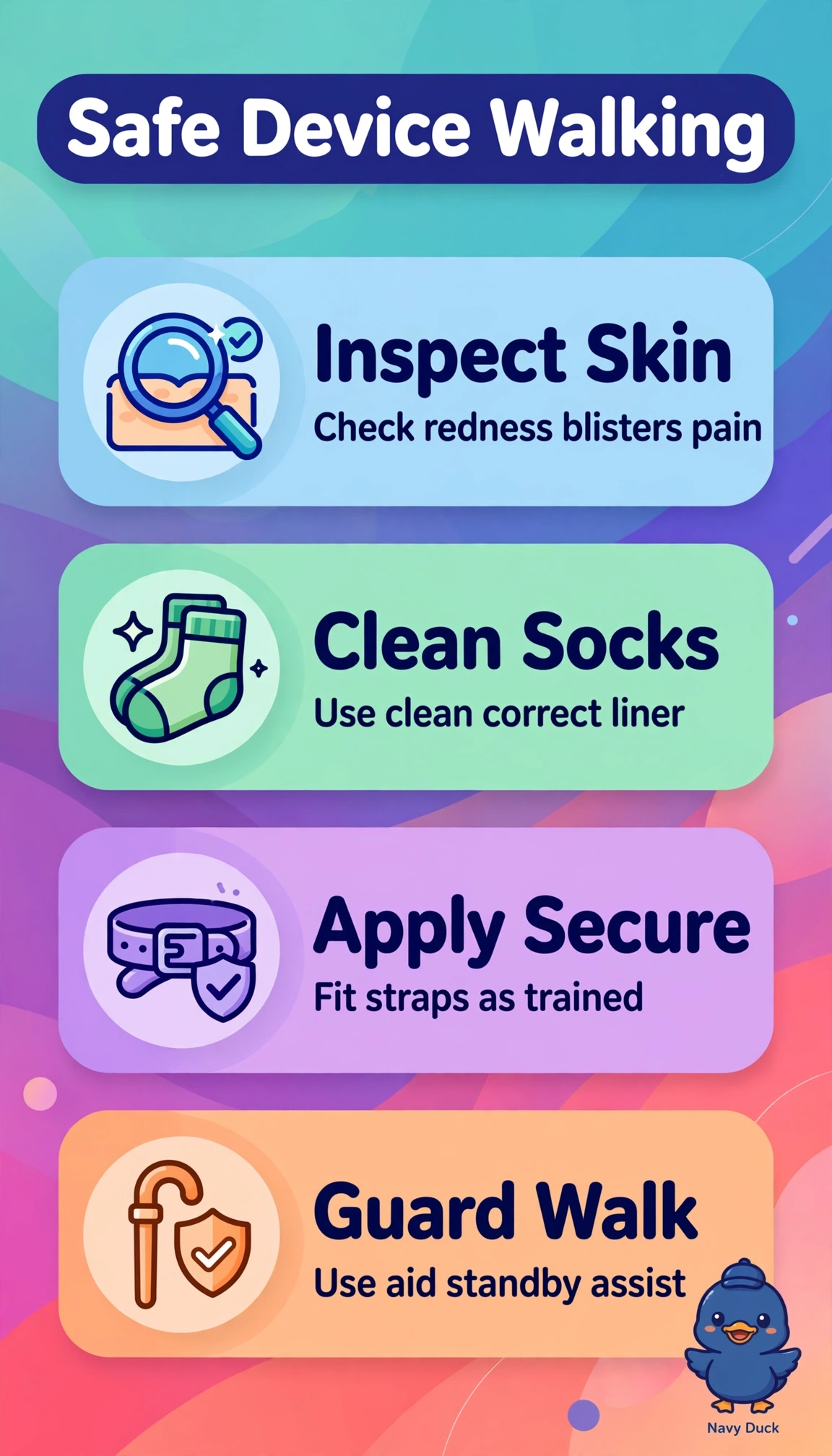
Because you noticed recent redness, check the residual-limb skin before covering it with a device. Skin inspection helps you catch pressure trouble early and support a safer fit as you assist with walking.
Full Explanation
The approach that inspects the skin, applies clean socks and both devices as trained, checks fit and secures straps, then assists ambulation addresses the full situation: recent residual-limb redness, new devices, and a walk to the bathroom. Inspection helps identify pressure concerns before they are covered; clean socks, correct application, fit checks and secure straps help reduce friction, pressure, shear and instability; close assistance supports balance and lets you notice problems during walking. Applying the socks and devices and assisting the walk without inspecting the skin misses an important check prompted by yesterday’s redness. Inspecting the skin and applying the devices before walking, but omitting fit checks and strap security, leaves device fit and fixation unconfirmed before weight bearing. Inspecting the skin, applying the devices and checking fit and straps, but assisting only with standing, does not provide the requested supervised walk to the bathroom. Exam caveat: attend to every cue—redness, new devices, both devices and the destination—rather than treating general assistance as sufficient. Practical check: inspect and compare the skin, confirm socks are clean and dry, check fit and straps, ask about pressure or pain, stay close during the walk, and reinspect the skin after removing the devices.