
On a night shift on an orthopedic unit, you help a post-surgical adult who reports dizziness when standing to walk with a walker to the bathroom and observe cloudy urine with a strong odor. The nurse asks you to record the assistance and observations in the EHR before handoff using proper medical terminology. Which EHR entry using medical terminology best meets legal documentation standards?
Select an answer to reveal the explanation.
Short Explanation
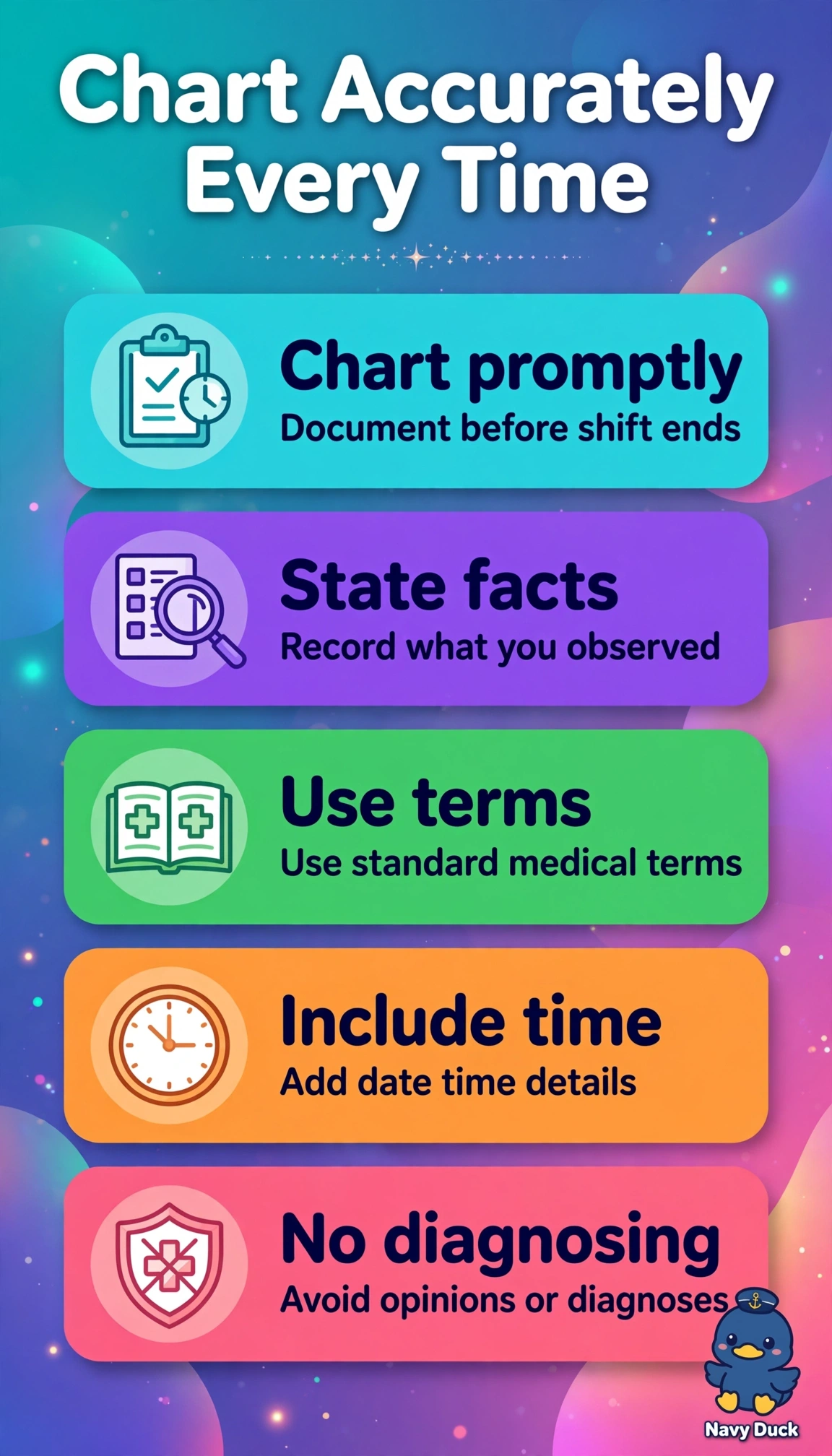
Good charting reads like a security camera, showing only what happened and when. You’ll lock in that objective wording with time, aid, symptoms, and observations before handoff.
Full Explanation
The correct entry succeeds because it captures assistance level with walker to bathroom, patient-reported dizziness on standing, objective observation of cloudy urine with odor, and exact time at 2200 before handoff, satisfying legal standards of what, when, objective findings, and patient statements without diagnosis or opinion. One incorrect entry documents walker assistance, dizziness, and abnormal urine accurately but omits timestamp, which fails timeliness and legal accountability because night shift handoff requires when care and observations occurred to establish sequence and continuity. Another incorrect entry correctly notes walker assistance, timing, and abnormal urine but omits dizziness on standing, which fails completeness and safety because a post-surgical orthostatic symptom alters fall risk, need for continued supervision, and provider notification. The remaining incorrect entry correctly notes walker assistance, dizziness, and timing but omits urine characteristics, which fails objective data collection because cloudy odor urine after surgery may signal dehydration or infection and must not be left unreported. Exam caveat is to distinguish proper terminology and factual charting from diagnostic labeling or normalizing findings, as syncope, dysuria, or normal urine would misrepresent what was reported and seen. Practical check before saving is to verify who, what assistance, subjective symptom in patient words, objective observation, time, and signature per facility policy.