
On a busy medical-surgical unit, a registered nurse asks you, the PCT, to help catch up by taking vital signs, ambulating a stable postoperative patient, administering oral pain medication, and documenting intake. The patient is stable and all tasks seem routine. Which assigned task should you decline to remain within PCT/A scope of practice?
Select an answer to reveal the explanation.
Short Explanation
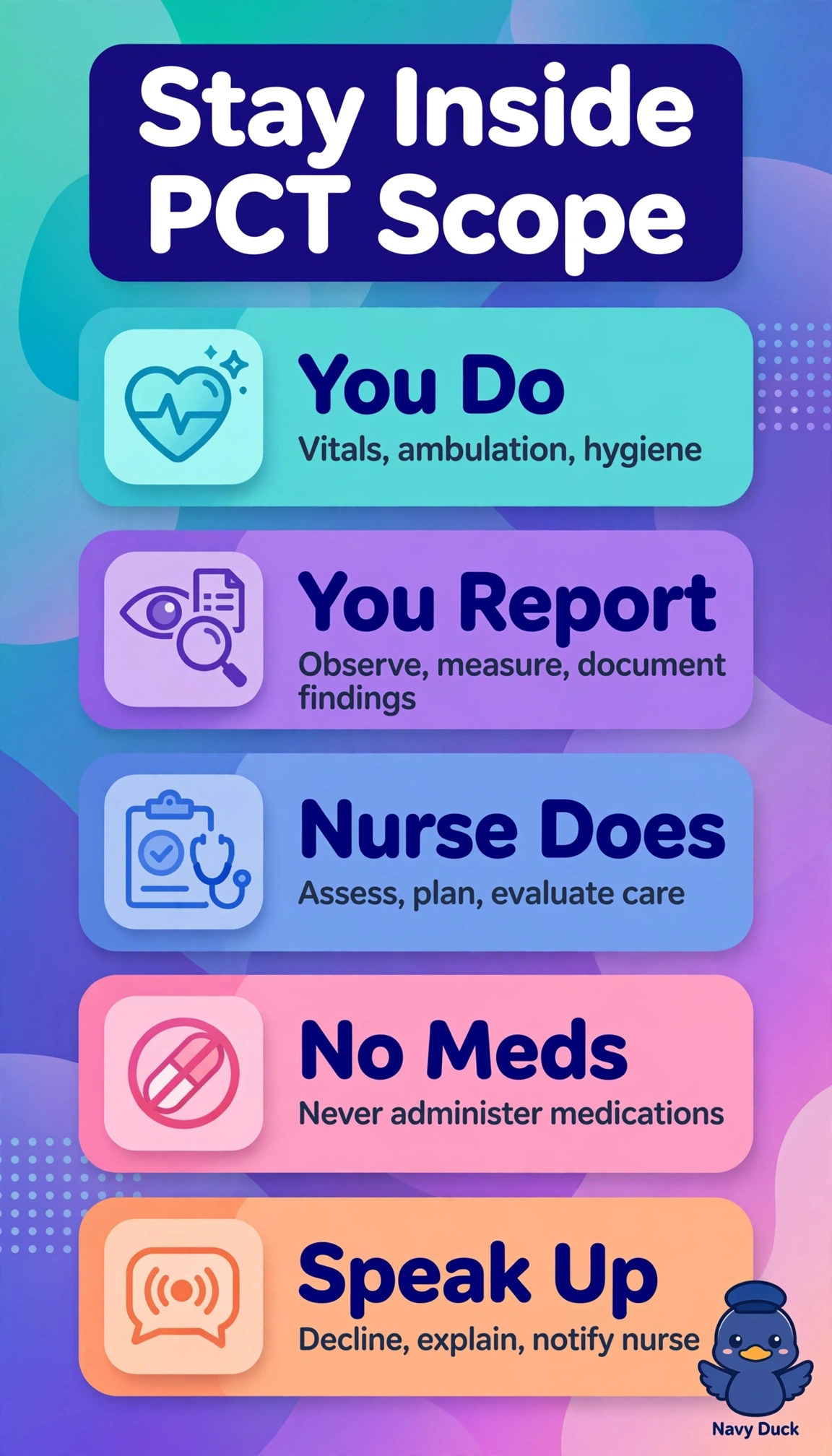
Sticking to your lane protects both you and your patient on a hectic unit. Scope of practice means you own vitals, ambulation, and observations, while assessment and meds stay with the nurse.
Full Explanation
The correct response protects scope boundaries by declining medication administration while accepting vital signs, ambulation of a stable patient, and intake documentation, all of which are standard supportive tasks that a PCT may perform when delegated with appropriate direction and reporting. Verifying stability with the nurse before giving the pill fails on scope of practice because assessment of readiness does not convert a licensed medication function into an assistive function. Performing the dose under direct observation fails on accountability because supervision does not transfer licensure authority and the RN retains responsibility for medication safety checks, counseling, and evaluation. Giving a routine dose because the patient is stable and the task was delegated fails on delegation principles because stability and being helpful do not override the legal task list or facility policy. For exams, remember that busy workload, teamwork, routine status, the five rights, or bedside observation never expand PCT scope to include medication administration. In practice, confirm the do-not-delegate list, politely decline the medication, offer the allowed tasks, and promptly alert the RN to pain needs so licensed follow-up is not delayed.