
During evening rounds on a medical-surgical unit, a housekeeper splashes concentrated floor disinfectant on forearms and eyes, the bottle label warns of corrosive hazard, and the charge nurse asks you to bring safety information to the bedside while help arrives. Which Safety Data Sheet section should you locate first to guide immediate decontamination and first aid?
Select an answer to reveal the explanation.
Short Explanation
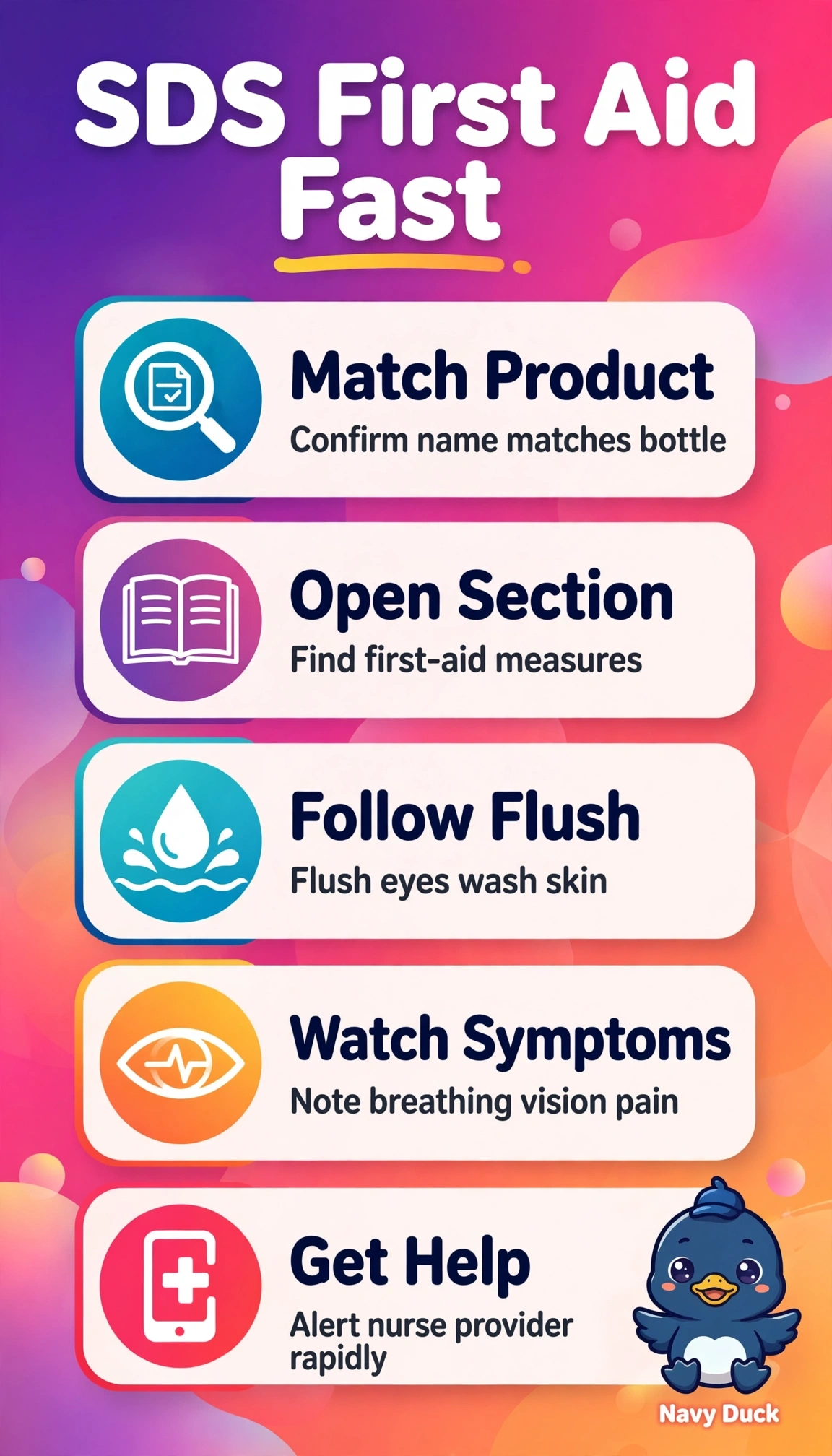
You can guide fast action by going straight to the treatment steps. First-aid measures direct you on flushing, washing, and when to seek help.
Full Explanation
The Safety Data Sheet’s First-Aid Measures section gives stepwise care, including eye irrigation method and duration, skin washing, removal of contaminated clothing, and when to seek emergency care. This directly guides immediate decontamination after a corrosive splash to the eyes and forearms, where irrigation should begin within seconds to limit injury. The composition section helps identify the chemical for poison control and providers, but that information should not delay copious irrigation for a labeled corrosive. Exposure controls describe prevention measures such as limits, ventilation, gloves, and goggles; they do not direct treatment for someone already exposed. Toxicological information helps anticipate corrosive signs and delayed effects, but describes toxicity, routes, and symptoms rather than bedside first-aid actions. An exam caveat: wording about a corrosive splash, eyes, bedside care, and help arriving signals that immediate treatment takes priority over chemical identification or routine prevention, even though those other Safety Data Sheet sections have valid uses. As a practical check, match the product identifier to the bottle, open First-Aid Measures, begin continuous eye and skin flushing as directed, remove contaminated clothing while preserving warmth and privacy, and ask another staff member to gather composition and exposure details for follow-up.