
In an outpatient clinic treatment room, you assist with a sterile dressing change on an adult patient's leg wound. The provider asks you to set up the sterile field on a cleaned overbed table while the patient is positioned and alert. Which sterile-field action best maintains aseptic and sterile technique during setup?
Select an answer to reveal the explanation.
Short Explanation
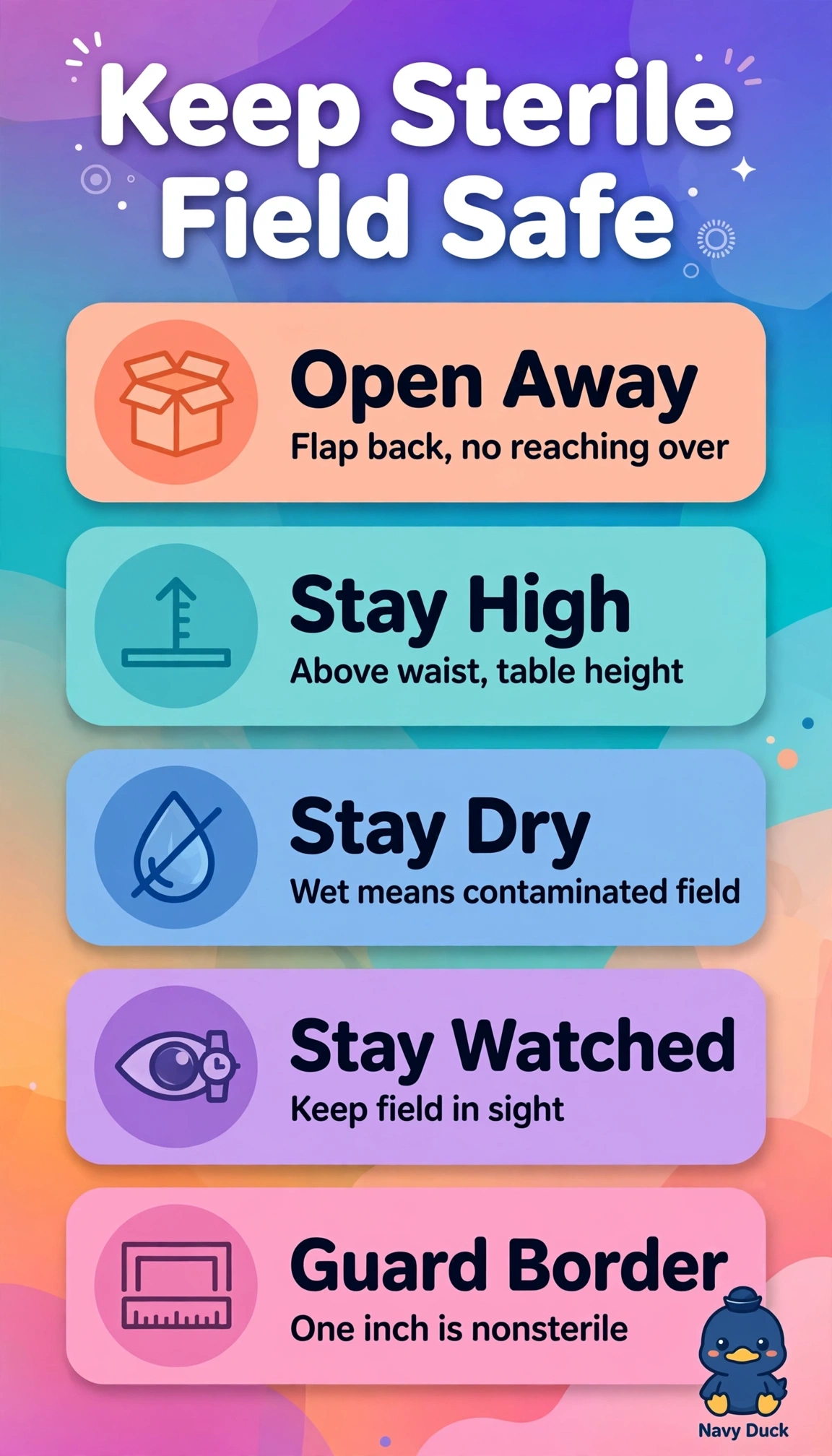
You’re the guardian of that little sterile island, so you’ll keep it high, dry, and watched. Sterile field rules reward hands that open away, stay above the waist, and never wander out of sight.
Full Explanation
The correct action preserves all linked sterile principles for a leg dressing change on a cleaned overbed table: opening away avoids reaching over the field, dryness prevents strike-through, above-waist positioning keeps the field in the controlled zone, and direct sight prevents unnoticed contamination by the alert patient. Opening toward the body fails on unfolding direction because hands and clothing pass over the sterile surface, contaminating it even when dryness, level, and observation are correct. Using the outer one-inch border for supplies fails on boundary definition because that edge is considered unsterile from handling and contact with nonsterile areas. Stepping away to retrieve supplies fails on continuous surveillance because an unobserved field is considered contaminated from possible movement, touch, or airflow even if opened correctly and kept dry and above the waist. A common exam caveat is that a mostly correct description is still wrong if any single principle is violated, so do not choose efficiency or tidiness over direction, border, dryness, level, and visibility. As a practical check, confirm table height, lighting, line of sight, and that all supplies are within reach before opening, and remake the field if it becomes wet, low, unseen, or touched at the border.