
An adult patient on a surgical unit had a stroke with expressive aphasia, is alert but cannot state a number, and grimaces when turning in bed with stable vital signs. The nurse asks for a current pain score before ambulation. Which pain assessment method should the PCT use to obtain a reportable pain score?
Select an answer to reveal the explanation.
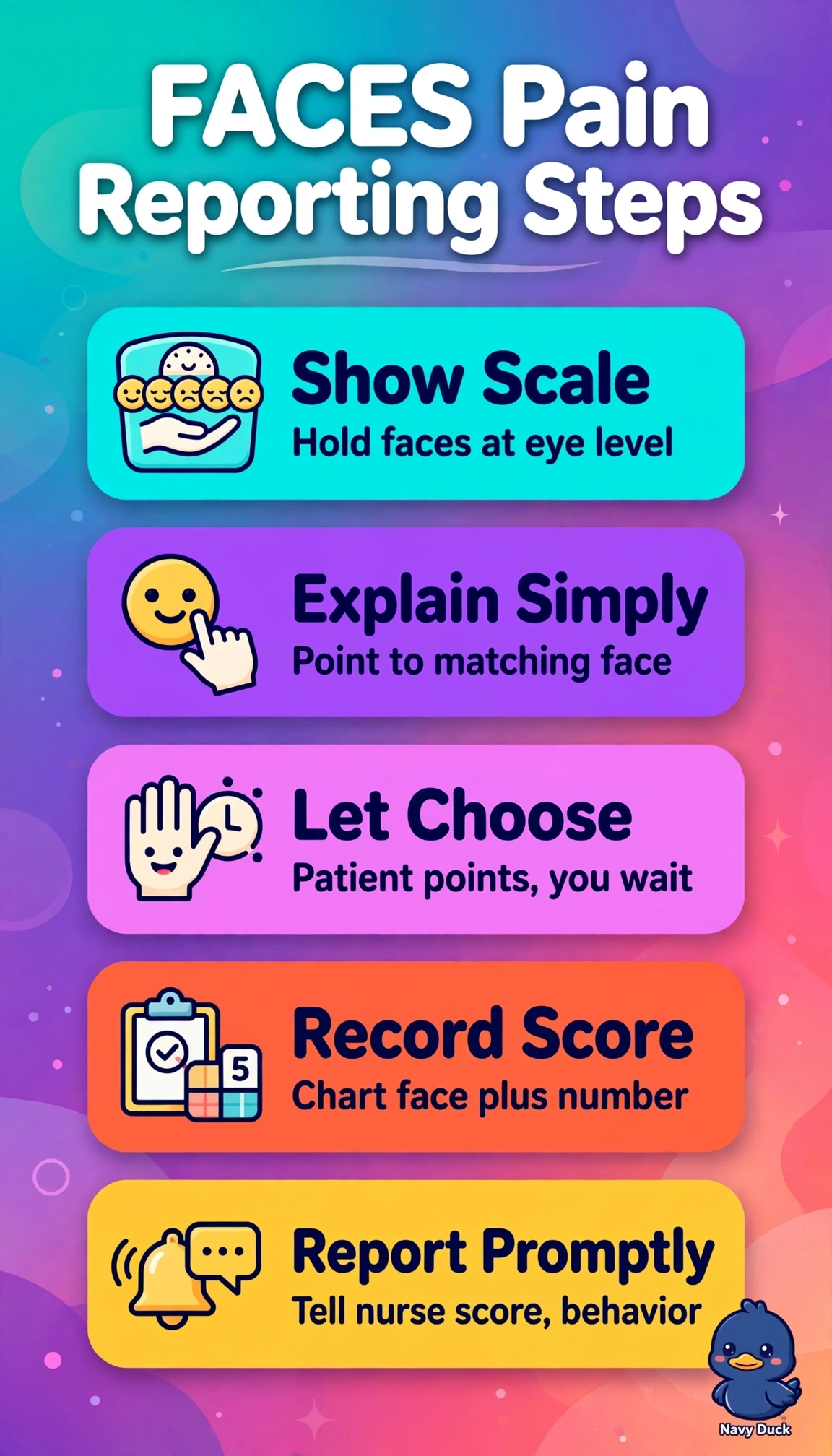
Short Explanation
You’ve recognized the communication barrier, so let the patient show you their pain directly. Pointing to faces gives you a reportable score even when speaking is difficult.
Full Explanation
Presenting the Wong-Baker FACES scale and having the patient point is correct because self-report is the gold standard when a patient can participate. Expressive aphasia can impair verbal output without preventing understanding or pointing, so this approach preserves a valid report before ambulation. Asking the patient to state a zero-to-ten rating fails because that scale requires verbal production, which the stroke has impaired; silence cannot be scored as no pain. Obtaining a family proxy rating fails because surrogate reports are for patients unable to participate and cannot replace the patient’s self-report when pointing is possible or be charted as the patient’s score. Using an observational tool to score grimacing and breathing fails because such tools are intended for patients unable to self-report. Grimacing and stable vital signs do not replace self-report, since vital signs poorly reflect pain. An exam caveat: when the stem says the patient is alert and can point, prioritize adapted self-report over a proxy rating or observation; expressive aphasia does not necessarily mean comprehension is impaired. As a practical check, hold the scale at eye level, confirm the patient understands it, allow time to point, record the indicated face value, and report movement-related grimacing separately to the nurse.