
An adult post-surgical patient on bedrest has left ankle swelling that holds a pit for several seconds, the left foot is cool and pale with slow toenail color return, and a fresh urine sample looks cloudy with visible sediment. Which edema, circulation, and specimen observation set should the technician report to the nurse as abnormal?
Select an answer to reveal the explanation.
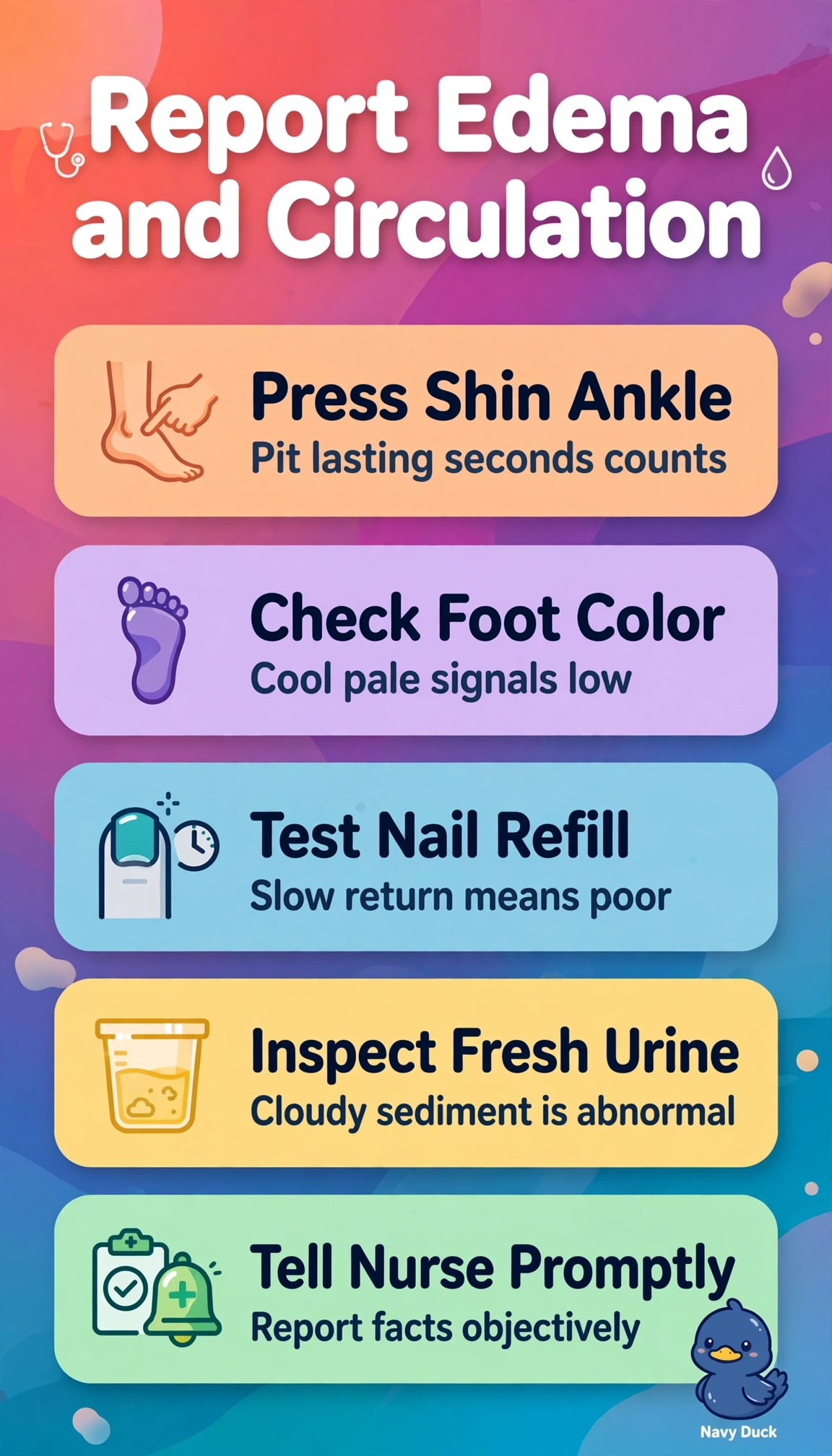
Short Explanation
You nailed the pattern when cool, pale skin plus slow refill teams up with pitting and cloudy urine. Perfusion is like water pressure in a garden hose, so coolness and delay mean flow is low.
Full Explanation
The correct report is accurate because it combines pitting ankle edema that holds an indentation for seconds, indicating interstitial fluid from venous stasis after surgery and bedrest, with a cool pale foot and delayed toenail color return indicating impaired peripheral perfusion that requires prompt nursing assessment for localized vascular compromise, plus fresh cloudy urine with visible sediment indicating particulate pathology such as infection, crystals, or cellular debris rather than expected clear yellow output. The bilateral pitting description fails on localization because converting the stated left ankle finding to both ankles incorrectly implies systemic overload and obscures the asymmetric postoperative concern where unilateral swelling with perfusion change raises suspicion for obstruction. The brisk refill description fails on perfusion timing because documenting refill within two seconds as normal contradicts the stated slow return, thereby normalizing an abnormal circulatory sign and understating ischemic risk. The cloudy urine without visible sediment description fails on specimen completeness because omitting confirmed sediment removes a key abnormal element that distinguishes simple turbidity from sediment that warrants analysis. As an exam caveat, avoid choosing statements that are mostly correct when one altered descriptor changes triage meaning, since tests often assess precise observation reporting rather than general recognition. As a practical check, re-verify side and pit duration, re-time refill with the foot at heart level in good light, confirm urine freshness, and report exact observations to the nurse without interpreting diagnosis.