
In a pediatric urgent-care room a 5-year-old with a sprained ankle cries when bearing weight, answers simply, and points vaguely to the leg. The parent wants a clear pain rating to guide care today. Which pain assessment using FACES or numeric scales best fits this child?
Select an answer to reveal the explanation.
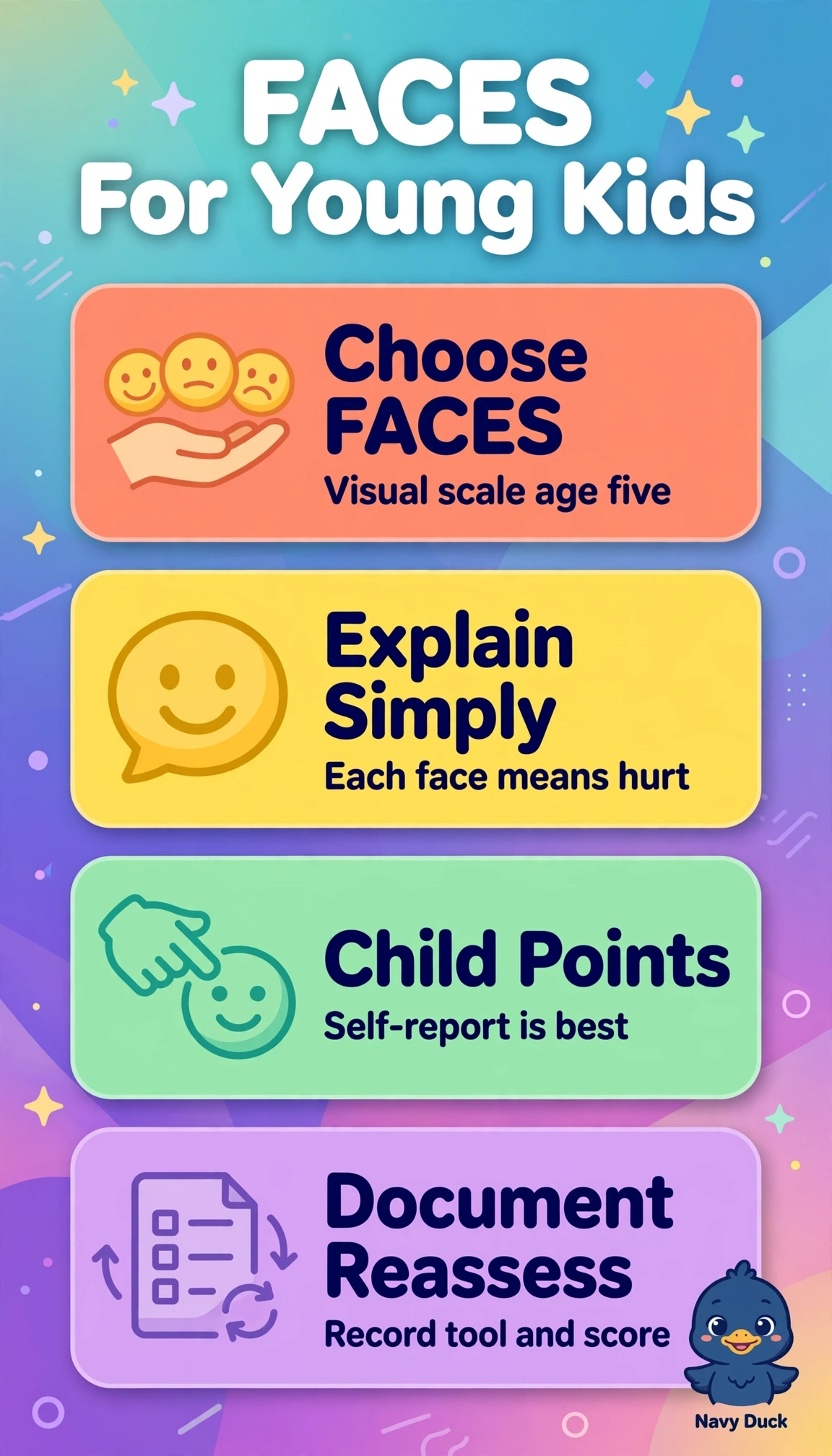
Short Explanation
Little kids show hurt better than they number it. Letting them point to a face turns tears into a rating you can act on.
Full Explanation
The correct approach matches developmental stage and clinical timing because a 5-year-old with simple speech can provide valid self-report when the abstract sensation of pain is made concrete, so showing each FACES face, labeling it in plain words, and inviting the child to point captures current intensity at the point of decision-making for analgesia, splinting, and X-ray need. Asking the child to choose a zero-to-ten number after anchoring ten as worst imaginable fails on developmental fit because numeric scales demand seriation, magnitude estimation, and abstract anchoring that become reliable generally at eight years and older, not at five despite careful explanation. Having the parent select a FACES score from crying and limping to guide dosing fails on source hierarchy because parent-observed distress is a valuable adjunct, especially for preverbal or noncommunicative children, yet observable behaviors conflate fear, anxiety, and pain and cannot substitute when the child can self-report. Showing the scale and recording the rating only after splinting to ensure calm accuracy fails on timing because post-intervention reassessment is essential for evaluating response but cannot establish the pre-treatment baseline required to guide initial care today. For exams, distinguish capability from preference: a child who can count does not equal readiness for numeric pain scaling, and parental concern does not make parental proxy first-line. As a practical check, document the specific face chosen, the words used to explain it, and behavior during weight-bearing to justify the plan and allow consistent re-rating with the same tool.