
A sitter technician is assigned one-to-one monitoring for an adult on suicide precautions after an overdose, who is agitated, making threats, and repeatedly trying to leave the room to use a bathroom with a locked door. The nurse requests constant observation without leaving the patient alone. Which one-to-one monitoring approach should the technician provide for suicide risk, withdrawal, and aggression?
Select an answer to reveal the explanation.
Short Explanation
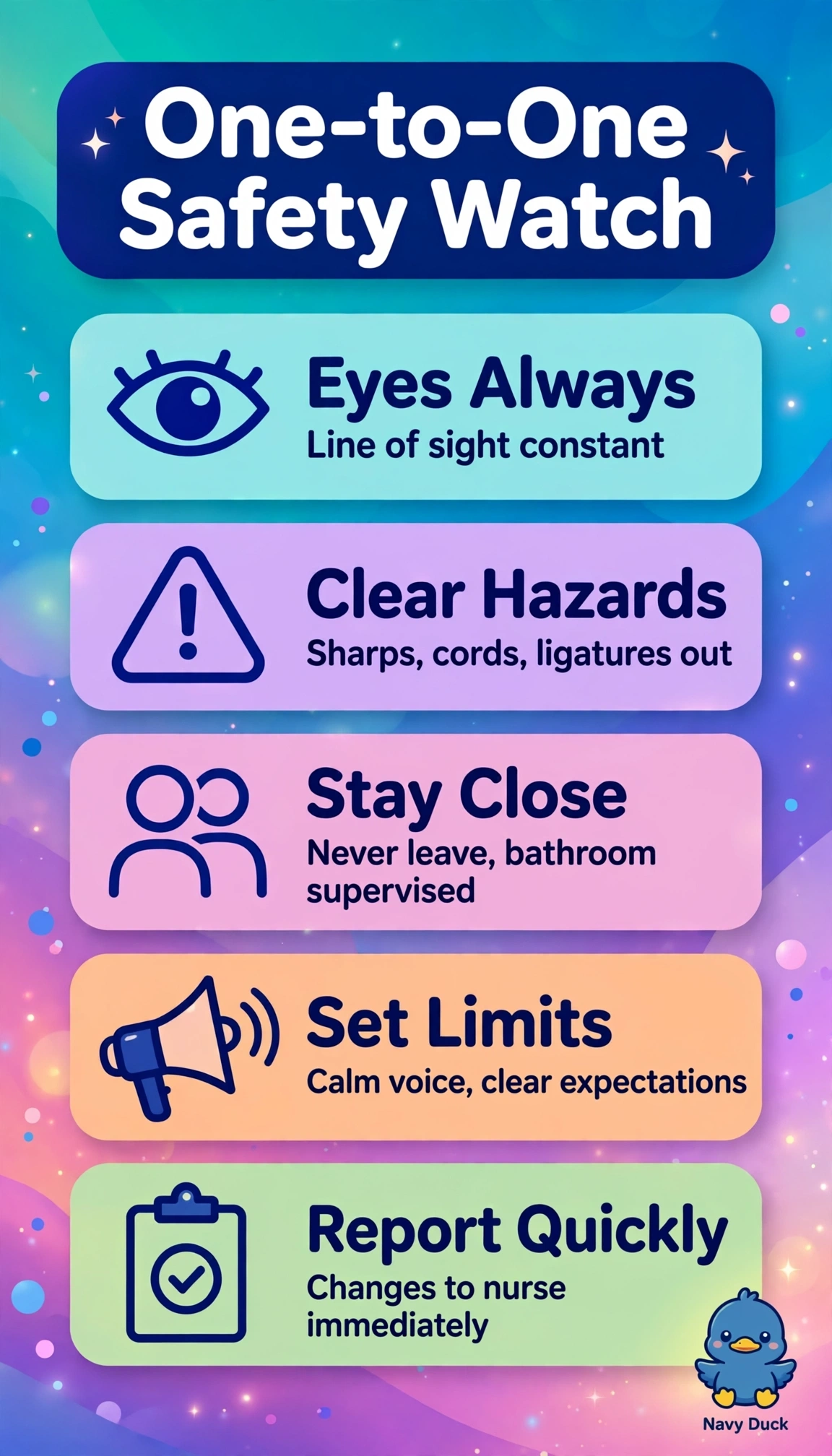
Keep your eyes on the patient and clear away hazards so you can catch warning signs before harm happens. Line-of-sight observation means you don’t leave them alone, including during bathroom use.
Full Explanation
Continuous in-person line-of-sight observation without leaving the patient alone is required because suicide precautions after an overdose, combined with agitation, threats, repeated attempts to leave, and interest in a locked-door bathroom, create high self-harm, elopement, and assault risks that can change rapidly with withdrawal. The technician should maintain continuous visualization, remove sharps and ligature risks to restrict access to means, and report behavior changes at once so the nurse can reassess and intervene. Permitting brief locked bathroom privacy may seem respectful and routine for a stable patient, but it creates unobserved time when hanging, self-injury, or elopement could occur in seconds and violates the never-alone requirement. Using de-escalation for threats and reporting behavior changes promptly are useful, but without removing sharps and ligature risks, calming words do not address environmental hazards; relational and physical safeguards are both needed. Recording agitation for shift handoff review supports documentation, but waiting for handoff delays warning the nurse about withdrawal decline or rising aggression and the need for medical, medication, or security action. An exam caveat: when the stem specifies constant observation, never leaving the patient alone, and active threats, privacy cannot replace direct supervision. As a practical check, clarify the bathroom and threshold plan in advance, such as keeping the door ajar for continuous visualization, maintaining a safe distance, securing hazards, and notifying the nurse immediately about escalation or an attempt to lock the door or leave.