
A technician is helping a drowsy older adult in a long-term care unit who receives nutrition through a PEG tube, needs head elevation, and coughs during the feeding. The pump is running, the nurse checked placement earlier, and suction is available. Which assistance best follows feeding-tube scope and aspiration precautions?
Select an answer to reveal the explanation.
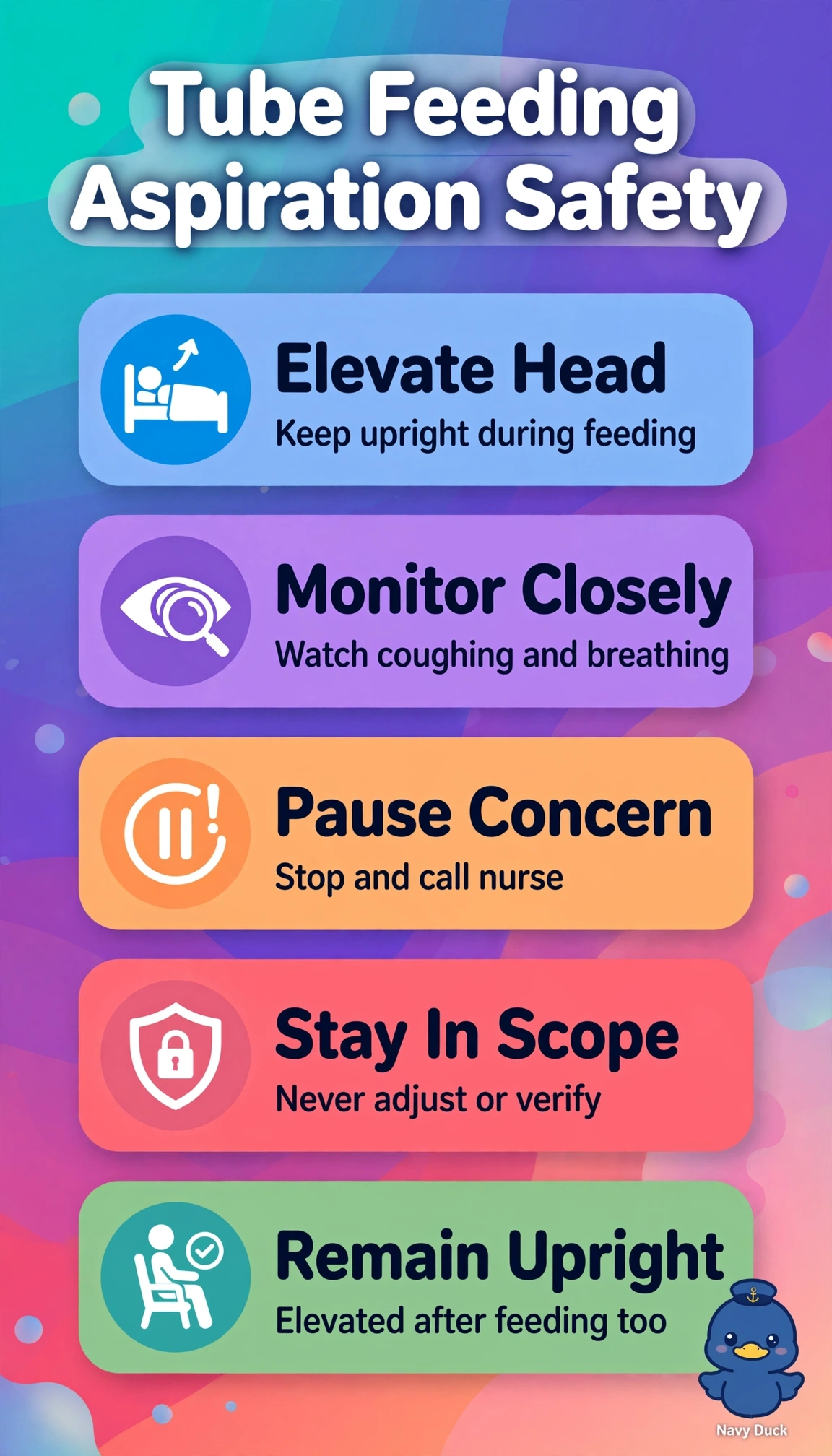
Short Explanation
You keep the airway uphill and speak up at the first cough. Elevation plus prompt reporting makes safety stick like keeping a cup upright to prevent spills.
Full Explanation
The correct action protects a high-risk patient within technician scope because sustained head elevation reduces reflux and aspiration, pausing the pump stops further formula entry when cough signals possible airway compromise in a drowsy older adult with impaired protective reflexes, and immediate reporting transfers assessment and decisions about placement, residuals, and resumption to the nurse. Continuing the feeding at the same rate while monitoring closely with suction ready fails by continuation despite a new warning sign, since vigilance and available suction do not make it safe to infuse through active coughing and the technician must not judge the cough as benign. Flushing the tube to check placement before notifying the nurse fails by scope, since patency flushing and position verification are nursing assessments with approved methods, and manipulation by support staff can instill fluid through a displaced tube and delay urgent evaluation. Resuming the feeding once coughing resolves after informing the nurse fails by authorization, because transient resolution does not prove tolerance or correct placement and restarting requires explicit nursing reassessment and direction rather than technician judgment. An exam caveat is that an earlier placement check and suction at the bedside do not authorize continuation or independent intervention, as any new cough, voice change, desaturation, or drowsiness restarts the sequence to stop and escalate. As a practical check, maintain head of bed at 30 to 45 degrees unless contraindicated, pause the pump and keep tubing closed, stay with the patient, report onset, frequency of cough, and vital signs promptly, and do not resume, flush, reposition the tube, or offer oral intake until directed.