
A PCT must collect two sets of blood cultures from an adult with new fever and chills before antibiotics start, using a butterfly and culture bottles on a medical unit. The patient has intact antecubital veins and no IV in the draw arm. Which collection method best preserves culture accuracy and prevents contamination?
Select an answer to reveal the explanation.
Short Explanation
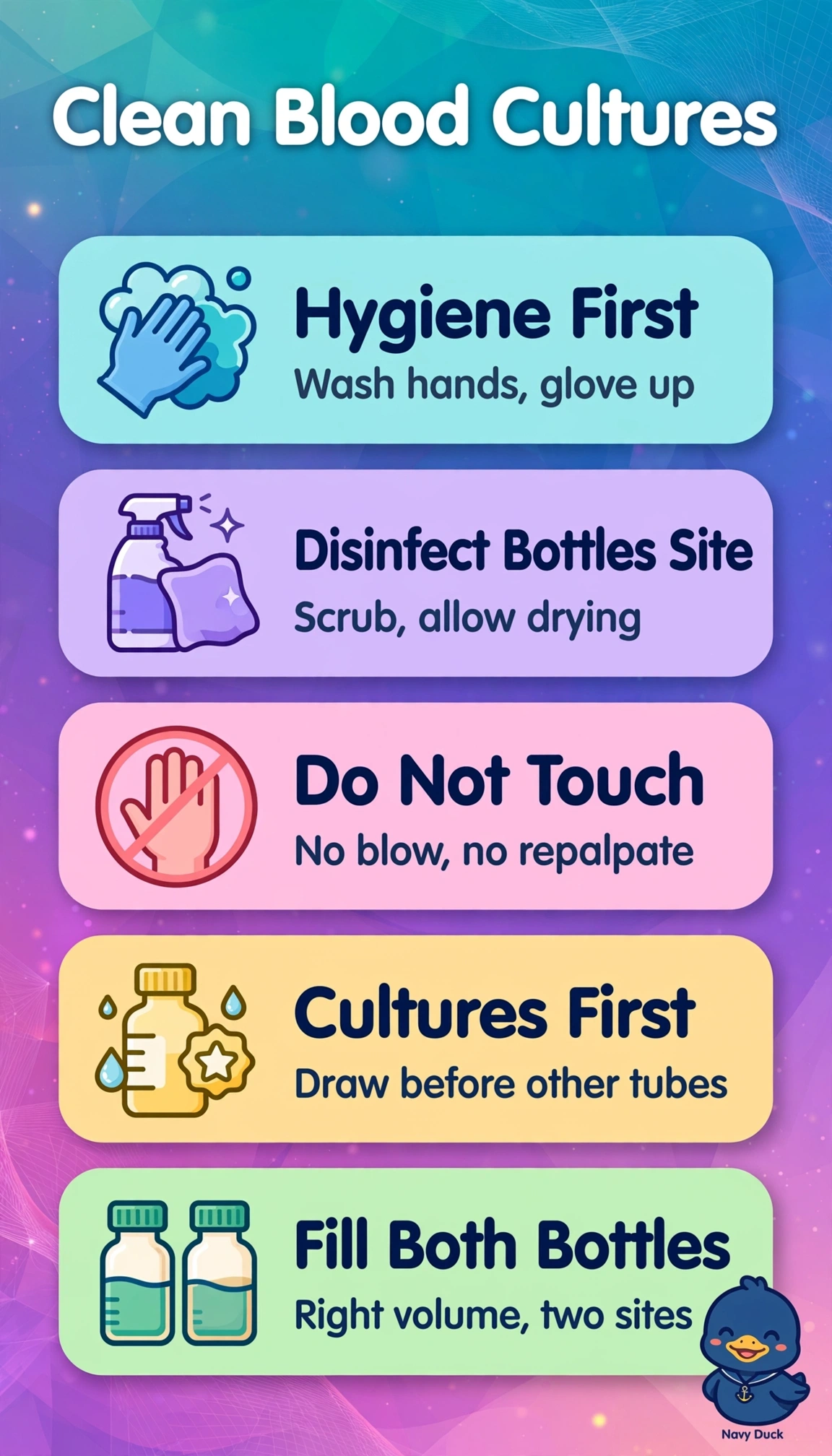
You protect culture accuracy by scrubbing carefully and letting the antiseptic dry completely. Drawing cultures before other tubes keeps the collection aseptic and helps prevent contamination.
Full Explanation
For an adult with new fever and chills, collect blood cultures before antibiotics so treatment does not reduce pathogen recovery. Hand hygiene, antiseptic disinfection of the bottle septums and venipuncture site, and complete drying help prevent skin contamination and ensure the antiseptic has time to work. Drawing cultures before other tubes preserves their priority as the most contamination-sensitive samples and avoids exposing the collection to handling of routine tubes first. Collecting two sets from one venipuncture is less suitable because separate peripheral venipunctures provide independent samples, which help distinguish true bacteremia from contamination and improve detection of intermittent bacteremia. Skipping drying time undermines disinfection; wet antiseptic may be less effective, can enter the needle and inhibit growth, and can increase false-positive results. Filling routine tubes first reverses the sterile priority and risks touch contamination or delays. An exam caveat is that collection details depend on the patient and access, but this patient has intact antecubital veins and no IV in the draw arm, supporting peripheral collection before antibiotics. A practical check is to verify visible drying, check bottle expiration dates and fill marks, label both sites with exact collection times at the bedside, and document that the cultures were obtained before antibiotics.