
At a rehabilitation facility you record morning vitals on a stable adult: temperature 99.1 F, pulse 118, respirations 22, blood pressure 88/54, and SpO2 97% on room air. The patient denies chest pain but feels lightheaded when standing. Which vital-sign finding requires immediate recognition and reporting as outside reference range?
Select an answer to reveal the explanation.
Short Explanation
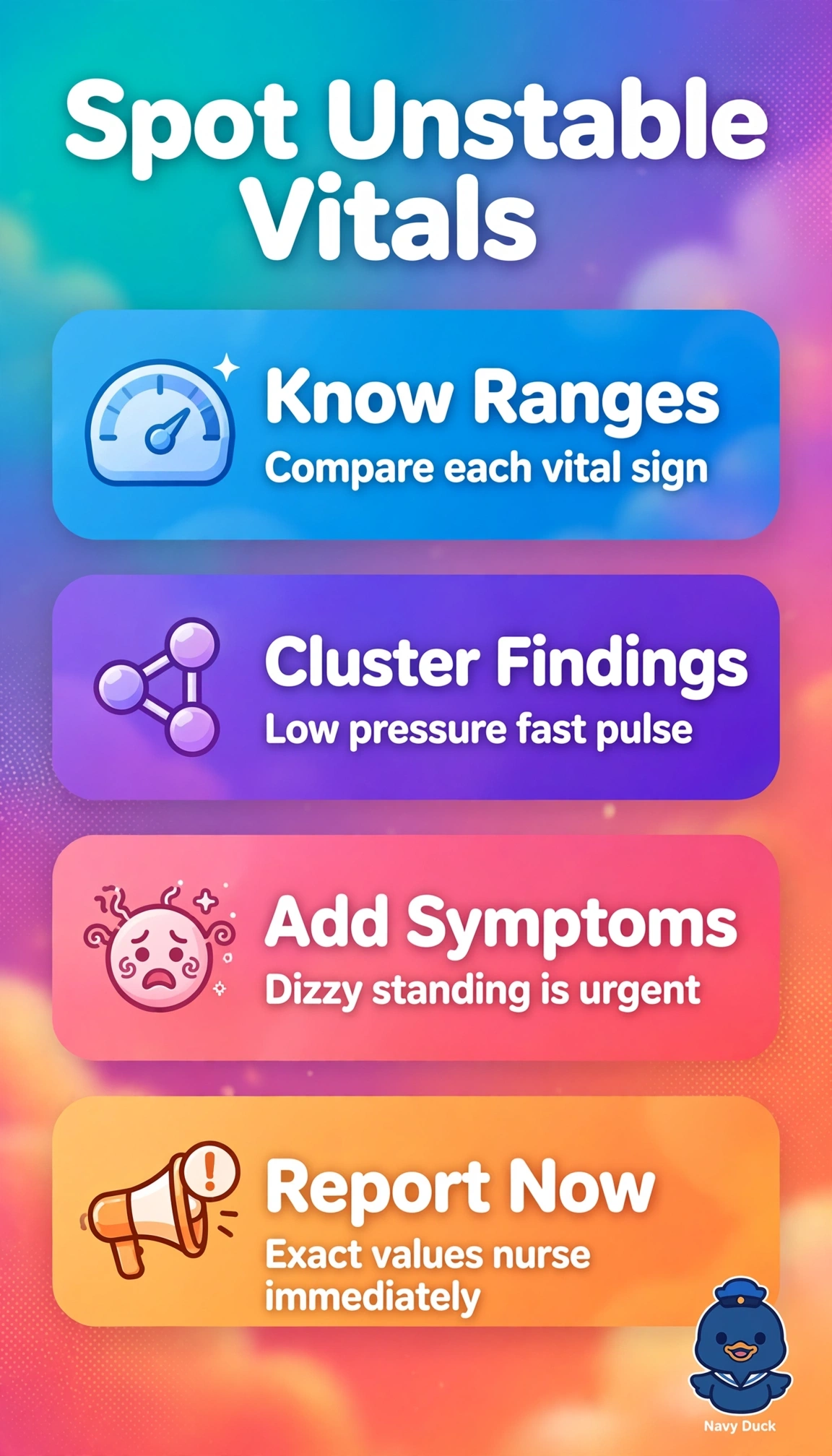
You've got one low reading that can't wait when it's paired with a racing pulse and dizziness, like a car running out of fuel while the engine revs harder. You'll want to flag that low blood pressure to your nurse right away before it leads to a fall.
Full Explanation
Immediate reporting of low blood pressure with rapid pulse and lightheadedness is required because 88/54 is below the 90/60 hypotension reference and 118 exceeds the 100 tachycardia threshold, while lightheadedness on standing indicates symptomatic orthostatic compromise from reduced perfusion or volume depletion with compensatory sympathetic tachycardia demanding urgent nurse evaluation. The temperature documentation approach fails by threshold definition because 99.1 F remains within the 97-99.5 F range and below the ~100.4 F fever threshold, so hydration and infection precautions are sound general care but misidentify a normal value as the reportable outlier. The rest-and-fluids-until-later-rounds approach fails by clustering and urgency because supine rest and oral fluids may suit isolated sinus tachycardia but are unsafe when tachycardia pairs with hypotension and orthostatic symptoms signaling compensation for low volume or perfusion failure. The record-respirations-and-proceed-with-activity approach fails by context and exertional clearance because 22 exceeds the 12-20 reference and normal 97% SpO2 on room air does not negate tachypnea with hypotension, tachycardia, and dizziness, so continuing rehabilitation risks syncope, fall, and decompensation. Exam caveat: vignettes often pair one normal distractor with secondary abnormalities to test prioritization, so map every number to its range first and select clustered symptomatic hypotension over mild tachypnea or non-fever. Practical check: remeasure BP manually with correct cuff supine then standing, recount pulse and respirations for a full minute, confirm SpO2 waveform, ask about intake, output, bleeding, diarrhea, fever, and new antihypertensive or diuretic use, keep the patient supine with fall precautions, and report promptly via structured handoff without independently prescribing fluids or activity.