
While drawing blood in a crowded outpatient lab, an anxious adult becomes pale, sweaty and dizzy, another adult develops a rapidly swelling bluish area at the puncture site, and a third reports sharp shooting pain with numbness down the arm during needle insertion. Which response to syncope, hematoma and nerve injury best protects patients?
Select an answer to reveal the explanation.
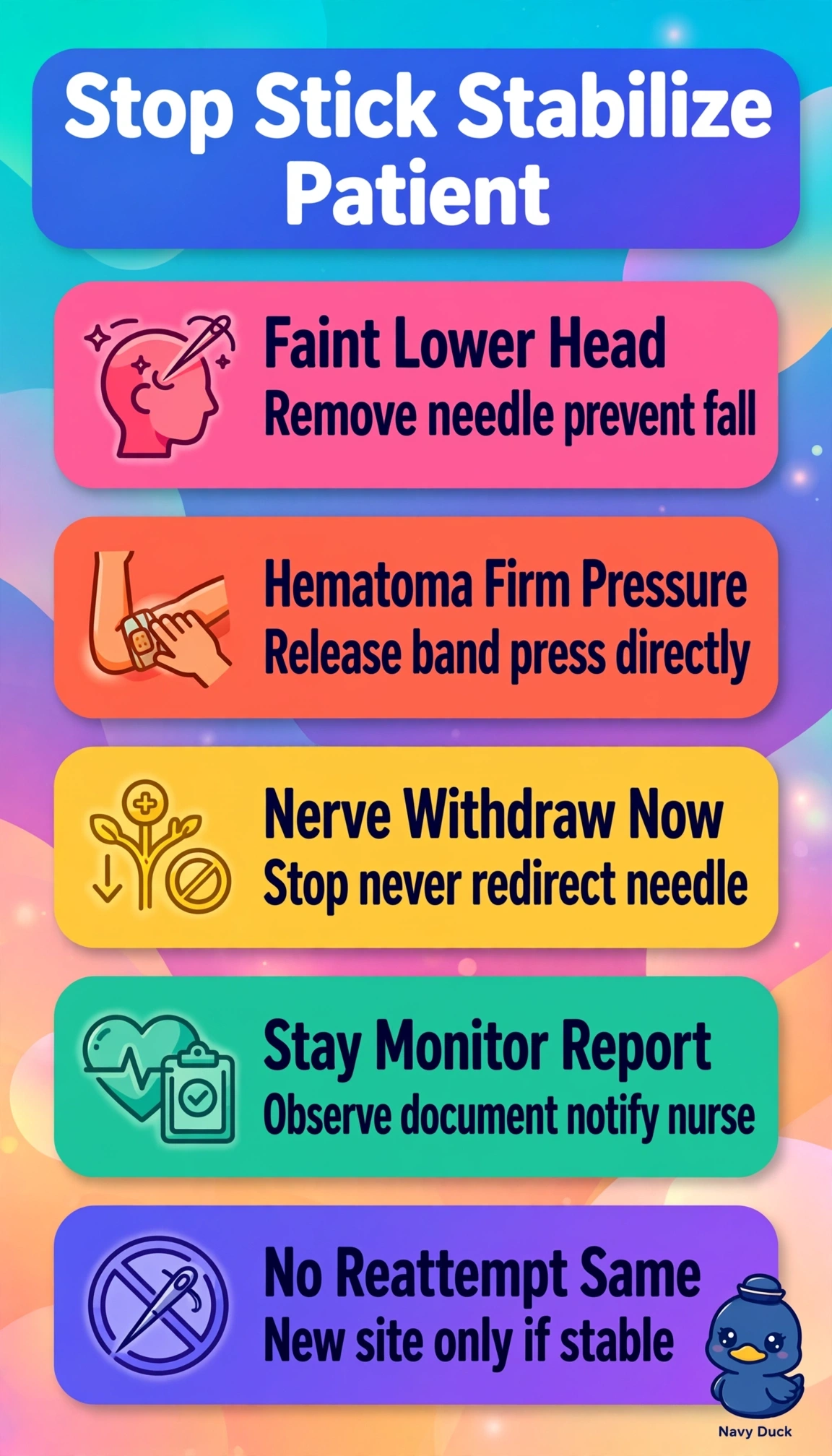
Short Explanation
Blood draws can go sideways fast, and your calm reflexes matter most. Stopping the stick and applying pressure turns a scary moment into safe care.
Full Explanation
The correct response aligns each action with its pathophysiology: lowering the head while removing the needle restores cerebral perfusion and aborts vagal syncope while preventing fall injury from a pale sweaty dizzy patient, releasing tourniquet pressure to remove venous congestion plus firm direct pressure tamponades the vessel defect to arrest hematoma expansion, and immediate full withdrawal removes mechanical irritation when sharp shooting pain with numbness signals nerve contact. The upright reassurance variant fails syncope management because keeping the patient seated upright impedes cerebral flow and risks fainting and falls despite appropriate hematoma and nerve care. The light-pressure variant fails hemostasis because gentle pressure for comfort cannot compress the leaking vein adequately so the rapidly swelling bluish area continues to enlarge despite correctly releasing venous pressure and correctly handling syncope and nerve symptoms. The slight-redirection variant fails nerve safety because steering or advancing the needle while it provokes electric pain prolongs contact and risks lasting injury, whereas the standard requires complete withdrawal without probing despite correct syncope and hematoma care. An exam caveat is to distinguish classic descriptors rather than applying one generic response, since pallor diaphoresis dizziness means presyncope, rapid bluish swelling means active bleeding, and radiating electric pain numbness means nerve involvement. A practical check is to verify tourniquet release, maintain firm pressure with observation, keep the patient supine until recovered, avoid reusing the injured site and document persistent deficits.