
A night-shift technician on a 30-bed medical unit hears the fire alarm, smells smoke near the linen room, and sees staff moving a crash cart and oxygen tanks through the smoke-filled corridor while visitors crowd the exits. The charge nurse calls for evacuation assistance. Which response to fire, biological hazard and disaster events should the technician prioritize?
Select an answer to reveal the explanation.
Short Explanation
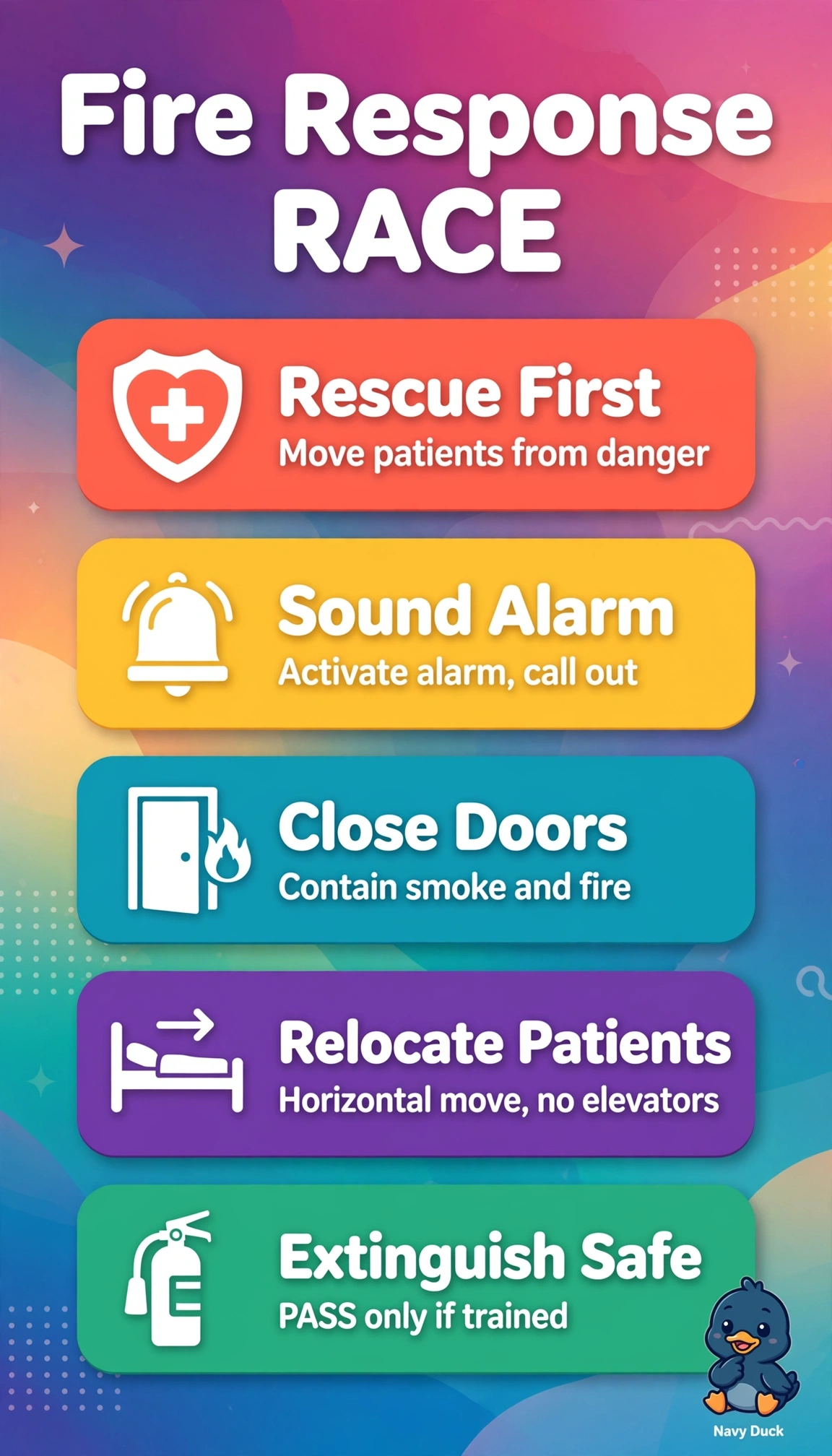
You're the calm in the chaos here, so your rescue-first move is to alert your team and get patients out of danger, then shut doors to hold back smoke like closing a kitchen door on burnt toast. Don't play hero with carts or tanks — just slide folks sideways away from the fire where they can breathe easy.
Full Explanation
The correct response follows the RACE priority of rescue and alarm first, then contain and relocate away from danger, which directly matches a night fire with smoke near the linen room, visitors blocking exits, and unsafe movement of oxygen tanks and a crash cart through smoke. Alerting staff activates help and communication, rescuing patients removes those unable to protect themselves, closing doors limits smoke and fire spread to buy time for horizontal evacuation, and moving patients away from the fire area avoids leading people or equipment through smoke. Attempting to control the linen room fire with an extinguisher before moving patients reverses that sequence by prioritizing extinguishment over life safety and containment, and it places the technician in smoke before rescue is completed. Clearing the corridor by moving the crash cart and oxygen tanks through smoke addresses orderliness but violates oxygen safety because heat, fuel, and smoke greatly increase combustion and explosion risk while continued traffic keeps doors open and spreads smoke. Reporting for assignment and redirecting visitors to stairwells supports incident command and crowd control but delays the immediate rescue and containment actions that only staff at the scene can perform in the first minute. For exams, when fire, smoke, oxygen, and evacuation cues appear together, choose rescue, alarm, close doors, and horizontal relocation before extinguishing, equipment moves, or visitor management. At the bedside, quickly verify corridor and patient room doors are closed, oxygen remains secured away from smoke rather than carried through it, and stairwell doors close fully after visitors pass.