
In a 16-bed stroke recovery unit, you are assigned morning exercises for an adult with left-arm weakness who can move with some help, a fully alert adult needing joint flexibility maintenance, and a post-operative adult with a provider-ordered shoulder motion limit. Which passive, active and assistive range-of-motion approach meets each need?
Select an answer to reveal the explanation.
Short Explanation
You'll keep your patients moving safely when you tailor the effort to their strength. You're like a spotter at the gym — giving a lift to weak arms, letting strong joints work solo, and honoring surgical limits to protect recovery.
Full Explanation
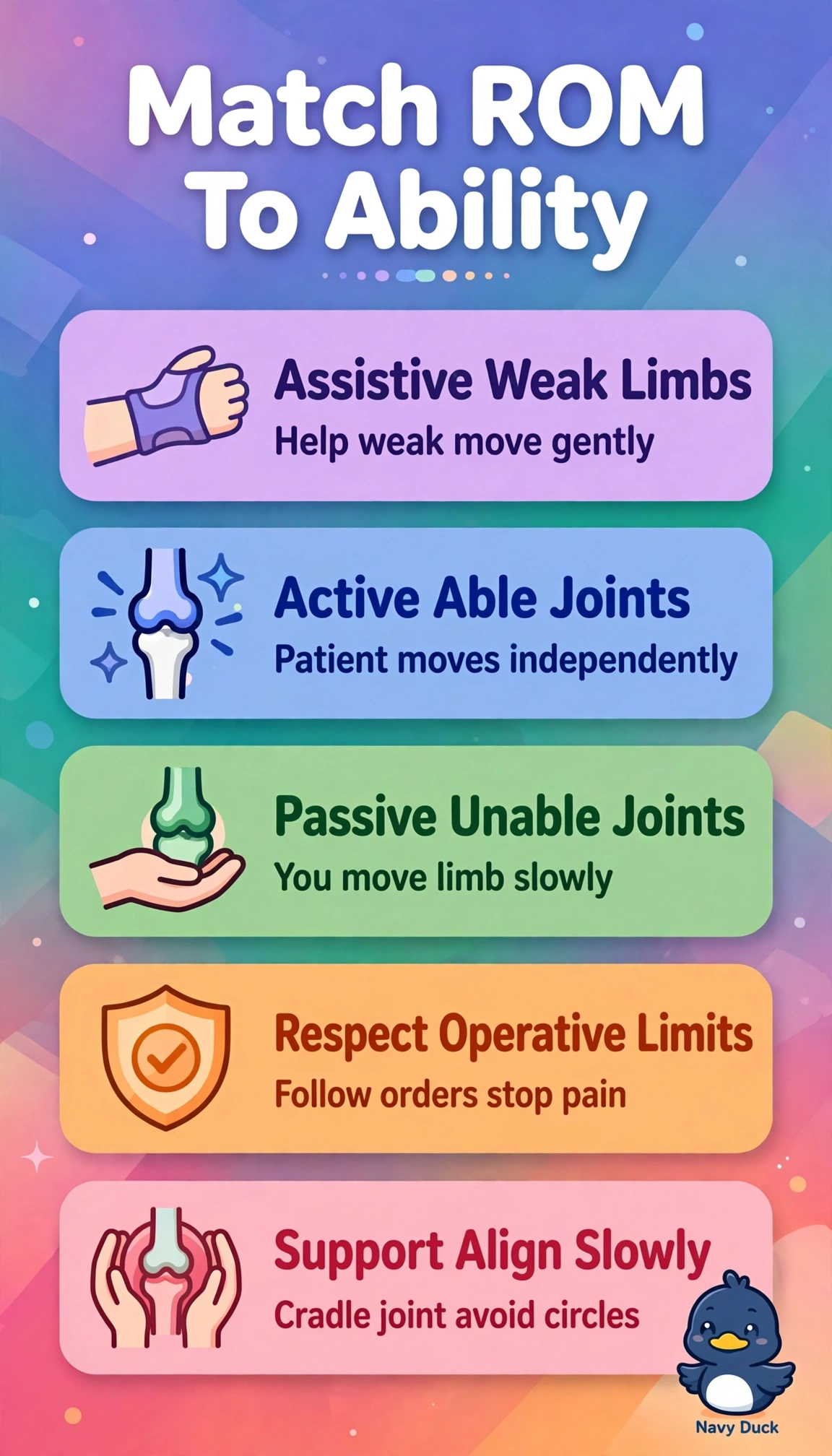
The correct approach aligns each ROM type to ability and safety: active-assistive support lets the weak left arm contribute effort while the nurse guides completion to preserve strength and prevent disuse, active voluntary movement maintains flexibility and muscle tone in the fully alert patient without creating dependence, and strict adherence to provider-ordered limits protects healing tissues in the post-operative shoulder from disruption or bleeding. The routine proposing standard full shoulder motion for quick recovery fails on surgical precaution concept because post-operative rehabilitation must remain within prescribed arcs even when full motion seems beneficial for flexibility. The routine proposing passive motion only for the weak arm fails on participation concept because a patient who can move with some help needs encouragement to contract muscles rather than total substitution, which would slow motor recovery. The strategy proposing passive motion for flexible joints fails on independence concept because alert capable joints benefit most from active exercise that sustains endurance and coordination. Exam caveat is to read functional cues carefully, distinguishing can move with help indicating active-assistive from unable to move indicating passive, and to treat ordered limit as absolute. Practical check is to review the operative orders and pain response before touching the surgical shoulder, support the weak limb proximally and distally, cue and observe active effort, and stop and report increased pain, swelling, or resistance.