
A technician is assigned an occupied bed change and bath for an adult recovering from a fall who can roll with help, has an IV line, and worries about exposure and feeling cold. The side rail, gown, and fresh linen are available. Which occupied-bed and bathing practice best maintains hygiene, warmth, and safety?
Select an answer to reveal the explanation.
Short Explanation
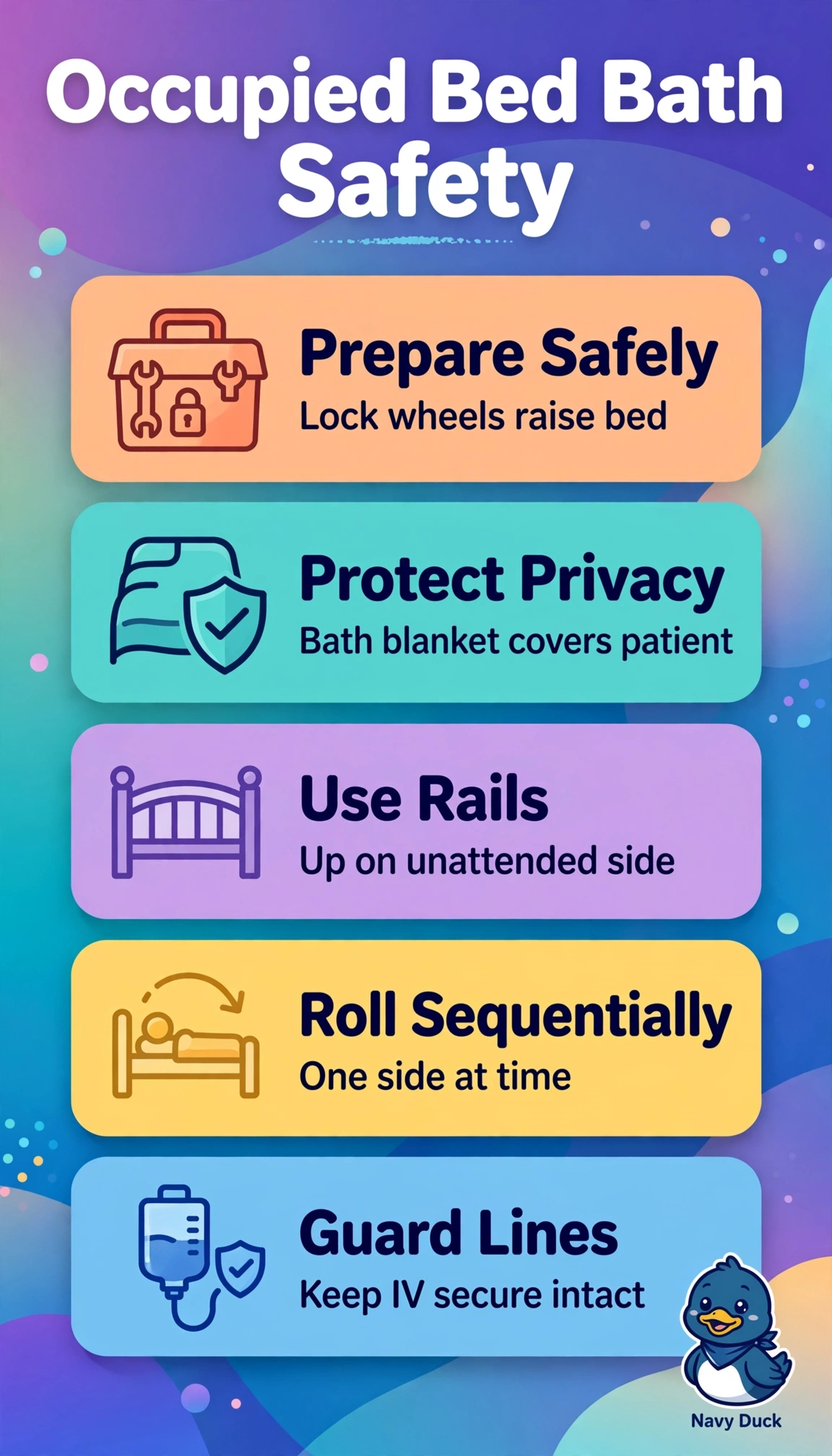
You keep comfort and safety moving together, one side at a time. Working at waist height with coverage protects privacy like changing behind a curtain never in the open.
Full Explanation
The correct practice covers all goals because a raised bed aids mechanics and hygiene visibility, side rails protect a client who rolls with help, blanket coverage exposes only one area to limit cold and exposure, and changing one side at a time keeps support and keeps IV tubing slack, visible, and dry. The chair transfer practice is appropriate for stable clients needing an unoccupied change, but it fails safety here because moving an adult recovering from a fall out of bed contradicts the occupied assignment and assisted-rolling ability. The floor-level practice is appropriate for resting fall precautions, but it fails ergonomics and hygiene here because bathing and rolling at low height increase strain and contamination risk instead of providing working height. The gown-only practice is appropriate for modesty after bathing, but it fails warmth and dignity here because a gown alone without a blanket leaves gaps and chilling during a prolonged bath for a client worried about exposure and cold. An exam caveat is to prioritize stem cues over generally correct methods by matching occupied status, rolling ability, IV presence, and warmth concerns. A practical check is to lock wheels, keep the far rail up, preserve blanket coverage, secure IV slack and dry connections, and confirm warmth, coverage, and call access before and after each turn.