
A PCT is assigned morning vitals for a fearful 3-year-old with a respiratory infection, a 78-year-old with stiff arteries and hearing loss, and a postoperative adult with an arm IV and mastectomy. Equipment includes multiple cuff sizes, a temporal thermometer, and a pulse oximeter. Which vital-sign adaptation best fits pediatric, geriatric, and special-population needs?
Select an answer to reveal the explanation.
Short Explanation
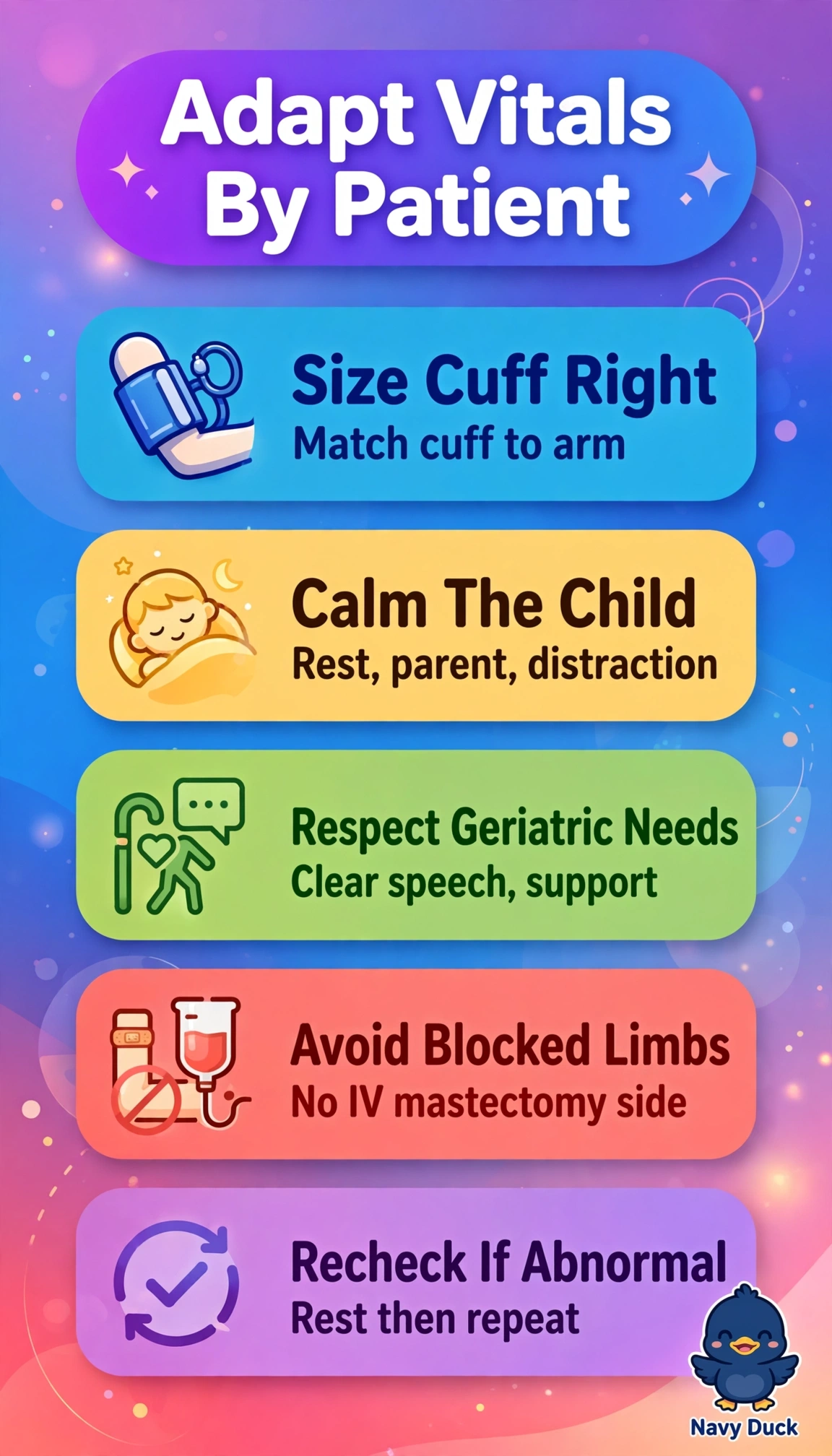
You'll get truer readings when you match the cuff to the arm, keep things calm for little ones, and steer clear of IV or surgery sides. That's like using the right shoe size — your technique has to fit each person, not the other way around.
Full Explanation
The correct adaptation integrates pediatric, geriatric, and special-population principles by matching cuff bladder size to arm circumference for accuracy, using calm distraction and noninvasive temporal measurement to lower fear-related elevations in a preschooler with respiratory infection, using clear face-to-face communication and controlled technique for an elder with hearing loss and stiff arteries, and rerouting blood pressure away from infusion and mastectomy limbs to protect therapy and tissue. The rapid-deflation variation fails on geriatric auscultatory concept because stiff, noncompliant arteries require slow release at about 2 to 3 mmHg per second to distinguish Korotkoff phases, while hurried deflation blurs sounds and distorts systolic and diastolic values despite correct cuffs and communication. The oral-thermometry variation fails on pediatric developmental fit because a fearful 3-year-old with respiratory infection often mouth-breathes, coughs, and cannot cooperate with lip seal, making calm temporal scanning safer and more reliable. The affected-arm variation fails on site-safety concept because even careful inflation over an intravenous line or mastectomy side can interrupt flow, promote infiltration or infection, compress healing tissue, and raise lymphedema risk, so the unaffected arm or leg must be used. An exam caveat is that plausible distractors preserve almost all correct care and alter only deflation speed, thermometer route, or measurement limb, so every final clause must be weighed. A practical check is to verify cuff width near 40 percent of arm circumference, face the elder at eye level, confirm written limb restrictions, and document alternate site and tolerance.