
During night shift on telemetry, a high-pitched alarm signals possible ventricular tachycardia for a patient assigned to your observation. The monitor shows a wild tracing, the patient room is quiet, and the nurse is down the hall. Which telemetry response best addresses the alert and alarm safely?
Select an answer to reveal the explanation.
Short Explanation
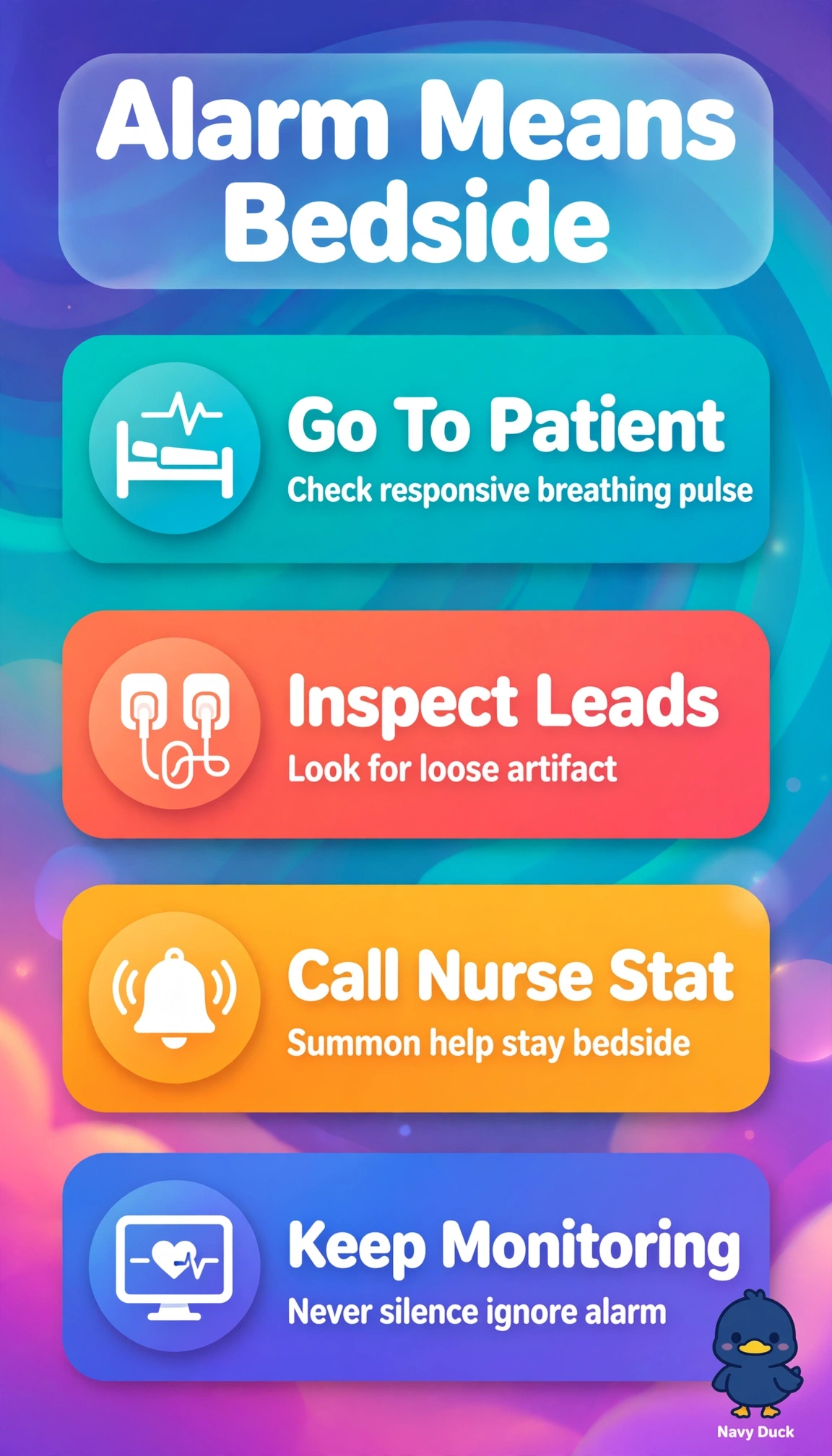
A high-pitched alarm brings you to the bedside, not just to the monitor. Checking the patient first tells you quickly whether the tracing signals real danger, while checking the leads and summoning the nurse support a safe response.
Full Explanation
Quickly assessing responsiveness and breathing, checking the leads, and summoning the nurse immediately is safest because a possible ventricular tachycardia alarm and wild tracing cannot distinguish a pulseless emergency, a perfusing rhythm, or motion artifact without bedside assessment. Responsiveness and breathing help establish the patient’s immediate status; lead inspection can identify artifact; and prompt notification brings the nurse’s expertise and emergency resources without delay. Checking lead connections for artifact and alerting the nurse is useful for troubleshooting and escalation, but it omits the essential first assessment of consciousness and breathing. Assessing responsiveness and breathing and immediately bringing the nurse is appropriately urgent, but without checking the leads, artifact may go unrecognized and the monitoring signal may remain unreliable. Assessing the patient, repositioning leads, and briefly rechecking the tracing addresses the patient-monitor connection, but waiting to summon the nurse delays escalation for a potentially life-threatening rhythm. An exam caveat: a quiet room does not mean the patient is simply asleep; cardiac arrest can be silent. A practical check is to call the patient’s name, observe chest rise, assess breathing and pulse, inspect electrode contact while keeping the tracing in view, and call out for the nurse immediately.