
While providing morning care in a long-term care facility for a withdrawn older adult with unexplained bruises on the upper arms, poor hygiene, and a fearful reaction to a family caregiver, plus conflicting explanations for injuries, which mandated reporting action best addresses suspected abuse and neglect?
Select an answer to reveal the explanation.
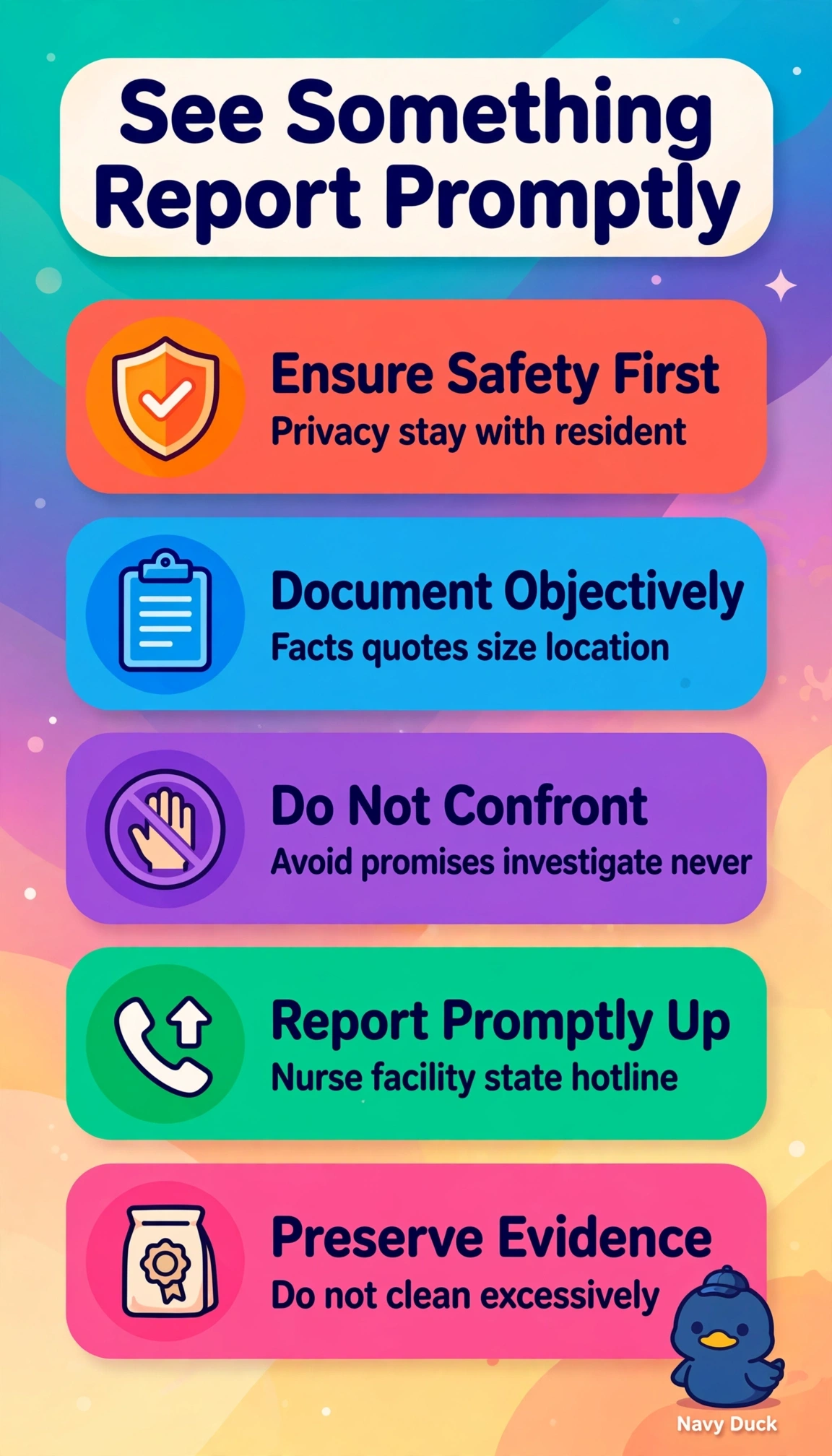
Short Explanation
You’re right to take these signs seriously, even when the explanations conflict. Objective notes and prompt reporting help protect your resident while the appropriate team responds.
Full Explanation
The correct response meets mandated duties for suspected elder abuse and neglect: ensure the resident’s immediate safety and privacy, record observable facts such as bruise size, color and location, hygiene, behavior, and exact conflicting statements without interpretation, and promptly notify the nurse and proper authorities. Suspicion alone triggers reporting; you do not need proof before acting. Providing privacy and comfort, documenting accurately, and asking the charge nurse to monitor may support good care, but internal monitoring alone does not fulfill prompt reporting to authorities. Completing a focused assessment and reporting to the nurse and authorities addresses notification, but further data gathering must not take priority over immediate safety and protection from possible harm. Ensuring safety, reporting promptly, and offering emotional support are valuable, but without objective documentation, important information for investigation and accountability is missing. On exams, remember that consent, family clarification, or certainty does not override prompt reporting. In practice, check that safety is secured, facts are charted without judgment, and both the nurse and proper authorities have been notified promptly.