
A PCT in a hospital laundry and patient-care area notices an overflowing sharps container, a wet floor with no sign, and then slips without injury while carrying linens. The supervisor asks what to do next per workplace safety rules. Which action best follows OSHA, NIOSH, and CDC safety expectations and incident reporting?
Select an answer to reveal the explanation.
Short Explanation
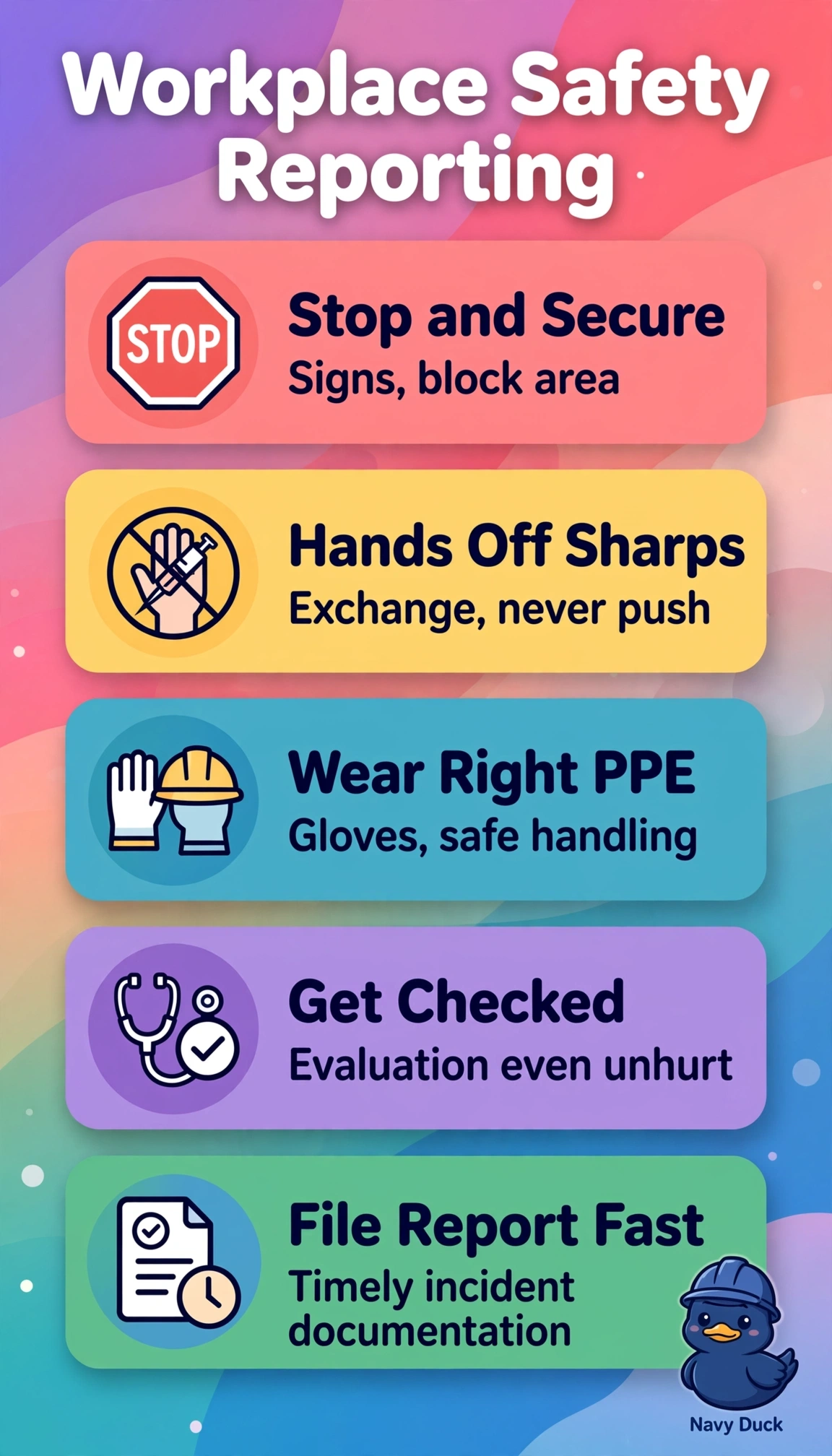
Even when you are unhurt, a near-miss is a chance to protect yourself and the next person. Secure the hazards, use the required precautions, seek evaluation, and file a timely incident report so safety concerns are addressed.
Full Explanation
The action that secures the hazards, uses required PPE and signage, seeks evaluation, and files a timely work-related incident report integrates OSHA, NIOSH, and CDC expectations for hazard control, exposure prevention, and surveillance. Secure and exchange an overflowing sharps container without compressing its contents; barricade and mark the wet floor until it is dry; and use appropriate PPE and hand hygiene when handling linens and sharps under standard precautions. Prompt evaluation and same-shift written reporting matter even when no injury is apparent, supporting treatment, baseline documentation, and hazard correction. Securing the sharps and posting a wet-floor sign but waiting until next month to report fails on timeliness: delay can weaken factual accuracy, postpone corrective action, and undermine facility reporting and tracking. Securing the area, exchanging the full container, and reporting promptly but skipping evaluation because you feel unhurt fails on medical surveillance; pain may be delayed, and assessment can address strain or possible contamination. Reporting and seeking evaluation but securing hazards without PPE or signage fails on exposure control and hazard communication, leaving you and others at risk despite appropriate follow-up. Exam caveat: routine cleaning does not justify compressing sharps, using trash bags for them, or mopping without warnings; no apparent injury does not mean no reportable incident. Practical check: stop work, secure and mark the area using PPE, notify supervision and employee health, and confirm the container is exchanged, the floor is dry, and the report is complete before resuming duties.