
A clinic technician must collect fasting glucose and blood cultures from a 62-year-old outpatient who reports taking morning insulin, using a rolling phlebotomy tray shared by several rooms in a warm storage area. The requisitions list tube types and priority order. Which verification of equipment, tubes, expiration dates and patient testing requirements should the technician perform before venipuncture?
Select an answer to reveal the explanation.
Short Explanation
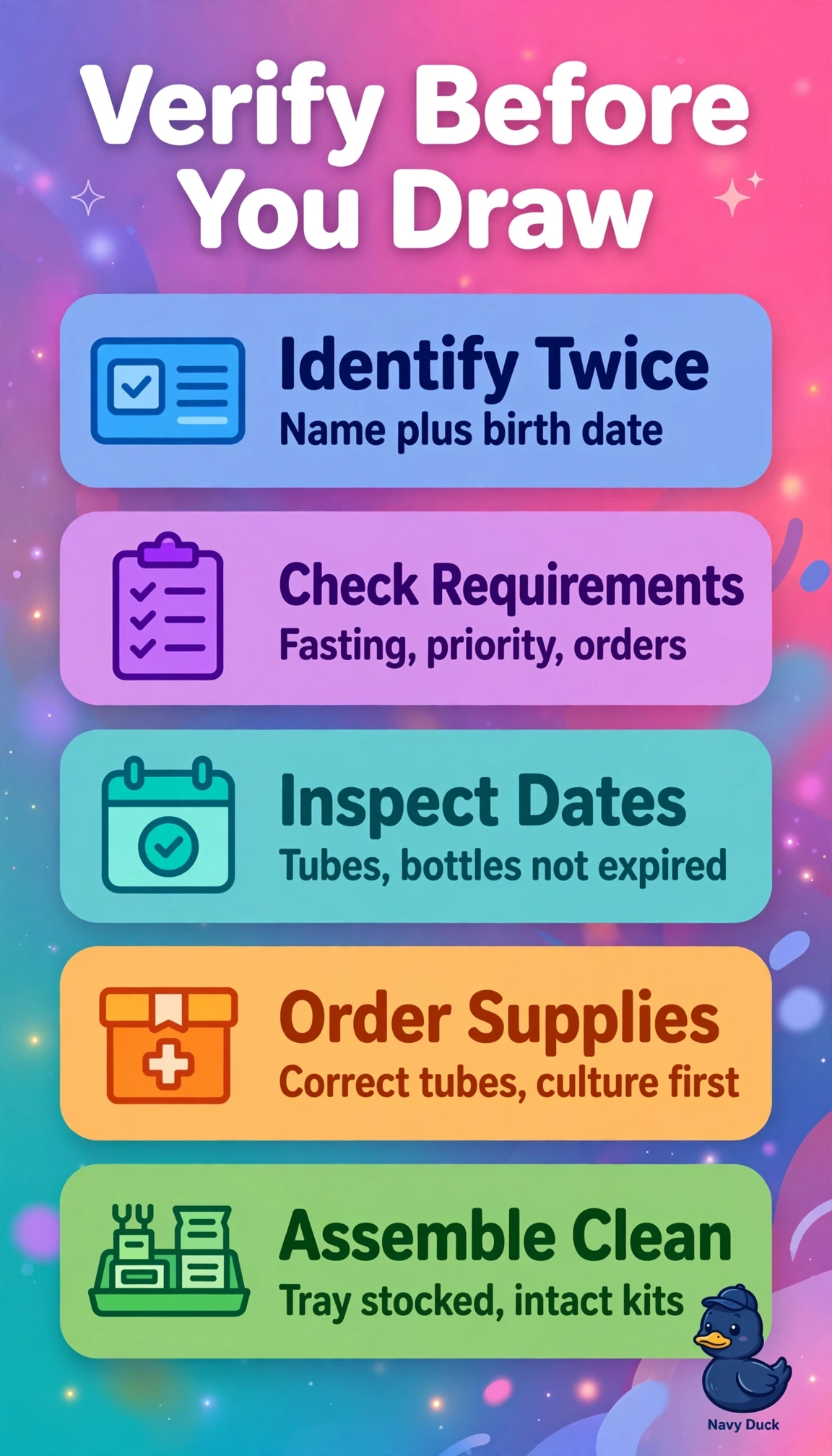
You can prevent a recollect by confirming two identifiers and fasting status, checking tube and culture-bottle expirations, and setting out supplies in the requisition’s draw order. With a shared tray stored warm, checking each item before the stick is a simple safety step that helps protect your glucose and culture results.
Full Explanation
The verification that checks two identifiers and fasting status, inspects tube expirations and culture bottles, and assembles supplies in the requisition’s draw order is right because it addresses the stated pre-venipuncture requirements together. Fasting status matters for glucose interpretation, and the reported morning insulin use is relevant to interpreting the result and recognizing hypoglycemia risk. Inspecting expirations and bottle integrity is especially important when stock is shared and stored in a warm area; arranging supplies in the specified order supports proper collection, including sterile cultures before other tubes when that is the prescribed order. The approach that verifies fasting, identifiers, and expirations but uses standard order fails because it does not follow the requisition’s priority, risking contamination of cultures and false results. The approach that checks identifiers, expirations, bottles, and order but omits fasting status fails because a non-fasting glucose could be misinterpreted and the patient’s insulin use may affect glucose and symptoms. The approach that checks identifiers, fasting status, and order but skips expiration checks fails because shared stock may have compromised vacuum, deteriorated additives, or failed culture medium; heat can accelerate these problems. An exam caveat is that a routine that misses even one stated requirement remains incomplete, even if the other checks are sound. A practical check is to read the requisitions at the bedside, confirm two identifiers and last food and insulin times with the patient, inspect expiration dates and bottle seals, then lay out supplies in the prescribed order after hand hygiene and tray decontamination.