
A PCT monitoring telemetry on a medical unit sees a sudden change on the bedside monitor: a rapid wide-complex rhythm at 180 beats per minute with no clear P waves in a patient who is pale and unresponsive, and the alarm is sounding. Which rhythm recognition and response best addresses this potentially life-threatening ventricular arrhythmia?
Select an answer to reveal the explanation.
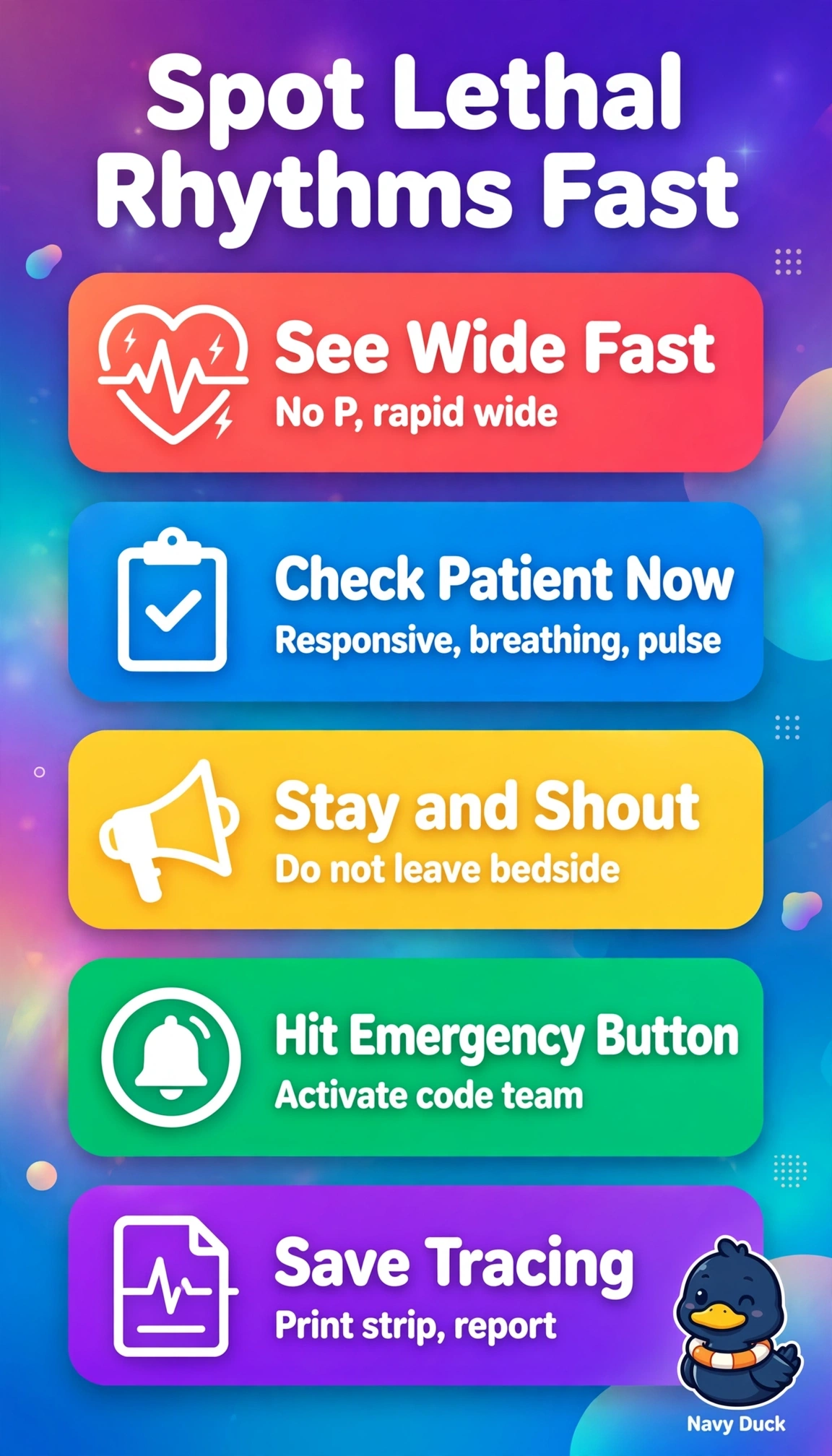
Short Explanation
A rapid wide rhythm with pallor and unresponsiveness means you act now, not later. Stay with the patient and activate emergency help—your quick recognition can make a real difference.
Full Explanation
A sudden rapid wide-complex rhythm without clear P waves, together with pallor and unresponsiveness, indicates a potentially unstable ventricular arrhythmia, most likely ventricular tachycardia or fibrillation. You should stay with the patient and activate the emergency response immediately so the team can provide defibrillation and advanced support. Verifying electrode contact, repositioning leads, printing a strip, and then notifying the nurse fails on priority: troubleshooting may help when a stable patient’s tracing suggests artifact, but here it delays response to clear signs of collapse. Recognizing supraventricular tachycardia with aberrancy and activating help fails on rhythm interpretation; the wide-complex rhythm and unresponsiveness require you to treat a ventricular cause as likely rather than assume a supraventricular one. Obtaining full vital signs before calling fails because pallor and unresponsiveness already indicate instability, while measurements may be unobtainable or misleading during a severe ventricular rhythm. An exam caveat: stable tachycardia may allow further assessment, but an unresponsive patient is not stable, and immediate action matters more than distinguishing the exact ventricular rhythm. Practically, stay at the bedside, keep the patient and monitor in view, call out or activate the code alarm, reassess responsiveness and breathing, and have the team bring the crash cart and defibrillator; do not leave to troubleshoot or document.