
During morning rounds in a 40-bed hospital unit, you sustain a needlestick from a used needle while recapping, with blood splashing near your eye, and you are unsure of the source patient’s infection status. Which exposure control plan action should you take first after occupational exposure?
Select an answer to reveal the explanation.
Short Explanation
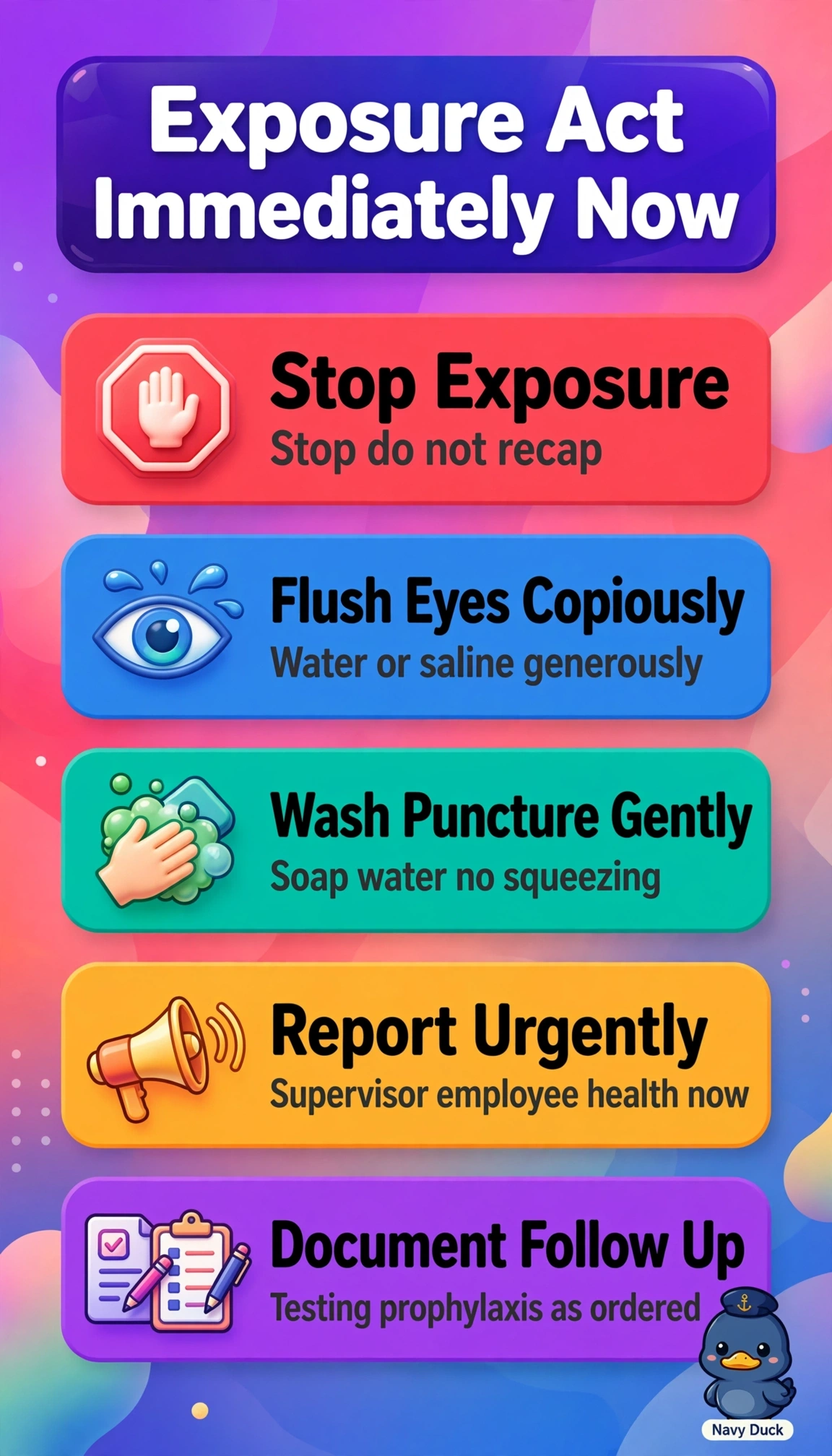
You’ll want to stop care and deal with both exposure routes right away. Flush your eye with water, wash the puncture with soap and water, and report promptly for evaluation.
Full Explanation
The correct action is to stop care, flush the eye with water, wash the puncture with soap and water, and report immediately for medical evaluation. A needlestick and possible blood splash near the eye from a source with unknown infection status require prompt decontamination and urgent follow-up; reporting triggers source testing, baseline serology, and time-sensitive prophylaxis decisions under the exposure control plan. Washing the puncture, identifying the source patient, and reporting promptly is incomplete because it omits flushing the eye, even when contact is not confirmed. Flushing the eye and washing the puncture but confirming the source patient’s infection status before reporting is incorrectly sequenced: evaluation cannot wait for chart review or laboratory results when prophylaxis may be time sensitive. Stopping care, performing both washing steps, and attending immediate retraining on safe sharps disposal instead of medical evaluation confuses prevention with treatment; retraining does not address the current infection risk or replace clinical follow-up. Exam caveat: when asked what to do first after an exposure with unknown source status, prioritize personal decontamination and reporting over investigation, documentation, or finishing rounds. Practical check: locate the eyewash station, sink, and occupational health reporting number at shift start, and activate eye and wound protocols together rather than addressing only one exposure route.