
On a busy telemetry unit you are asked to collect a routine venous sample for morning labs from a drowsy older adult in a shared room. The bedside chart, wristband, and breakfast tray all show slightly different first names. Which identification method correctly applies two patient identifiers before specimen collection?
Select an answer to reveal the explanation.
Short Explanation
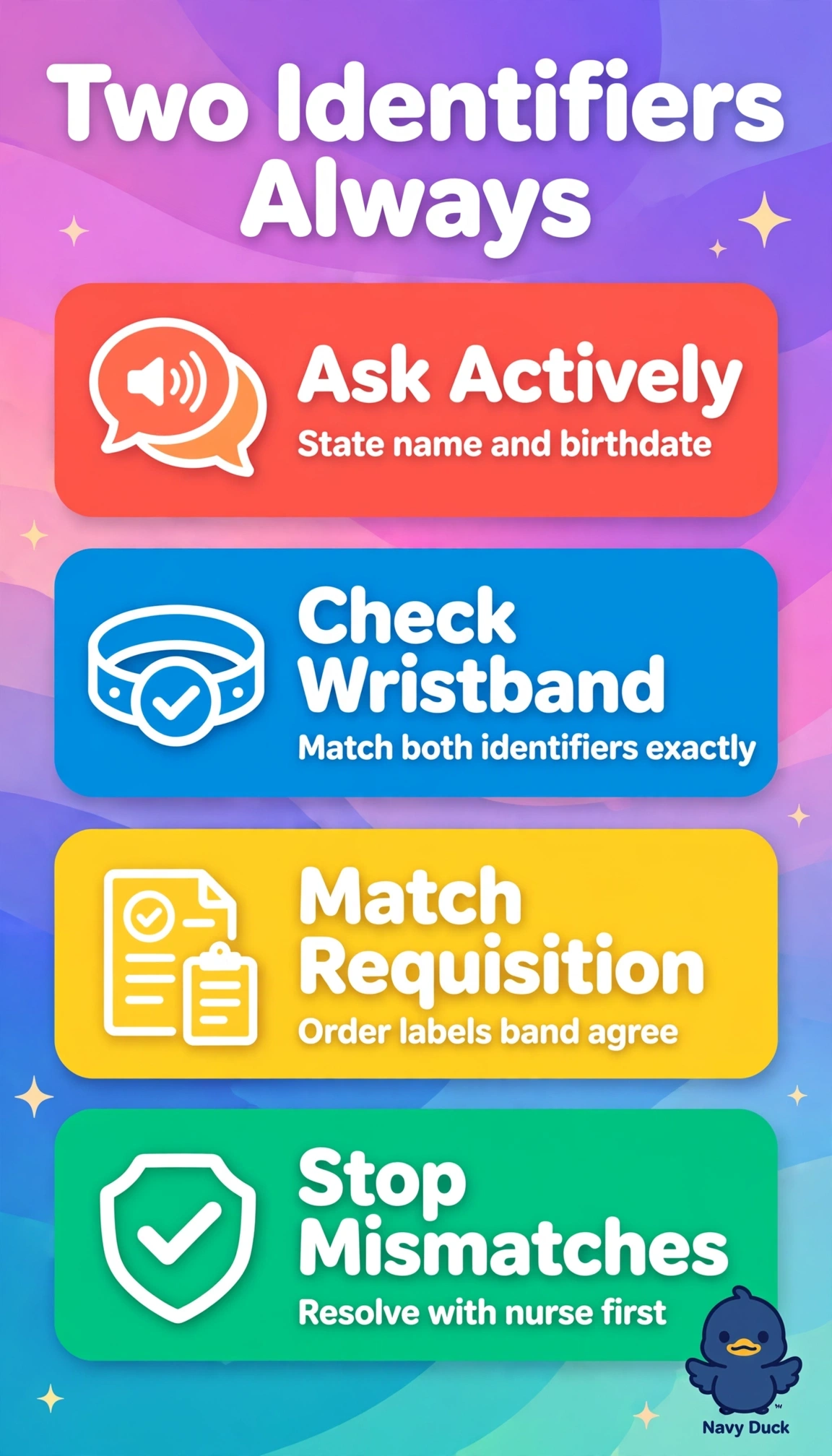
Names can differ between the bedside chart, wristband, and breakfast tray, so you need identifiers tied to the person. Have the patient state their full name and birth date, then match both to the wristband and requisition; those identifiers help keep the tube with the right patient.
Full Explanation
The safe method has the patient state their full name and birth date, then matches both identifiers to the wristband and requisition before collection. Asking the patient directly avoids prompting, while checking the band and requisition confirms that the person, identification band, and lab order agree despite the conflicting names in the room. Full name and room number do not provide two valid identifiers because a room is a location, not a person-specific identifier, and can change. Checking full name and birth date against the bedside chart and breakfast tray uses sources that are not the wristband and requisition; the differing names here also show why those sources cannot resolve identity reliably. Matching the wristband to the requisition without asking the patient to state the identifiers omits active identification and may not reveal an incorrect band or order. Exam caveat: a location or a different document may look like a useful second check, but it does not replace the required person-specific identifiers verified against the wristband and requisition. Practical check: pause, ask the patient to state their full name and birth date, compare both with the wristband and requisition, resolve any mismatch with the nurse before drawing, and label the specimen at the bedside.