
In a rehabilitation gym, a 68-year-old with left knee arthritis is learning a single-point cane, bears weight on the right leg, holds the cane in the left hand, and leans heavily over the cane for balance on a dry level floor. Which cane-ambulation sequence should the PCT reinforce to ensure safe cane-assisted walking?
Select an answer to reveal the explanation.
Short Explanation
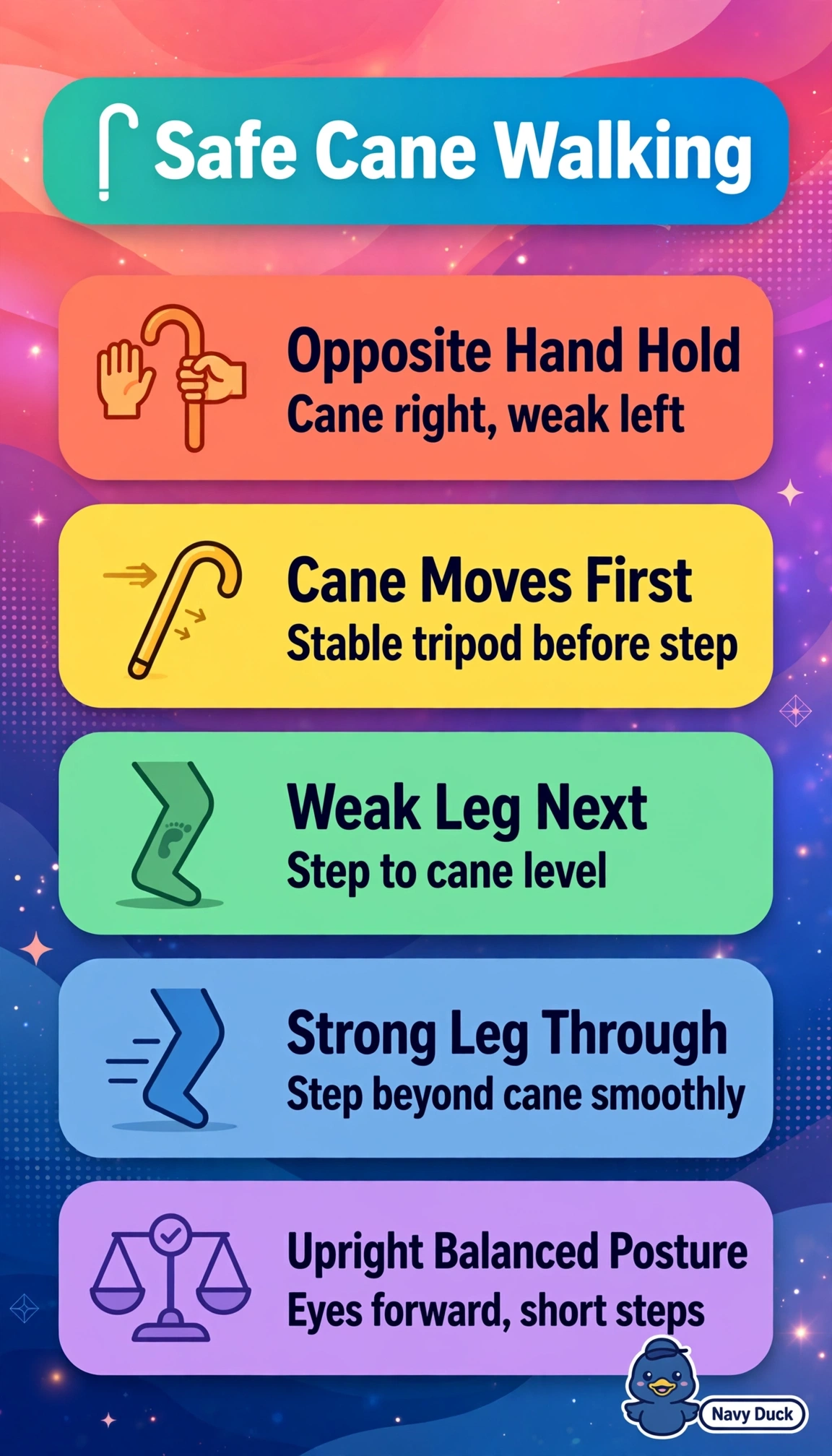
Good coaching keeps the cane as a steady partner, not a crutch to lean on. Opposite-hand placement widens your base so weight shifts smoothly and the sore knee gets real relief.
Full Explanation
The correct sequence uses contralateral placement and a cane, affected leg, unaffected leg rhythm because holding the cane opposite the weak left knee widens the base of support and allows partial unloading during left stance, advancing the cane first provides a stable tripod before weight transfer. Holding the cane on the same side as the weak knee violates the contralateral support concept by narrowing support over the painful joint and increasing lateral lean even though the step sequence is otherwise correct. Advancing the strong leg with the cane together and dragging the weak leg violates the coordinated sequencing concept by removing forward support during swing and overloading the arthritic knee despite correct hand placement. Placing the cane far ahead and jumping both feet violates the stable gait pattern and fall prevention concept by creating an excessive reach and loss of three-point contact despite correct hand placement. Exam caveat is to verify cane height at wrist crease, rubber tip intact and non-slip footwear, and practical check is to stand on the unaffected side, cue upright posture, short steps and turns toward the strong side.