
A nurse delegates a prescribed warm compress to a technician for an adult with a sore calf, requiring checking orders, skin condition, temperature safety, and time limits. The patient has intact but sensitive skin, can report discomfort, and call light is in reach. Which application best demonstrates safe hot therapy practice?
Select an answer to reveal the explanation.
Short Explanation
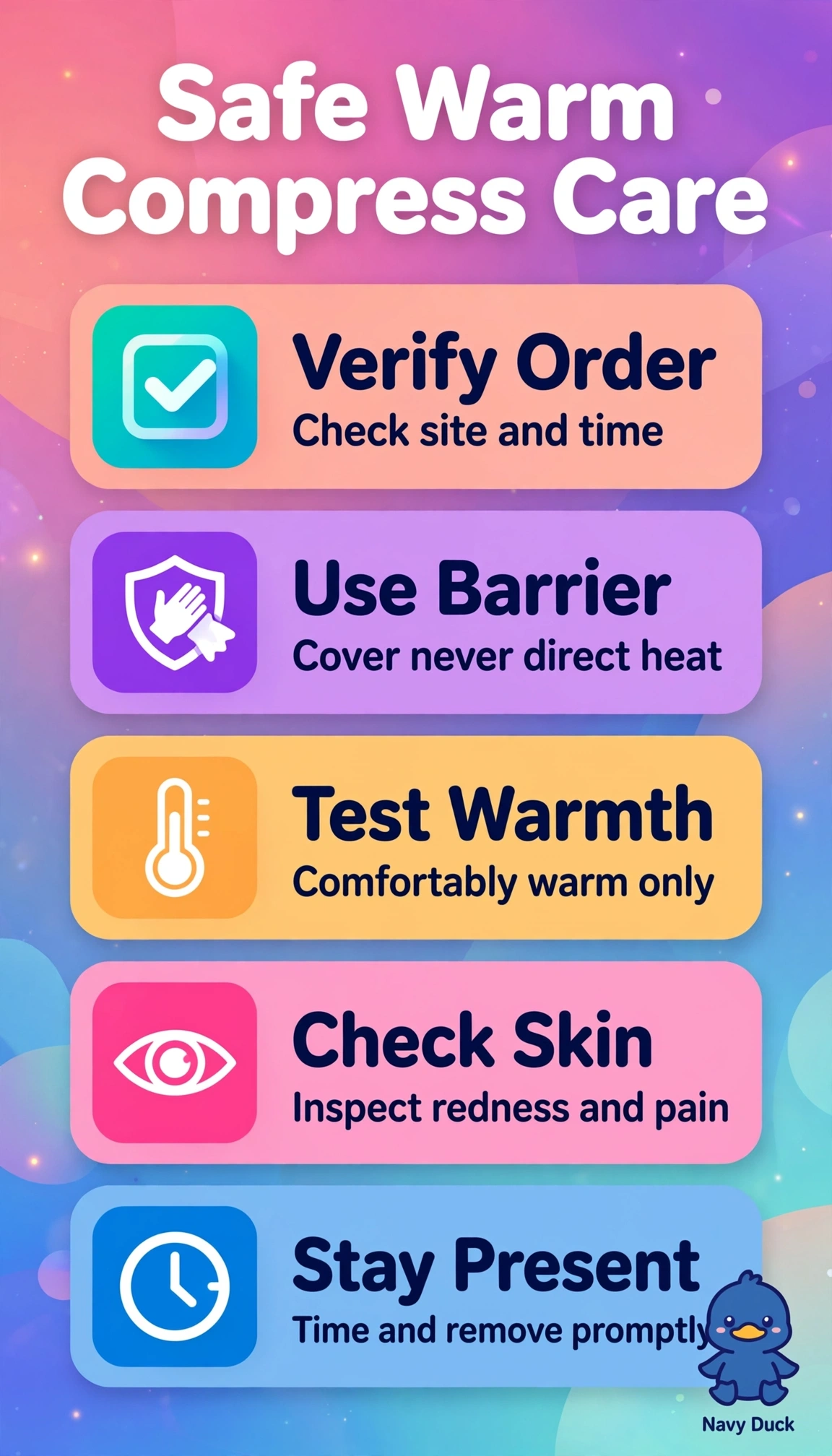
You protect sensitive skin while delivering comfort, and a barrier helps make heat safer. Frequent checks and prompt removal for redness or pain protect circulation, like testing bathwater before stepping in fully.
Full Explanation
The safe practice combines a barrier, frequent skin checks, and prompt removal for redness or pain; these steps reduce burn risk for a patient with intact but sensitive skin who can report discomfort. A covered compress left on beyond the prescribed time still violates the time limit: risk of tissue injury increases with exposure, even when warmth feels comfortable. Verifying the order and using a barrier are not enough if skin is checked only at removal; pain reports do not replace frequent observation, because skin changes may occur before discomfort is reported. Confirming the order and time while applying moist heat directly without a barrier also fails temperature safety: moist heat transfers efficiently, and direct contact raises burn risk. As an exam caveat, distinguish a generally appropriate measure from safe practice by checking that the order, barrier, ongoing monitoring, and time limit are all respected. As a practical check, confirm the order and time, test the compress temperature, use a cover, inspect the skin every few minutes, remove the compress promptly for redness or pain, and document the skin condition, time, and response.