
On an orthopedic unit, a post-op patient with right leg weakness is learning to walk with a standard walker on a tile floor with a small rug edge and an IV pole. Which ambulation assistance should the technician provide for stable walker use?
Select an answer to reveal the explanation.
Short Explanation
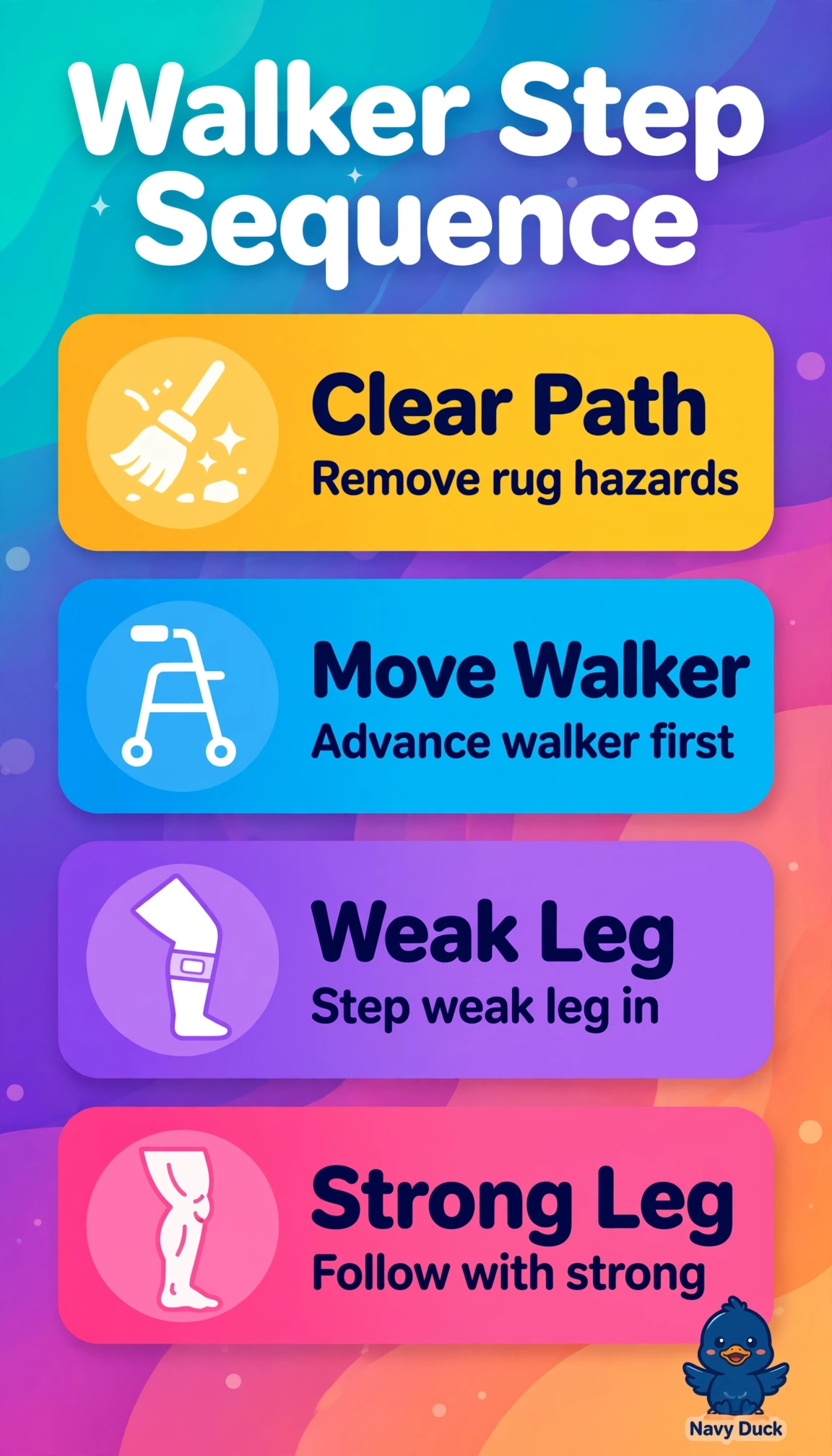
You're guiding their steps like you're moving a sturdy chair around them for safety. You'll have them push the walker ahead, step in with the weak leg, then bring the strong leg through to keep a steady base.
Full Explanation
The correct technique is correct because placing the standard walker forward first establishes a wide stable base ahead of the body, then stepping with the weak right leg into that base lets the arms transfer load through the frame precisely when the impaired limb cannot safely bear full weight, followed by the strong leg to restore balanced stance with continuous multi-point contact, which protects healing tissue and prevents buckling on tile. Leading with the strong leg after the walker reflects a pattern used for other aids but fails here by the concept of unloading, because it forces prolonged single stance on the weak side and brings that limb forward without forward support, increasing sway and collapse risk. Guarding from the strong left side while controlling the IV pole reflects sound supervision and equipment management but fails by the concept of protective positioning, because support must be on the weak right side to promptly block knee buckling and lateral loss of balance while keeping the pole clear without pulling. Gliding the frame without lifting reflects sound technique for a front-wheeled or rolling walker but fails by the concept of equipment design, because a standard pickup walker has rubber tips without wheels and must be briefly lifted and set down flat, otherwise tips drag and catch, especially at the rug edge, causing abrupt stops or tipping. An exam caveat is to separate standard walker rules from cane and rolling walker rules and to prioritize base stability over secondary hazards when tile, rug edge, and IV pole appear together. A practical check is to pause after each placement to confirm all four tips are flat and stable, the rug is removed or secured flat, footwear grips, and the patient feels steady before cueing the next move.