
On a medical-surgical unit a competent adult patient refuses a scheduled bed bath and says visitors must leave during care, while the nurse is tied up with an emergency. The patient is alert, calm, and concerned about privacy. Which staff response best applies the Patients Bill of Rights while following chain of command?
Select an answer to reveal the explanation.
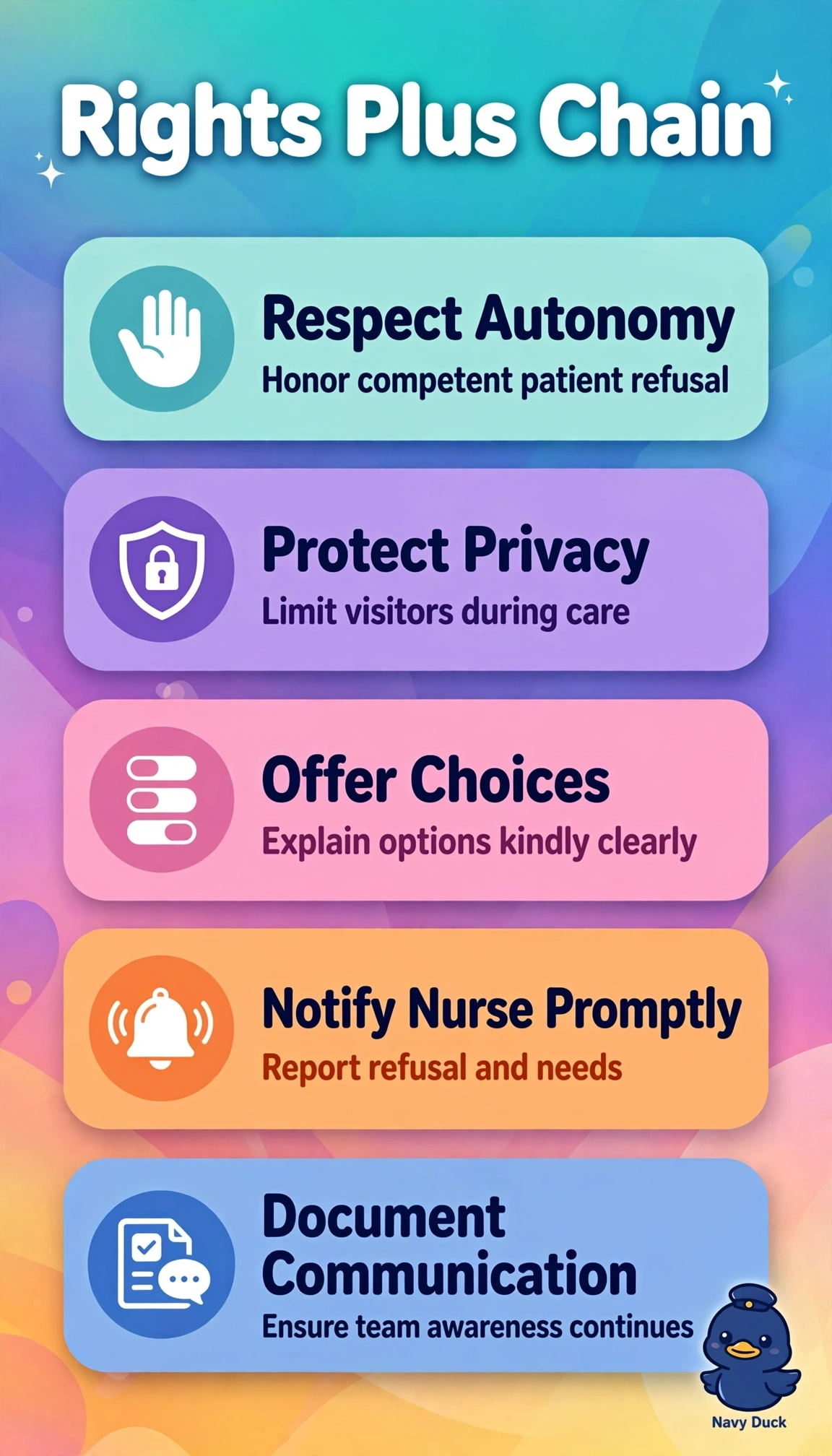
Short Explanation
You protect the patient’s dignity when you listen to their wishes and keep the nurse informed. Respecting the refusal, offering choices, and timely reporting support both patient rights and teamwork.
Full Explanation
The Patients Bill of Rights protects autonomy, privacy, informed refusal, and dignified care. A competent adult may refuse a bed bath and request privacy; the staff member should respect that choice, explain available care options, and promptly update the nurse through the chain of command. This allows the nurse to assess, educate, plan care, and document the refusal while the patient’s preferences are honored. Delaying the report and repeatedly encouraging the patient to accept the bath now can pressure the patient and prevent timely communication. Asking family to override the refusal violates autonomy: a family member’s wishes do not replace the decision of a competent adult. Honoring the refusal privately but not telling the nurse also fails the chain of command, leaving the care team unaware of hygiene needs, possible skin risks, and documentation requirements. The exam caveat is that respecting refusal does not mean abandoning the patient; coercion or force is not appropriate. As a practical check, restate what you heard, offer choices, and promptly give the nurse an SBAR-style update.