
A competent adult inpatient tells the patient care technician they do not want morning blood work after the purpose, steps, and risks were explained, and the patient speaks clearly without confusion. The nurse is nearby, the order remains active, and no emergency exists. Which ethical action best upholds informed and implied consent principles?
Select an answer to reveal the explanation.
Short Explanation
You protect choice even when it complicates the morning, and that is the job. Honoring a clear refusal safeguards autonomy like returning a signed form unsigned when someone says no.
Full Explanation
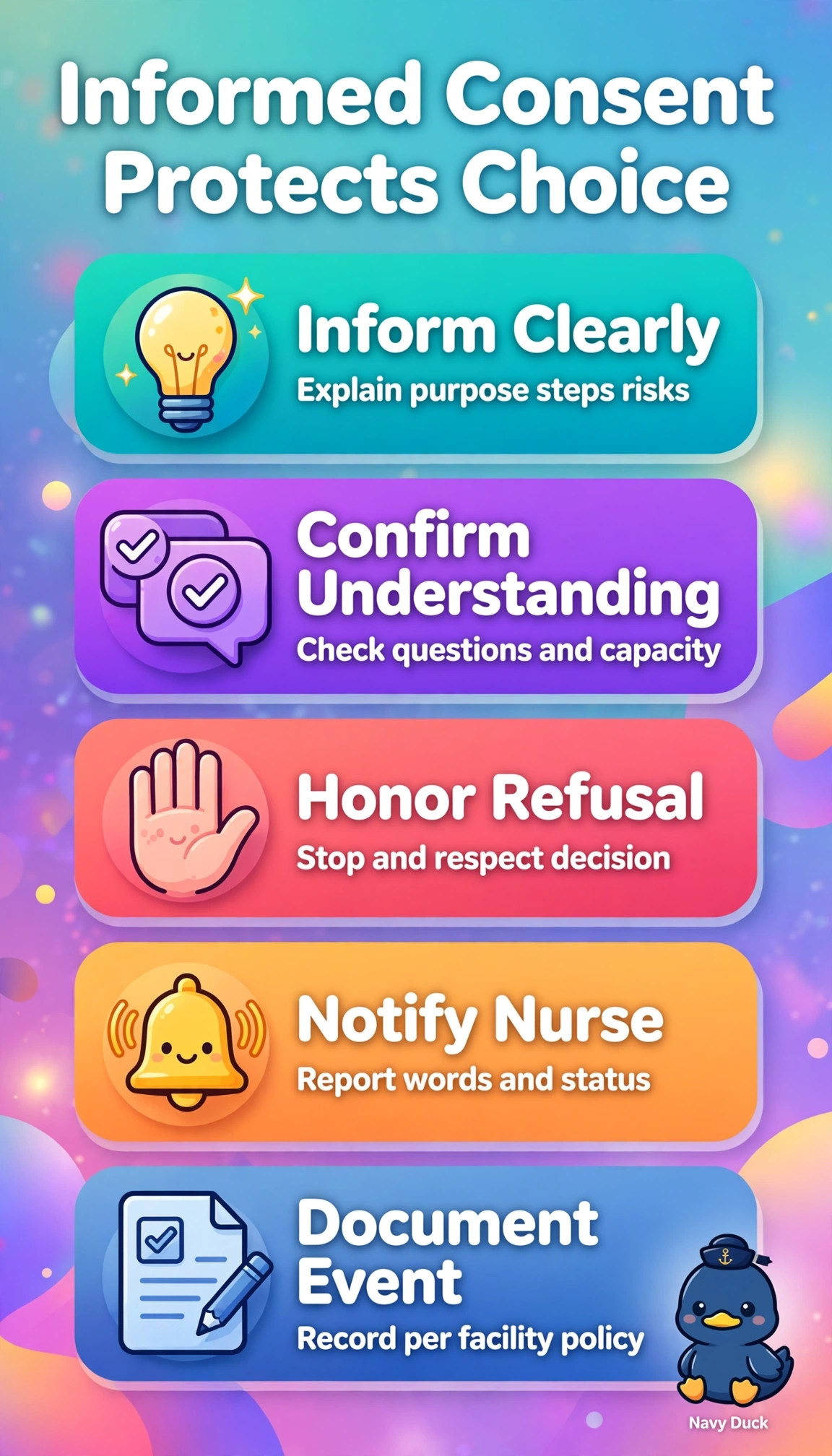
The correct response respects autonomy after valid informed refusal because purpose, steps, and risks were explained to a competent adult who speaks clearly without confusion, so the refusal is informed and must be accepted calmly with reaffirmation of the right to decide, and prompt notification matters because the technician cannot cancel or ignore an active order and the nearby nurse needs current information to inform the provider, update the plan, and document, while no emergency exists so implied consent cannot justify proceeding. One distractor fails on timeliness and chain of communication by documenting thoroughly but deferring nurse review until afternoon rounds, which leaves the active order unresolved and delays care planning despite nurse availability. Another fails on authority hierarchy by pausing correctly but asking whether the active order still requires the draw, implying a physician order can override a competent adult refusal when in ethics and law the refusal prevails pending provider discussion. A third fails on implied consent scope by handling the present correctly yet planning presumed consent tomorrow for routine labs, whereas implied consent applies to true emergencies or conduct clearly inviting care, not to routine venipuncture after explicit refusal. Exam caveat: do not equate an active order or routine morning work with consent, and watch for competence cues plus absence of emergency to eliminate implied consent answers. Practical check: use calm plain language, restate the refusal back, call the nurse now at the bedside if possible, document exact words, time, witnesses, and prior teaching, and await new direction without reattempting collection.