
A medical-surgical technician is assigned hourly rounding, bedside shift report, and discharge teaching for a 68-year-old patient with hearing loss who is at fall risk and needs repeated blood draws. The charge nurse reminds staff of survey priorities for safety and experience. Which combined practice best follows Joint Commission patient safety goals, CLSI venipuncture guidance, and HCAHPS standards?
Select an answer to reveal the explanation.
Short Explanation
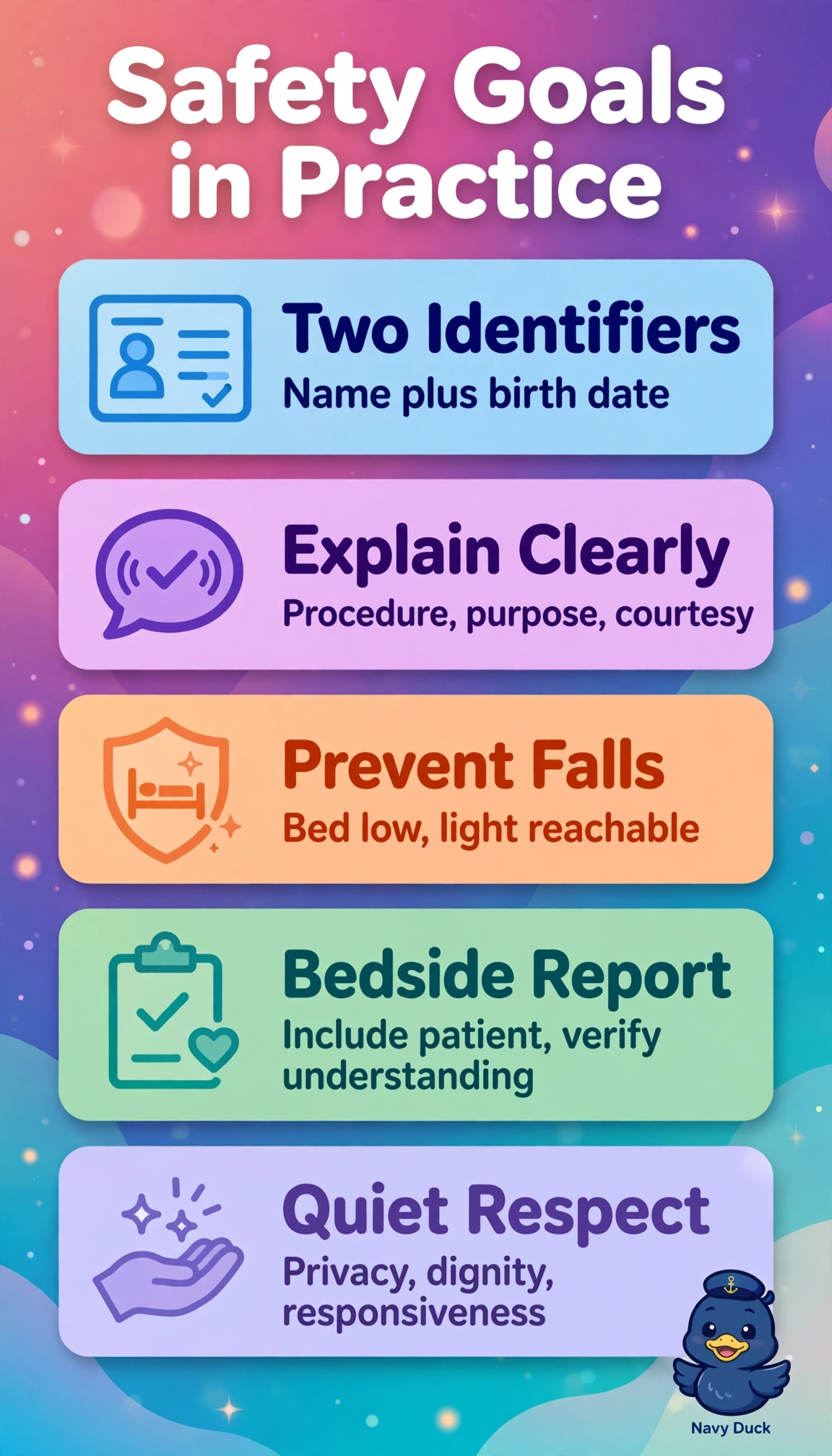
You've got this when you're pairing safety with kindness, like buckling a seatbelt before a friendly chat on the drive. You'll confirm two identifiers, explain each draw clearly, and keep the bed low with the call light close and your tone respectful.
Full Explanation
The correct practice integrates all three frameworks: Joint Commission goals require at least two patient identifiers for every draw and procedure plus fall safeguards of bed low, call light in reach, and hourly rounding; CLSI venipuncture guidance requires clear explanation and preparation before each draw, which for repeated draws means re-explaining purpose and steps with face-to-face clear speech and respectful responsiveness for hearing loss; and HCAHPS standards emphasize bedside shift report, responsiveness, clear communication, and discharge teaching with teach-back. The distractor describing detailed explanation only for the first draw fails by repeat-education concept because efficiency does not replace reorientation and consent for subsequent venipunctures, especially for an older adult who needs repetition. The distractor describing handoff at the desk to protect privacy fails by engagement concept because bedside report done respectfully with permission maintains confidentiality while improving safety, accuracy, and experience, whereas remote report excludes the patient. The distractor describing overnight clustering to promote rest fails by surveillance concept because uninterrupted sleep cannot replace intentional rounding, toileting offers, pain checks, and environmental safety checks for fall risk. Exam caveat: distinguish commonly appropriate actions applied in the wrong context, such as clustering for stable low-risk patients versus hourly rounding for fall risk, and private desk discussion for sensitive issues versus routine bedside handoff. Practical check: before each draw restate two identifiers from the wristband, face the patient, speak clearly, re-explain the draw, confirm call light in hand and bed low and locked, and close with teach-back of discharge and fall precautions.