
On a night shift in a 12-bed rehab unit, you are settling a confused older adult with a history of falls who keeps trying to climb over raised side rails, uses a wheelchair to the bathroom, and has a prescribed belt restraint for chair time only. Which bed, wheelchair and restraint safety action best prevents falls and injuries tonight?
Select an answer to reveal the explanation.
Short Explanation
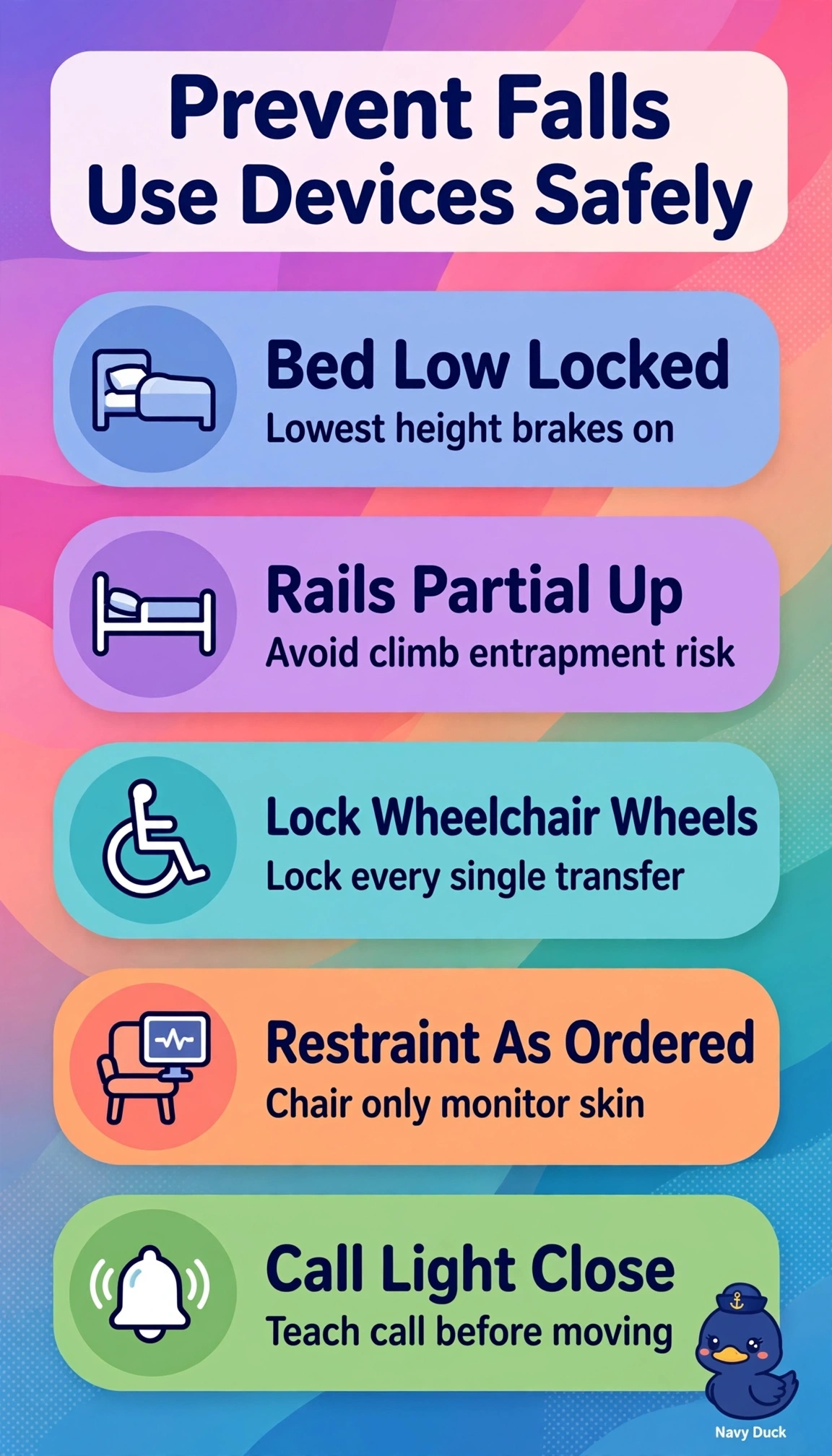
Across the whole night, small setup choices add up to big protection. Keeping things low, locked, and least-restrictive guards your confused patient without creating new traps.
Full Explanation
The correct action balances fall history, confusion, climbing behavior, and the limited restraint order by keeping the bed low to reduce injury momentum, using half rails as a reminder boundary rather than a climbable barrier, locking wheelchair wheels only during transfers to prevent rolling while allowing assisted mobility to the bathroom, and applying the belt restraint strictly during chair sitting as prescribed. The full-length rails approach fails by containment logic because a confused patient who climbs will scale higher rails and fall from greater height with entrapment risk, so more barrier is not safer here despite correct bed height and restraint use. The continuously locked wheels during bathroom trips approach fails by mobility safety because locked wheels prevent normal assisted wheelchair propulsion and create tipping or dragging hazards while defeating the stated function of wheelchair transport to the toilet. The overnight release of the belt in the chair approach fails by order compliance and risk matching because the prescription is for all chair time and the fall history does not resolve at night, so comfort does not justify omission while seated. An exam caveat is to read restraint scope literally and choose the least restrictive bed setup when climbing is stated, since adding rails or extending restraints beyond the order feels protective but increases harm and violates autonomy. A practical check tonight is to verify low bed position, half rail latch, wheel lock engagement and release with each transfer, belt fit with breathing and skin checks, call light and toileting schedule, and documentation of behavior and restraint time.