
A patient care technician is helping a hospitalized older adult who is fasting for cultural reasons, speaks softly, and avoids eye contact while looking distressed before morning hygiene care. The unit is busy, the nurse is available, and family will visit later. Which therapeutic communication response best demonstrates culturally competent care?
Select an answer to reveal the explanation.
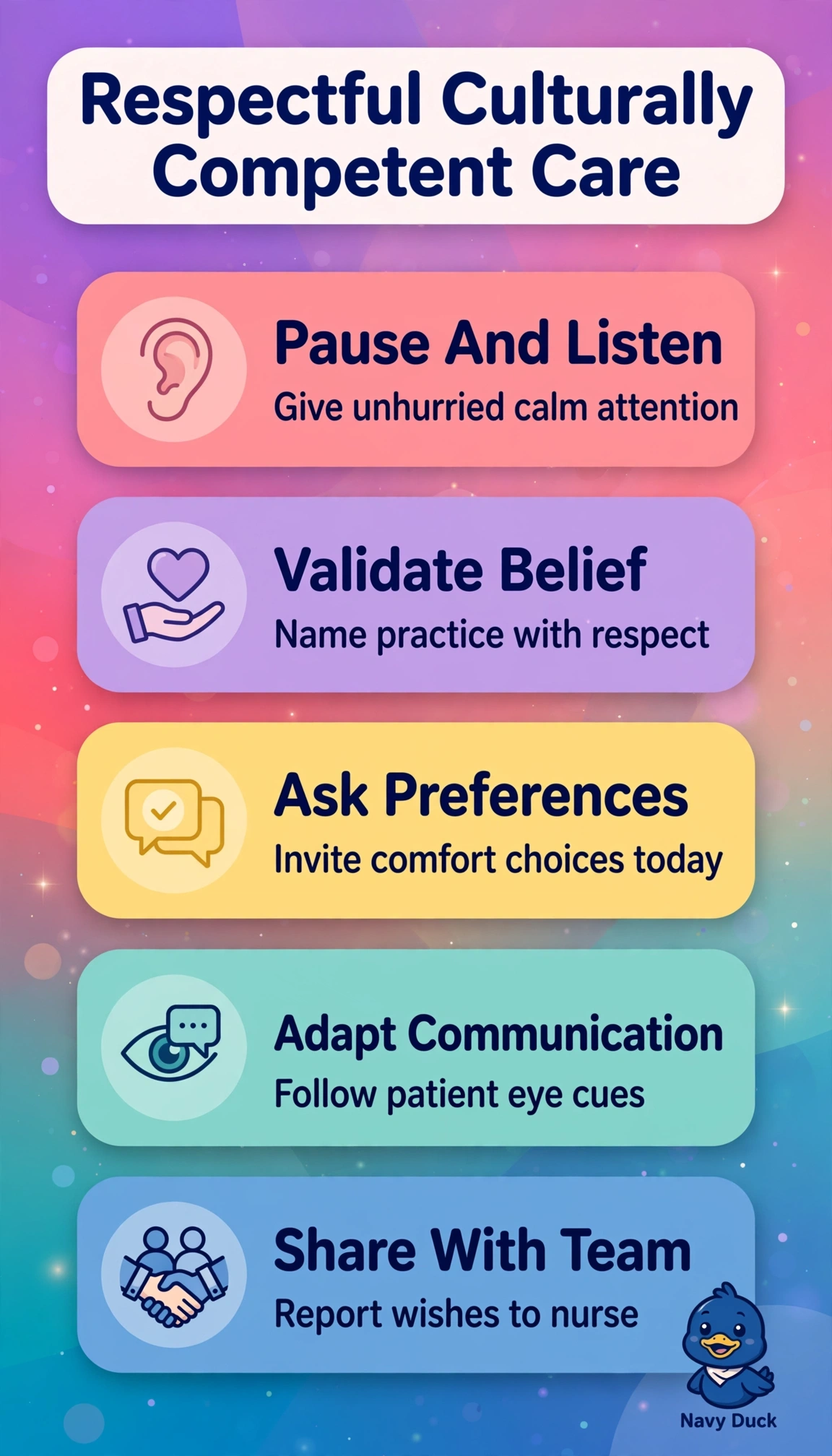
Short Explanation
You earn trust when curiosity comes before routine, so lead with respect. Honoring the fast while asking about preferences keeps dignity at the center like asking before borrowing something precious.
Full Explanation
The correct response enacts culturally competent therapeutic communication by deliberately slowing pace despite unit pressure, naming and respecting the fasting practice without judgment, and centering autonomy by inviting the patient to define comfort before intimate hygiene care, which validates distress signaled by soft speech, averted gaze, and worried affect rather than correcting those cues. The listen-unhurriedly-but-defer-fasting-until-family-visits approach fails on timeliness and respect because a cultural need present before intimate care requires immediate acknowledgment, and while family collaboration is valuable it supplements rather than substitutes for direct validation, risking prolonged distress and mistrust. The respectfully-note-fasting-and-promptly-update-the-nurse approach reflects appropriate teamwork but fails on patient-centered inquiry because it converts therapeutic communication into handoff without first eliciting preferences, so any adjustment lacks guiding patient voice. The acknowledge-fasting-yet-urge-stronger-voice-and-eye-contact approach fails on cultural humility by misreading potentially normative deference, modesty, or distress as deficits to fix, which can shame the older adult and obscure true concerns. On exams, beware attractive teamwork or family-involvement answers when acute distress pairs with a cultural practice before intimate care, since priority is direct respectful inquiry first, then coordination; a practical check is to pause without demanding gaze, ask what would bring comfort today regarding fasting and hygiene, mirror pace and volume, avoid correcting nonverbals, then confirm accommodations with the nurse and document preferences.