
You are rounding on a busy medical-surgical unit where three call lights are on: a stable post-op patient requesting water, a high fall-risk patient with an alarm who needs toileting, and a nurse awaiting a redraw for a hemolyzed stat potassium. Which rounding priority should the patient care technician choose to prevent harm first?
Select an answer to reveal the explanation.
Short Explanation
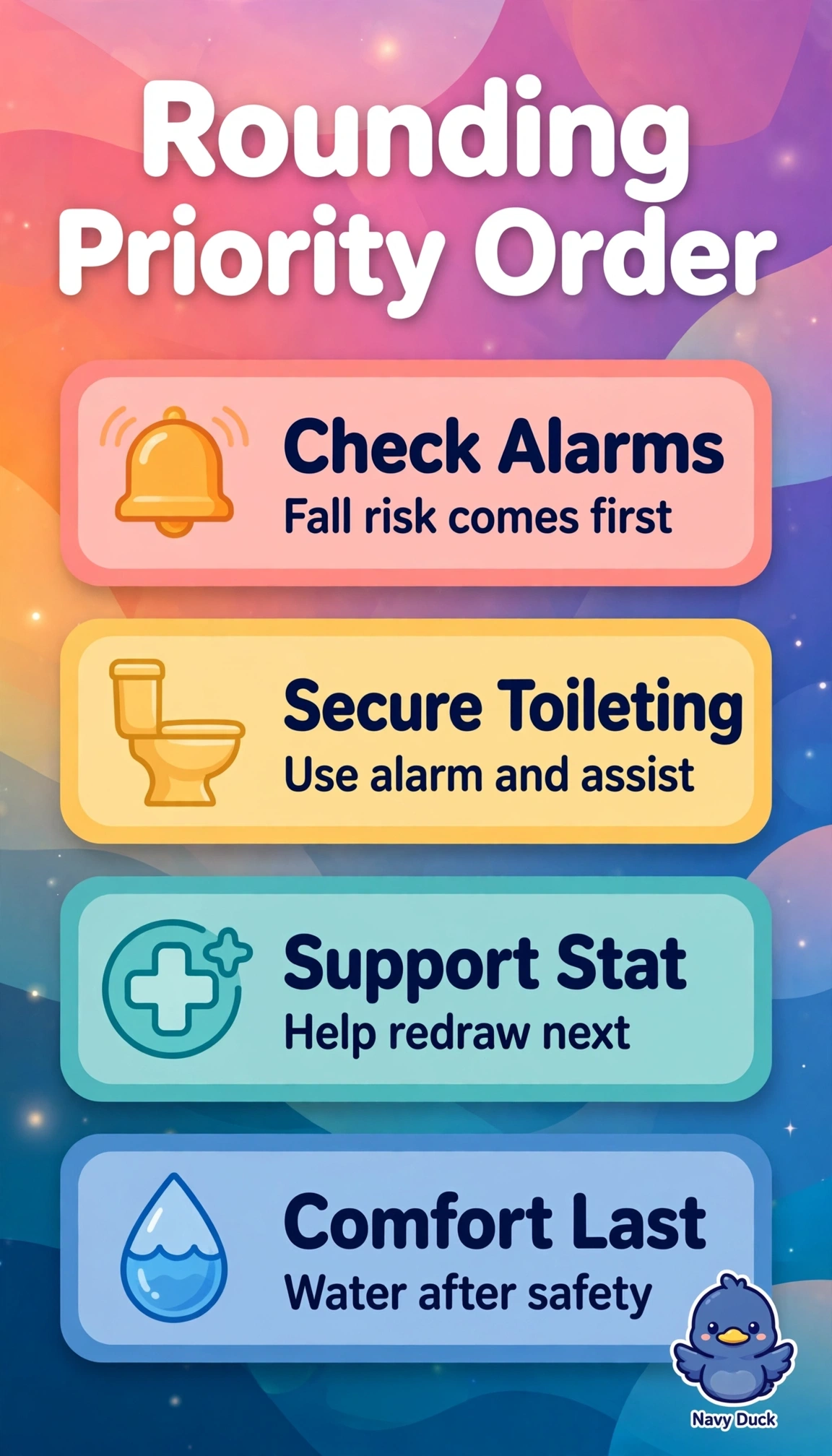
You've got to stack risks like triage tags, brightest red first. Prioritizing safety means the fall risk with toileting beats routine comfort and even urgent labs for immediate harm.
Full Explanation
Purposeful rounding requires prioritizing immediate physical safety over comfort or task efficiency, so a high fall-risk patient needing toileting carries the highest likelihood of sudden injury if left waiting and must be addressed before other duties. The fall-prevention approach fails because water is comfort care and delaying toileting invites an unassisted attempt to get up. The laboratory-first approach fails because although a stat redraw is time sensitive, a fall can cause harm in seconds while the draw can safely wait minutes after the patient is secure. Delegating to a visitor fails because visitors are not trained in safe transfer and alarm response, violating supervision and fall protocol. For the exam, remember that fall risk plus toileting almost always outranks other rounding tasks, and in practice quickly communicate delays to the other patients and the nurse to keep trust and workflow intact.