
A PCT on a 32-bed medical-surgical unit starts purposeful rounds and finds three needs at once: a confused older adult with a high fall-risk bracelet trying to get up alone to use the bathroom, a stat potassium specimen waiting for transport to the lab, and a stable patient requesting extra blankets. Which rounding priority best balances fall prevention and timely stat lab handling?
Select an answer to reveal the explanation.
Short Explanation
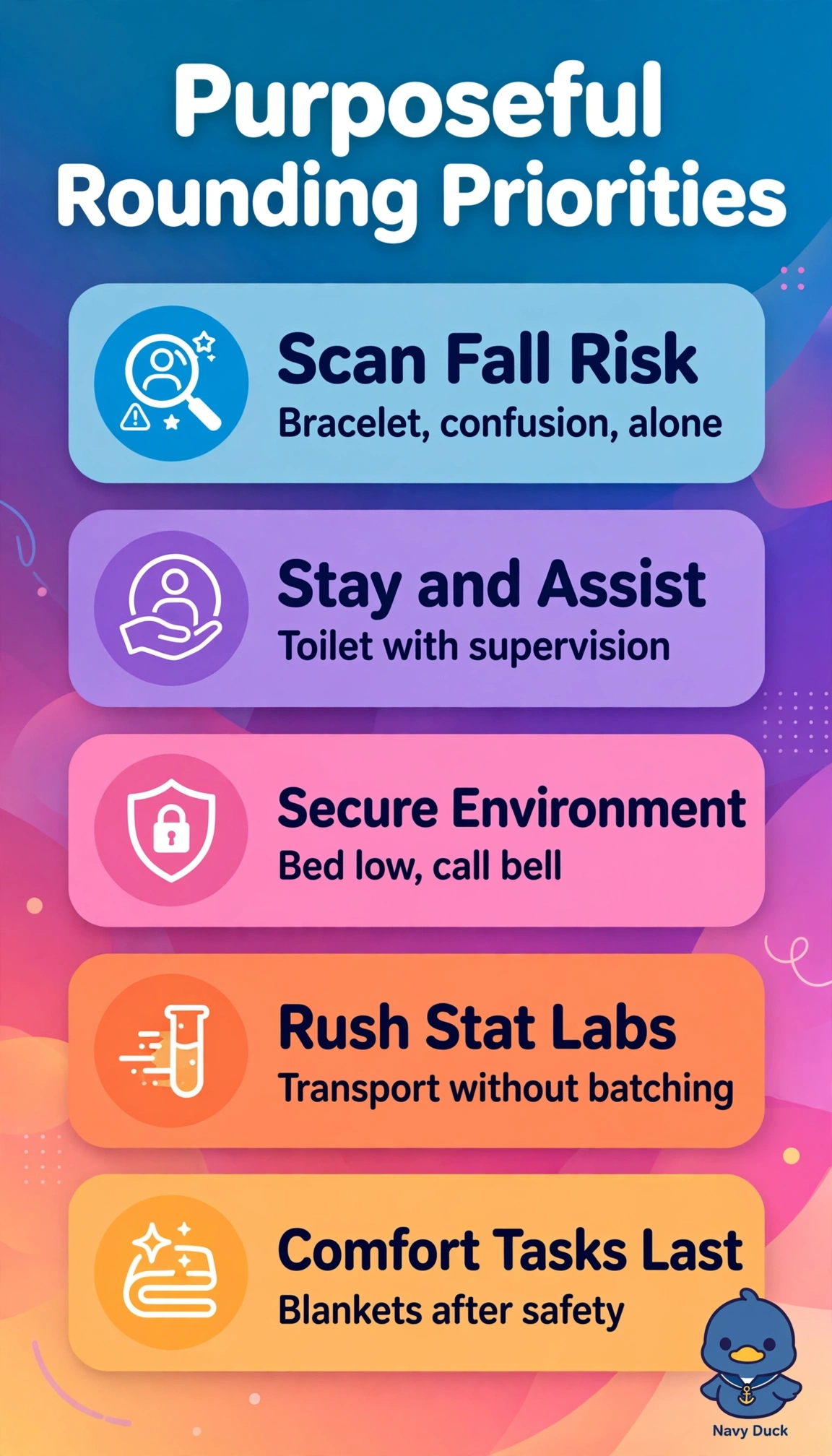
You prioritize the immediate fall risk by staying with the patient for safe toileting, then hand-carry the stat specimen without delay. That protects your patient and keeps urgent testing on time; the stable patient’s blankets can wait.
Full Explanation
Staying with the confused patient for safe toileting addresses the immediate fall risk, and hand-carrying the stat potassium specimen without delay meets the next time-critical need; potassium results can guide urgent cardiac decisions, and “stat” means delivery now without intervening tasks. The approach of staying for toileting but delivering blankets before the specimen treats stable comfort as equal to an urgent diagnostic need and risks delayed treatment or specimen compromise. Returning the patient to bed with the alarm set and then transporting the specimen promptly fails to resolve the toileting need, leaving the patient likely to try again alone and neglecting dignified toileting care. Staying for toileting but taking the specimen with routine morning rounds subordinates a stat order to workflow convenience and prolongs turnaround time. Stable blanket comfort is appropriately deferred until these safety and time-critical needs are met. Exam caveat: questions test sequence as well as actions, so address imminent safety first, stat orders next, and stable comfort afterward, even when each task sounds reasonable. Practical check: call for help if available, fully resettle the patient before leaving, verify specimen labeling and hand-carry rules, and tell the stable patient when blankets will arrive.