
A busy family clinic asks you to run morning rapid strep point-of-care tests before patients are seen. The kit was opened last week, controls are due today, and a patient sample is already waiting. The insert requires daily liquid controls logged in range. Which quality-control action should you complete first to validate CLIA-waived testing?
Select an answer to reveal the explanation.
Short Explanation
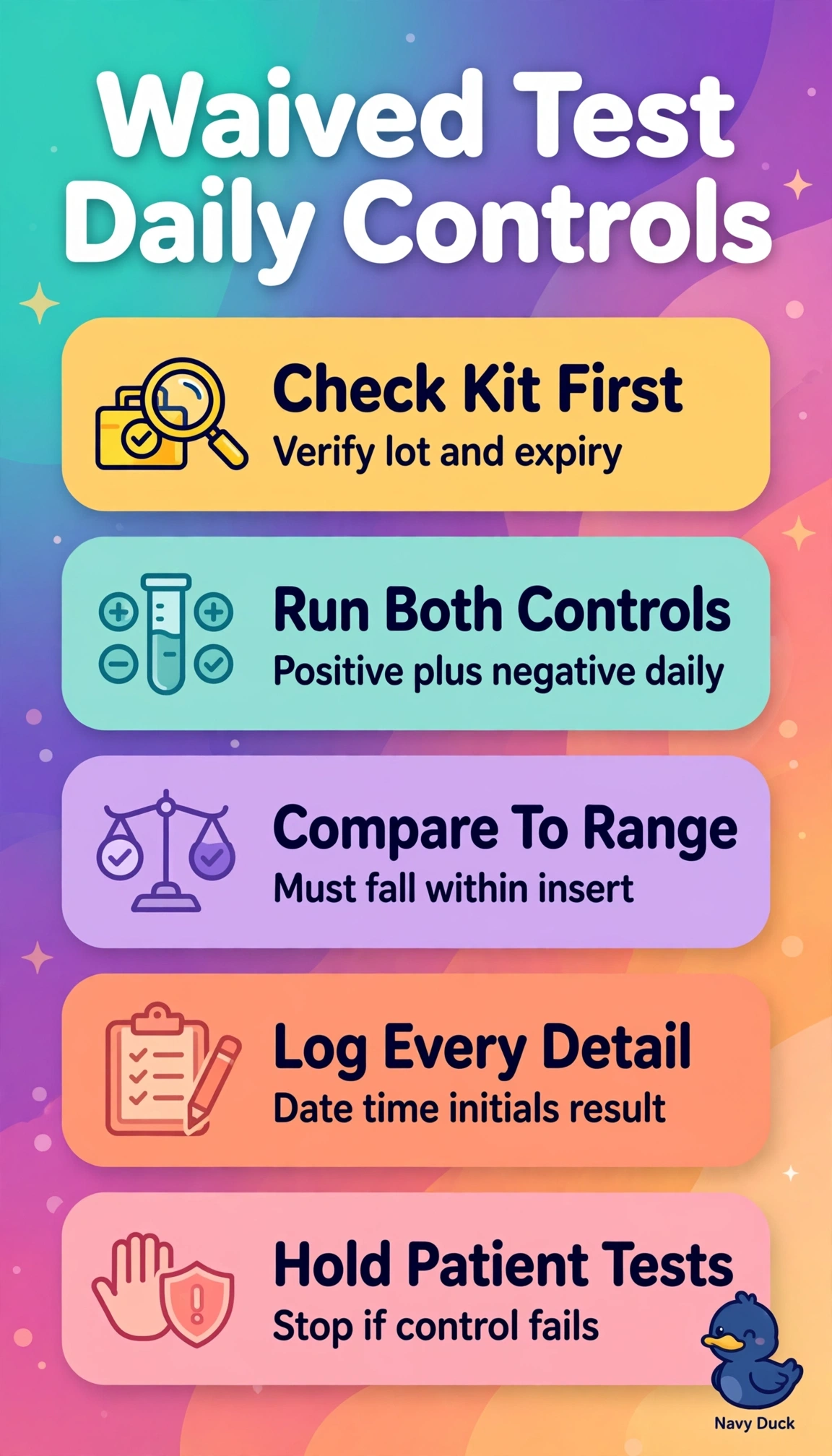
You earn trust in every result by proving the system works first. Running and logging controls is your safety net before any patient test counts.
Full Explanation
The correct action reflects CLIA-waived manufacturer-directed QC where daily liquid positive and negative controls must demonstrate expected reactivity, fall within the insert-defined range, and be documented before any patient result is reported, which validates open-vial reagent performance and establishes traceability for that day. The workflow that runs both liquid levels correctly and logs them after testing the waiting sample is clinically efficient but violates sequence validity because patient testing cannot be validated retrospectively once collection has occurred, and any later control failure would require repeat testing and disclosure. The single positive-level strategy conserves material and confirms detection of antigen but violates completeness of QC because the negative control is essential to detect contamination, nonspecific reactivity, or wash failures that produce false positives. The storage, expiration, open-stability, and electronic check workflow reflects good pre-analytic practice and instrument function verification but substitutes procedural and electronic surveillance for analytical QC and therefore cannot detect degraded antibodies, compromised reagents, or lot-specific failure after opening. Examination questions often embed timing, levels, matrix, and documentation cues together, so a response is correct only when all elements align with the insert for that day's testing. In practice verify control lot, expiration, and expected range, run both levels fresh, confirm in-range results, log date, time, operator, and lot before patient testing, and withhold reporting if either level fails until corrective action and repeat QC succeed.