
A postoperative patient on a surgical unit has IV fluids infusing, sips water with pills, voids into a hat in the toilet, has one episode of emesis, and needs accurate shift intake and output for fluid balance. The technician has a graduated pitcher, specimen hat, and bedside flowsheet. Which intake and output recording method should the technician use to yield the most accurate shift totals?
Select an answer to reveal the explanation.
Short Explanation
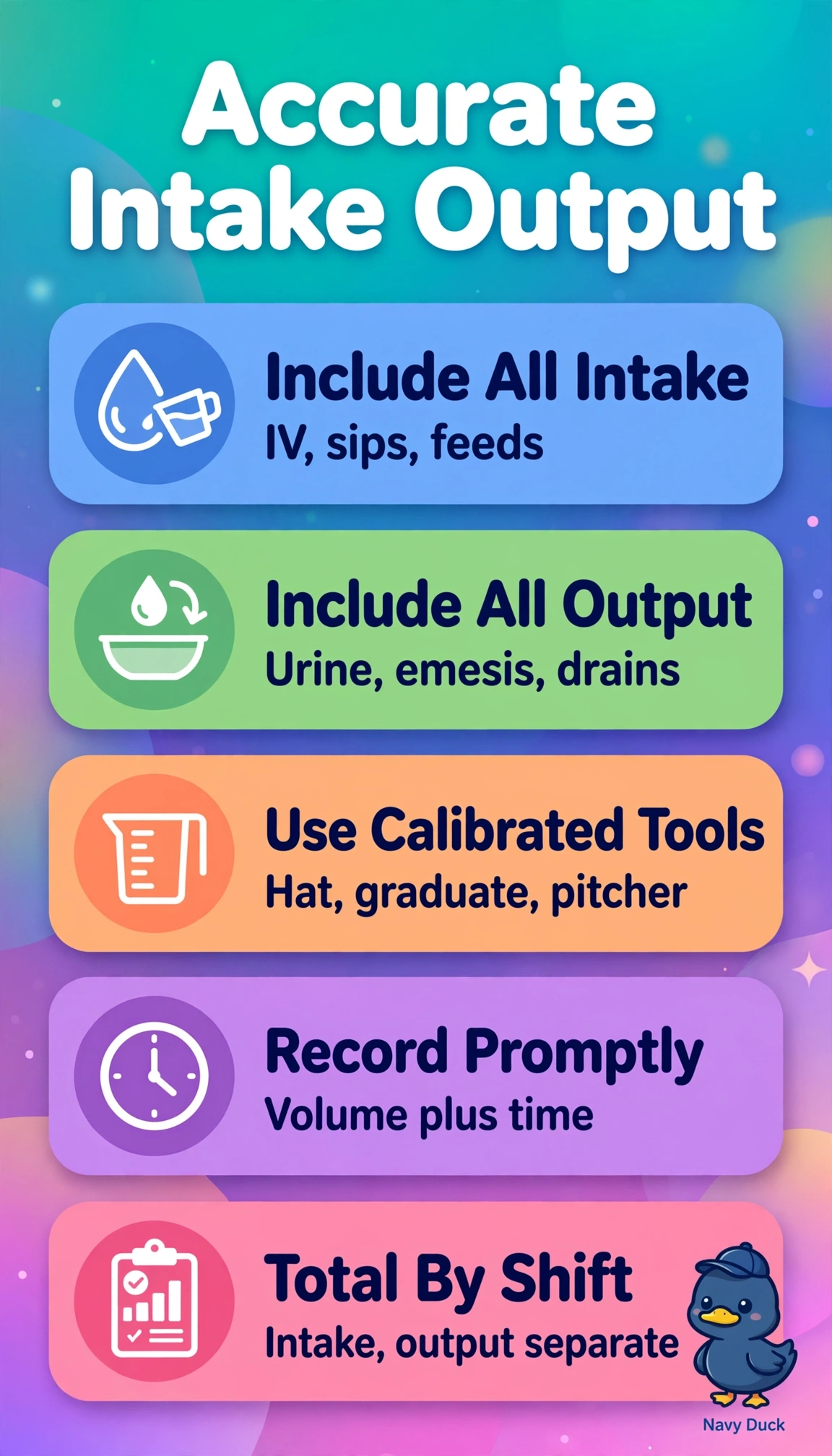
For accurate shift totals, you need every intake and output measured promptly with calibrated containers. That careful tracking helps you see the fluid balance clearly and avoid relying on memory at the end of the shift.
Full Explanation
Accurate shift totals depend on measuring every intake and output promptly with calibrated containers. Measuring each fluid intake—including sips with pills—and each urine, emesis, and drainage volume captures all the fluid crossing in or out and limits errors from estimation or memory. Measuring with calibrated containers but charting one total at the end of the shift fails because delayed recording can lead to forgotten volumes, transposed numbers, or lost details. Promptly measuring IV fluids, oral sips, and urine but leaving out emesis and drainage fails because those losses are part of output; omitting them makes the recorded balance inaccurate. Using the infusion pump for IV volume and promptly measuring urine, emesis, and drainage but omitting oral sips fails because even small amounts taken with pills count toward intake. On exams, when a question names several fluid sources, check that the method includes every listed intake and output as well as prompt measurement and recording. As a practical check, record each volume and its type on the flowsheet when measured, keep a running shift total, and reconcile the entries with the pitcher, specimen hat, and available pump record before handoff.