
After a bedside glucose check and venipuncture in a hospital room, you have a used lancet, a bloodied needle, saturated gauze, and an empty saline flush wrapper on the tray. The sharps container is half full and the biohazard bag is nearby, and housekeeping is waiting to enter. Which OSHA-compliant disposal separates biohazardous waste and sharps correctly?
Select an answer to reveal the explanation.
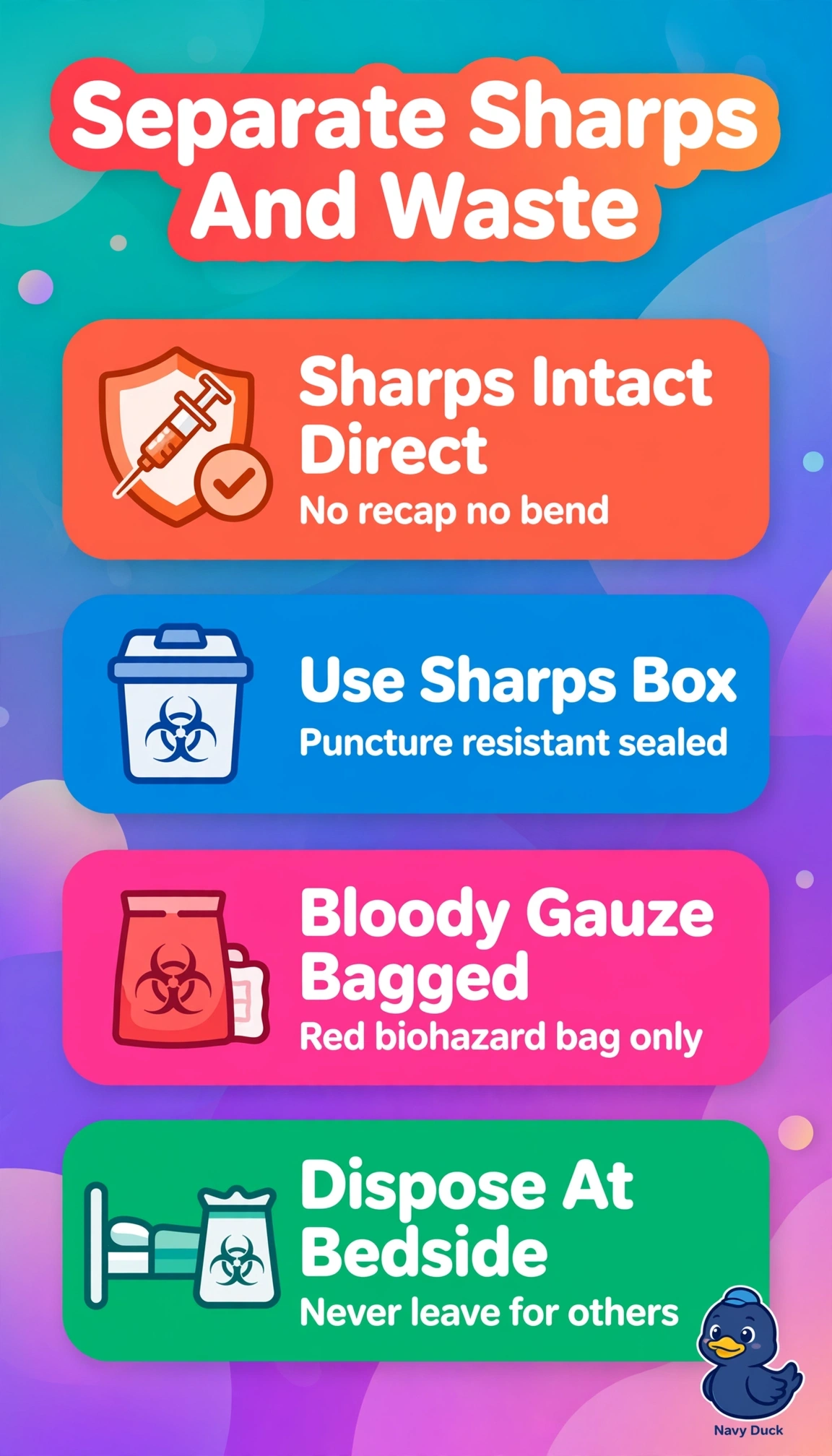
Short Explanation
You are sorting danger from mess at the bedside in seconds. Putting sharps in rigid containers and bloody soft waste in red bags keeps everyone safe, like keeping knives out of paper recycling.
Full Explanation
The correct response follows OSHA Bloodborne Pathogens segregation at the point of use by placing the needle and lancet intact without bending, breaking, detaching or recapping directly into the puncture-resistant sharps container and placing the saturated blood-soaked gauze into the labeled biohazard bag, leaving only the empty saline wrapper for regular trash and completing disposal before housekeeping enters so no exposed sharps or uncontained bloody waste remain. One distractor fails waste minimization and segregation by adding the clean saline wrapper to the biohazard bag, which wastes costly biohazard capacity and violates the principle that only saturated, drippable or caked infectious waste belongs there while clean packaging goes to regular trash. Another distractor fails generator responsibility and timing by deferring containment of the bloody gauze until after cleaning, which prolongs environmental contamination and improperly shifts a clinical duty to housekeeping staff who should never handle exposed sharps or unbagged bloody waste. The remaining distractor fails sharps-container management by treating a half-full container as full and staging exposed sharps for exchange, whereas containers remain in service until about three-quarters full and immediate placement is required rather than holding needles on a tray. On exams, distinguish truly saturated or drippable bloody materials requiring a biohazard bag from merely spotted wrappers or dried specks that do not, and in practice always verify the fill line, confirm sharps fall fully inside without forcing, tie and label the biohazard bag, and invite housekeeping in only after all infectious and sharp items are secured.