
After morning rounds on an isolation unit you have used needles, blood-soaked gauze, a cracked specimen tube, and an overfilled sharps box, with housekeeping waiting and a new admission arriving soon. Which OSHA-compliant biohazardous waste and sharps disposal action should you take to clear the room safely?
Select an answer to reveal the explanation.
Short Explanation
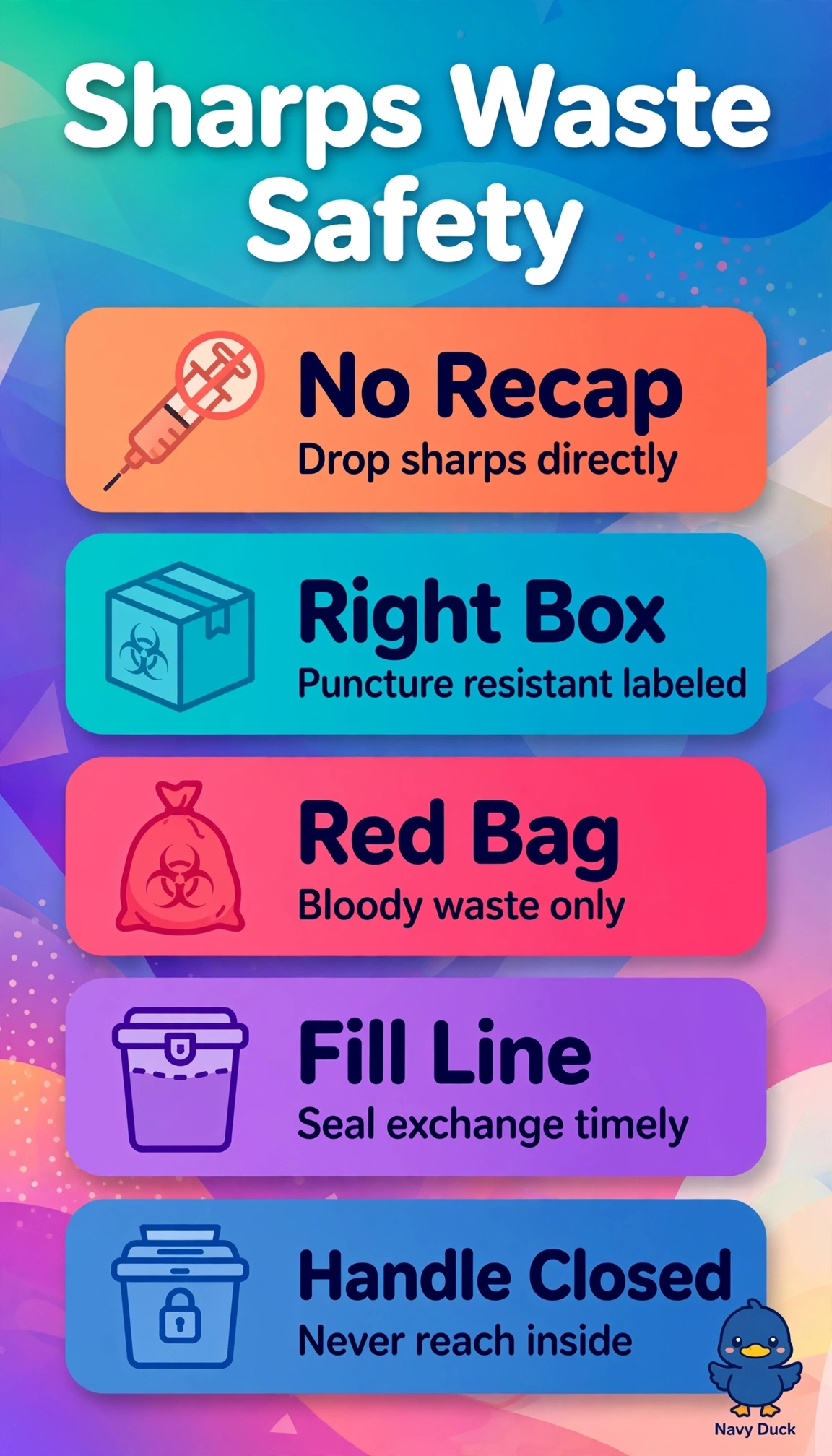
You can clear the room more safely by putting sharps straight into a puncture-resistant container and bloody gauze into red biohazard bags. That no-recap rule avoids extra needle handling, and an overfilled sharps box should not receive more sharps.
Full Explanation
Place sharps directly into a puncture-resistant container without recapping, and put blood-soaked gauze in red biohazard bags. This is the OSHA-compliant action because it avoids unnecessary needle handling and keeps sharps in rigid containment while bloody soft waste is bagged. Using a one-handed scoop to recap before disposal still involves manipulating a used needle; the safer principle tested here is to avoid recapping when direct disposal is available. Putting sharps into the existing overfilled container fails because an overfilled box may not safely contain additional items, increasing the risk of protrusion, puncture, or exposure during closure and handling. Bagging a cracked specimen tube with bloody gauze also fails because broken glass can pierce a flexible bag and injure someone handling it; a red bag is for the bloody gauze, not the cracked tube. An exam caveat is that a technique such as one-handed recapping may sound safer than ordinary recapping, but it does not replace direct disposal without recapping in this scenario. As a practical check before housekeeping enters, confirm that sharps went directly into a puncture-resistant container without recapping, the container was not the overfilled one, and the bloody gauze is in a red biohazard bag.